Apkallu Design

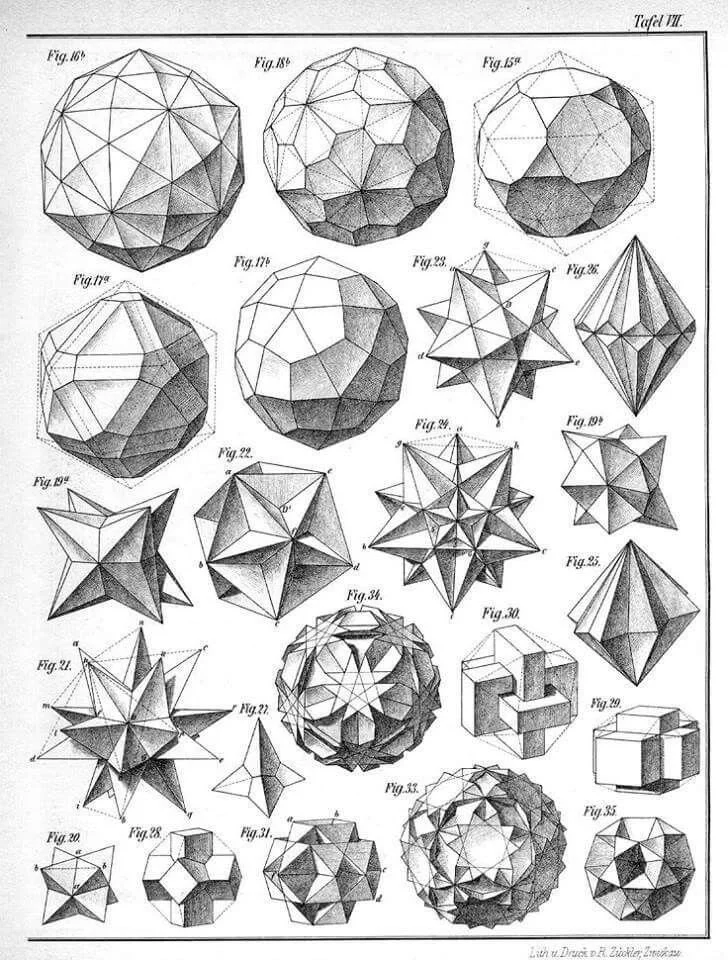
There are many options for the shape of the artefact. Fundamentally it must be clearly artificial in structure so as to distinguish it from the background rocks upon discovery. The idea currently being pursued is that the object has many surfaces such that each surface contains the knowledge of a particular field or discipline of knowledge. This is essentially a platonic solid containing many polygons. If there are too many surface areas then the individual area for each subject is smaller. If there are too little surfaces then the area for each subject is great, but the number of disciplines of thought that can be covered is small. A good compromise between these extremes would appear to be something like a Dodecahedron, which contains 12 sides. This is also good because the number 12 is a number associated with sacred geometry and relevant to important geometrical symbolism. Other factors which are relevant to the number of sides includes ease of manufacturing of the artefact and the risks of erosion and weathering and how having edges may or may not enhance decay modes.

Size of the Apkallu Artefact

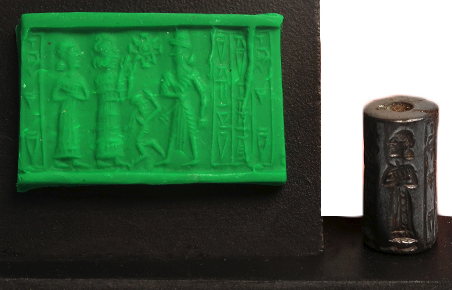
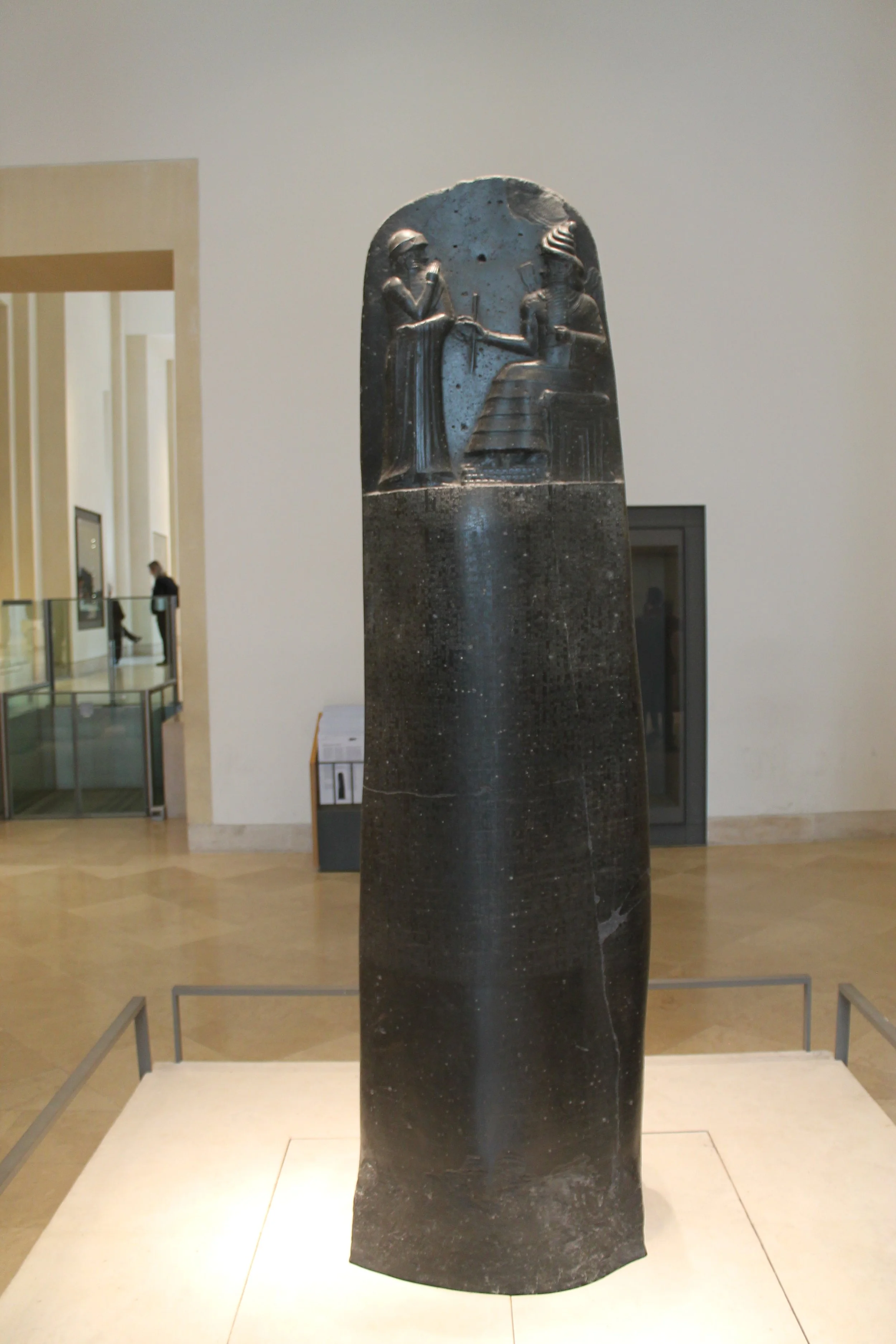
The size of the artefact could be very small like a cuneiform cylinder seal or much larger like the Code of Hammurabi. There is clearly a trade-off between practical build size, cost for production (and reproduction), and a minimum size required to convey the necessary information and knowledge. Another issue is making an artefact that can actually be found. The current thinking is that the artefact will be between 6 - 12 inches in diameter, similar to a football in size.

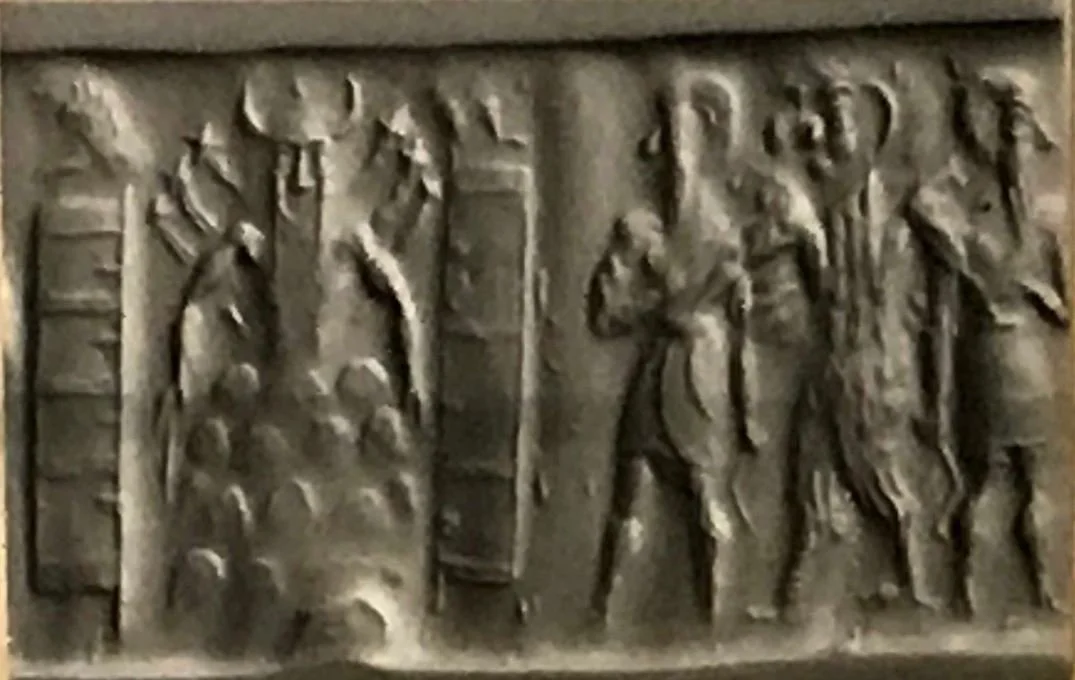
Sumerian cylinder seals, which tend to be around 1 inch in length. The one shown is 2.2 cm (7/8 inch) long and is a  cylinder seal with frieze depicting a standing robed figure in advancing pose facing a standing figure in flounced robe with hands raised, star above a small dancing figure, fourth robed figure to the rear, three columns of cuneiform text. It dates from Old Babylonian 20th - 18th Century B.C and is made of Hematite. The seal also contains text of cuneiform writing (credit: K. F. Long, from private collection of the same).

Code of Hammurabi, dating to 1754 BC, constructed under the orders of the 6th Babylonian king Hammurabi. It is 2.25 m (7.4 ft) tall contains text written in the Akkadian language using cuneiform script carved into the diorite stele. It consists of 282 laws (credit: Photo by K. F. Long, located in Louvre, Paris).

Material of the Apkallu Artefact

The material that the artefact may be made from spans a variety of options. The requirements are to survive for 100,000 years, to not degrade the information content engraved on it, which suggests a hard stone material. Clearly material experts need to be consulted, as well as sculptors to see what materials have survivability but also an inability to be engraved with text and images. The material must also be capable of surviving exposed to the weathering elements of the Earths atmosphere, being buried under ground or even sitting at the bottom of the ocean floor. Meanwhile, some of the material options currently being considered includes:

  • Diorite

  • Steatite

  • Hematite

  • Obsidian

  • Amethyst

  • Lapis Luzuli

  • jade

  • quartz

  • Agate

  • Onyx

  • Jasper

  • Serpentine

  • Carnelian

  • Granodiorite

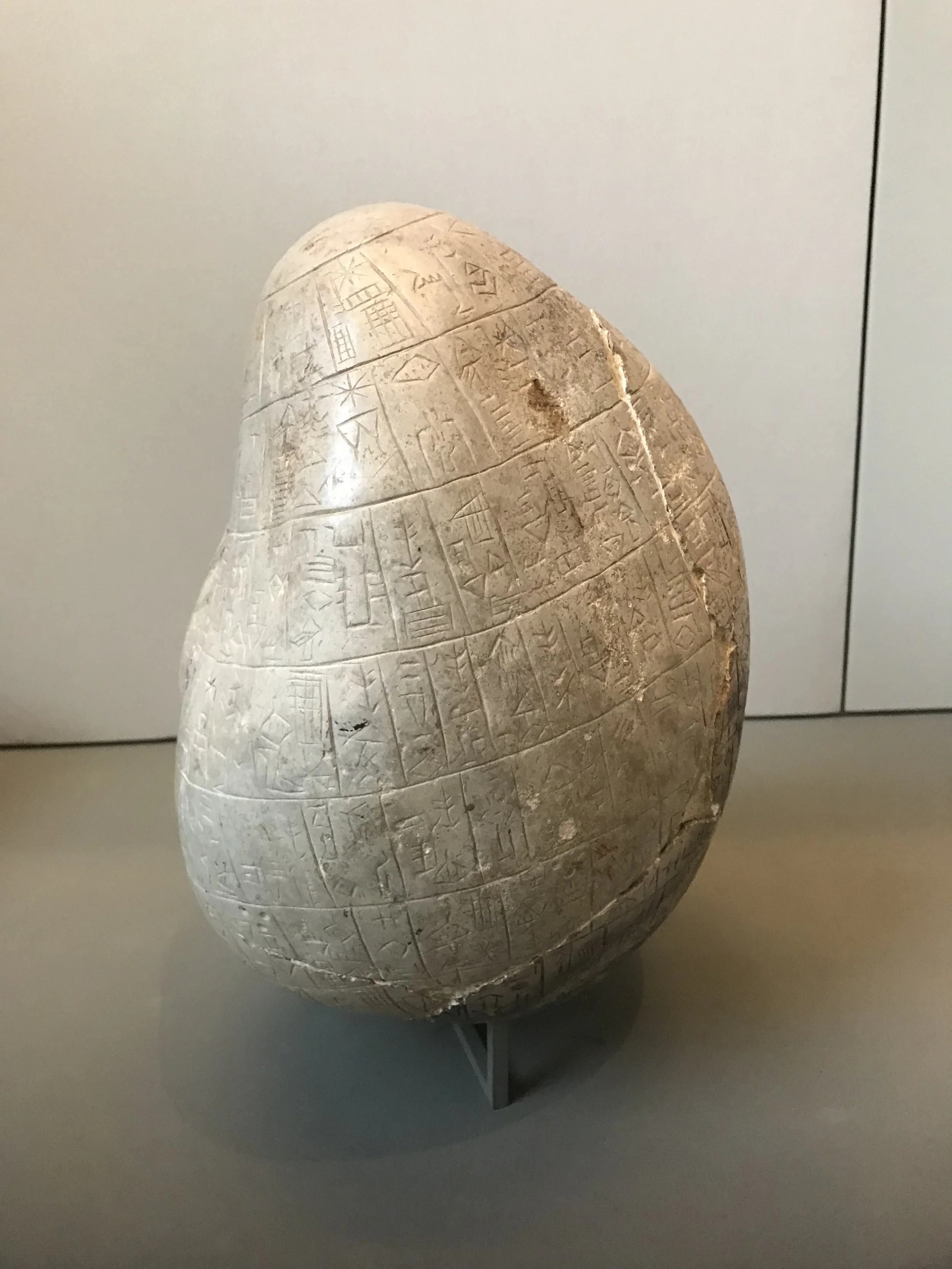
An artefact observed to contain much cuneiform written text in addition to logograms, which illustrates what such a minilithic artefact may look like. (image credit: K. F. Long, located at the Louvre, Paris)

Ideas Page for the Minilithic Artefact

On this page we will list any good ideas as they come in and keep a record of them as best as we can. This way the design can become a truly human endeavour as many creative ideas are put into its construction. It is expected that the project and the design of the artefact will evolve substantially as a result. Note that rather than capture all discussions, critique, objections or statements of support, the approach here is to capture 'specific' ideas relevant to the design of the artefact.

  • Encode fractal like information into the text, so that more information appears as you look closer under higher magnification (Rob Swinney, 29/06/18)

  • Surround the stone artefact in Amber like prehistoric insects were preserved. Recommend relevant book The Knowledge by Lewis Dartnal (Neil Raha, 29/06/18)

  • If you want to create a 100,000 year device, why not enhance your proposed approach by imbedding your dodecahedron into a clear sphere, then place this sphere as a floating sphere in a fountain. These floating sphere fountains (I think they are called Kugel fountains) would be of cultural interest, have an aesthetic beauty, and serve a philosophical role as a "fountain of knowledge" or “philosopher’s stone”. They could be placed at museums of natural history or other cultural centers. These floating sphere fountains already exist, but typically with a granite sphere, and they do attract attention as you can freely rotate the sphere by hand while it is sitting on its spherical bearing cup with the water serving as the floating medium. They could be made any size depending on the venue, but the information encoded on the dodecahedron would be the same. In the event of a long dormant period due to cataclysm, the spheres would encapsulate and protect the dodecahedron from degradation, and when discovered could be polished back to a clear surface allowing future humans to "see" what is in the middle of this sphere (Sonny White, 19/04/18).

  • Regarding the Information encoding, potential languages to be used, and Decipherment, one area that immediately strikes me is that there is research in the field of anticryptography as to how information can be presented such that it can be deciphered without any knowledge of the language used. This of course is important, because it may be that future post-disaster humans do not speak any current languages. As you note, it will be necessary to encode the information such that it is easily decipherable. I would draw your attention to the following book: Anticryptography: The Next Frontier in Computer Science, Brian McConnell, O’Reilly Media, Inc, 2001. Although the book focusses on encoding signals to be transmitted such that extra-terrestrials can decipher the message, the principles apply equally to "messages to the future". To quote from the author "One of the things I discuss at length in my book is the idea of using algorithms (short computer programs) as a foundation for communication. Using programs, you can send what are, in effect, living symbols. This enables the sender to transmit information very efficiently, and also to describe things that cannot be defined with static images or equations." Note that though algorithms are used, one does not require a computer to decipher them. Hopefully the above notes are of interest, and as I state if the project goes forward and I can help out (particularly with information theory and encoding) then please let me know. (Chris Corner, 19/04/18).

  • A device offering Maxwell’s equations or the periodic table of the elements might then be seen as the work of the devil, and be destroyed, especially if the preceding disaster resulted, or is believed to have resulted, from human hubris – a highly plausible scenario (Stephen Ashworth, 20/04/18)

  • I think the endevour to create such a device in itself has high intrinsic value, as it would lead to debates about what is considered "fundamental", "canonical" or "principal" in several different domains of human activity (Andreas Hein, 29/04/18).

You can purchase the published report on the Apkallu Initiative from Amazon.co.uk

Purchase it Here

The Apkallu Initiative

Preserving the human civilization

Past . Present . Future

This web page is dedicated to all those geologists, historians, archaeologists, linguists and anthropologists that uncover our past; all those writers, architects, diplomats and peacemakers that create the conditions of harmony in the present, and all those technologists, futurists, space explorers that plan for a prosperous human future in all the domains of reality upon which our spirits may become embodied.

"It is not the strongest of the species that survives, nor the most intelligent that survives. It is the one that is the most adaptable to change". Charles Darwin

This was a project I initiated some years ago to discuss the possibility of constructing a minilithic artefact which contains the combined knowledge of humanity for the purpose of re-booting civilization in the event of a catastrophic collapse.

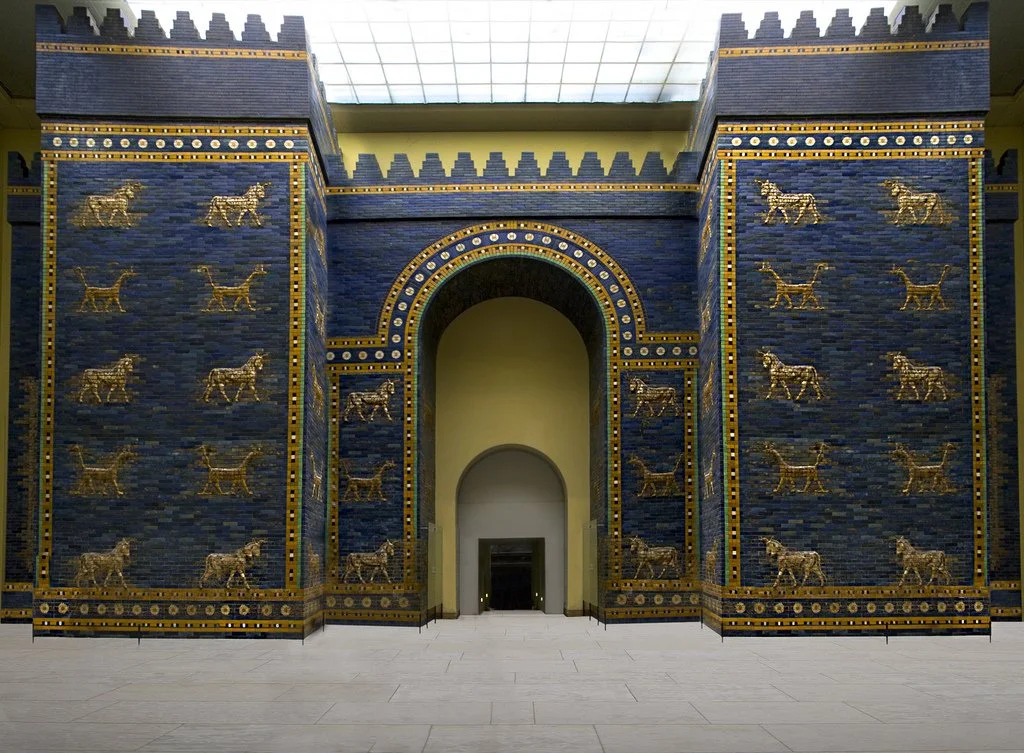
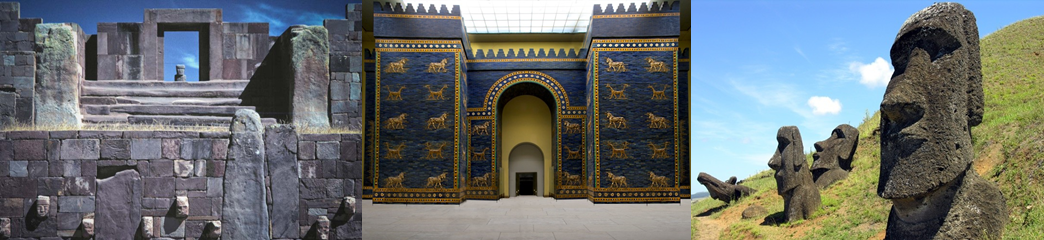
The Ishtar Gate of Babylon, As shown at the Pergamon Museum in Berlin


The Apkallu Initiative in brief

The ability of human kind to successfully explore and colonise the galaxy firstly depends on our capacity to leave the home world and avoid the cyclic catastrophes of nature; from the Sun, planets, or other objects of our Solar System. History tells us that approximately 12,500 years ago Homo Sapiens emerged from being a hunter-gatherer species to one of an agricultural-farming one, in what is termed the Neolithic revolution, as we transitioned from the Palaeolithic age into the Mesolithic age. Prior to this Palaeolithic cave art dating back around 40,000 years and older, tells us about the early history of thinking man. The history of human civilization may not be as linear as we once thought and recent discoveries such as Gobekli Tepi in the South East Anatolia region of Turkey, are suggesting that instead history may have been interrupted by periods of natural catastrophe to the extent that human progress from ancient Cro-Magnon man, perhaps as far back as 300,000 years, is thwarted and we have had to begin again. 

In addition, observations of Oxygen isotope ratios from the Greenland ice cores, suggest up to five major interglacial periods in the last 400,000 years where global climatic conditions were similar to today, and the opportunity for human civilization to arise was present prior to the Mesolithic age. It is well established that incidences such as the Cretacious-Tertiary (K-T) extinction 66 million years ago led to devastation in our global environment and a prolonged winter which affected the photosynthesis of plants and plankton life. There is also evidence emerging of more recent impact events such as around the period known as the Younger-Dryas around 12,900 to 11,700 years ago, which saw a return to glacial conditions which temporarily reversed the gradual climatic warming after the last glacial maximum which began receding around 20,000 years ago.

In this web page we outline an initiative for the construction of an artefact that contains the foundation knowledge of human kind, necessary to reboot human civilization in the event of a global cataclysm. This artefact, which is called a mini-lith (analogous to Megalithic structures of the ancient world) would be constructed of hard stone and designed to last for at least 100,000 years. It would contain knowledge of multiple disciplines of thought such as geometry, mathematics, astronomy, biology, architecture, agriculture, law to name a few, such that any surviving communities of a future event could study this and thereby gain assistance in the re-booting of civilization. This is analogous to other ancient structures in history such as the Code of Hammurabi which have helped to preserve deep knowledge regarding the formation of a civilization. It is hoped that this web site will serve as an initial home for the project, in advance of the project coming to full public attention, and thereby seeing the construction of such an artefact come to fruition at some point in the coming years.

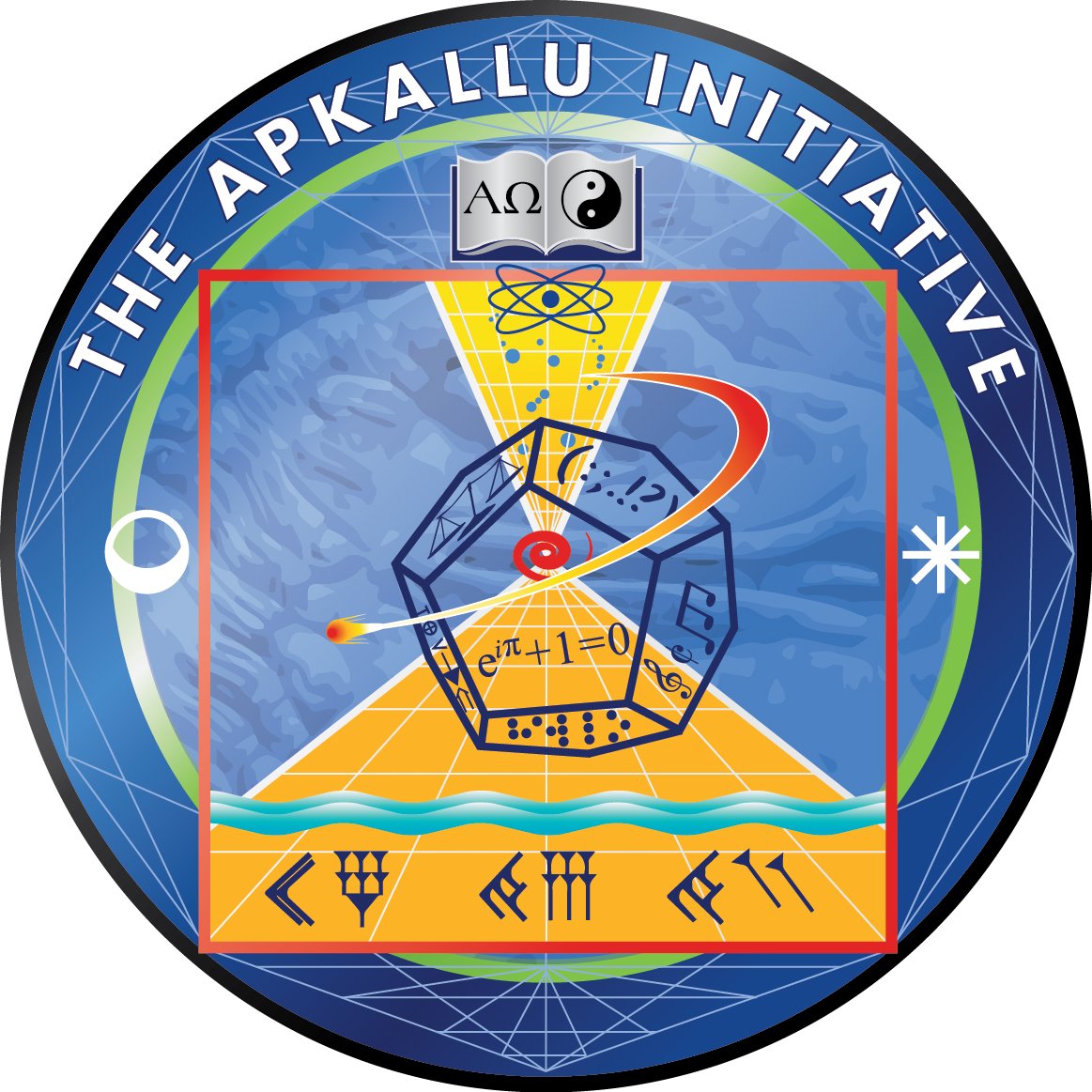
apkallu logo

The logo was designed by Kelvin F. Long and then produced under contract with the artist Alex Storer. The logo has been designed with much symbolism, whilst also being visually inspiring. The logo has connections to the ancient past, which includes the Sumerian and Egyptian cultures as examples of historical sacred knowledge. The various elements are now explained.

History of the logo design all started when…

  • The lower yellow triangle is actually the Great Pyramid of Giza with its angle of 51.4 degrees, which is representative of one of the elements of the liberal arts such as architecture. The upper yellow triangle represents the precession of the vernal equinox with its angle of 23.4 degrees as measured by many of the ancient megalithic structures. The precession segment also is coloured with yellow to represent light, and it contains the background stars with the constellation of Orion shown.

  • The blue wavey structure represents the ocean, and is manifest of the stories of the Great Deluge that is depicted in many religious and mythological texts around the world in different cultures.

  • The strange looking symbols in the lower part of the square are Cuneiform for the number 100,000 to represent 100,000 years, which is the duration for which the artefact must be designed to last. This was chosen since its a realistic time scale and also it approximately represents four precession cycles and potentially several interglacial periods.

  • The trajectory like object represents any existential threats we might see from space. 

  • The spiral at the centre represents the Universe and the galaxies and ultimately the origin of the Cosmos.

  • Towards the top is the atomic symbol which represents knowledge. This is typified by the classical Trivium (grammar, logic, rherotic) and Quadrivium (arithmetic, geometry, music, astronomy) which together characterised the liberal arts. 

  • The book at the top has the symbol for Alpha-Omega to represent religion and the Ying-Yang symbol to represent philosophy. Both are studied once the Trivium and Quadrium have been mastered. 

  • The object in the centre is a dodecahedron and represents the apkallu artefact as an example. It has different faces each of which contains different elements of knowledge from different disciplines of thought. 

  • The symbols of the crescent moon on the left and the Sun on the right represent the Sumerian gods Anu and En.ki who were responsible for the creation of the Apkallu in Sumerian creation stories. 

  • Under the entire logo, if all colour elements are removed, is a light lined web structure, which depicts the Tree of life.

  • The square and circle represent the classical squaring of the circle problem in geometry, but the square has been juxtapositioned downwards in a similar way to the Leonardo da Vinci Vitruvian man, emphasising that the real goal of the Apkallu initiative is the preservation and continued prosperity of human civilization.

  • The colours show on the boundary of the areas are the primary colours of Red, Green and Blue. The red also represent the continuing struggles of human kind on Earth and our need to liberate ourselves from our mental, emotional and physical limitations and therefore from metaphorical hell. The Green represents the gorgeous beauty of Planet Earth. The Blue represents the oceans and sky above the Earth, but also drawn in the colour of lapis luzuli blue which is the ancient colour for knowledge and wisdom. The Black on the outside of the logo represents deep space, the universe beyond and all of knowledge which is currently hidden from our view. It is the horizon that we expand into, physically and spiritually. 

  • Behind the logo one can see the water mark of the Apkallu.

Use of the Apkallu Initiative logo is subject to copyright permission 2018. 

Background to the project

There is every reason to be hopeful about the future potential of humanity on Earth and in space. There is every reason to think that given sufficient time and effort we will continue to explore and colonise the planets of our Solar System and one day the planets of other star systems too. But in order to get to that point, we first have to survive the threats to our existence along the way. The nature of those threats is many and varied in type. This includes asteroid impacts, comet impacts, solar storms, gamma-ray bursts, dramatic changes in the Earths climate, disease pandemic...and even the potential of alien invasion.

Given this, it is necessary to adopt strategies for adaptation and survival. This in essence is the purpose of the Apkallu initiative, manifested as a minilithic artefact, which has the goal of accelerating civilization socially, culturally and technologically in the event of a global demise.

In the event that Earth was hit by some impacting event from space for example, we might consider the following worst case assumptions:

  1. All infrastructure is destroyed, to include buildings, power utilities, city plumbing, damns, transport networks, agriculture and farming, huge portions of the plant and animal kingdom.

  2. All information sources are destroyed, to include all the world libraries, computers and electronic memory. It is possible that some books will be discovered over time as communities explore the rubble remaining from the metropolis. Books would become precious beyond their current value.

  3. The global climate is in turmoil and hostile, but with isolated regions of stability such that with determination survival is possible.

  4. The geological, climatic, oceanic activity and effects of the cataclysm event, within weeks, months or years will gradually return towards some level of stable Earth.

  5. Small pockets of humans survive around the Earth, perhaps 10s to 100s each but with the total not exceeding thousands.

Given this scenario, we can note that the surviving generation will remember the world as it was before. They will use this knowledge to teach their children. At this point knowledge is based upon direct memory. Those children will then grow up, with their parents dying off, and they will remember what their parents taught them and some of those children may even have some memories of the world before. But for the most part we are dealing here with recent history and part mythology. The grandchildren will also be born and grow up, but they will have no direct memory of the world the way it was before. At this point we are dealing with history and mythology. Within the third or fourth generation there is a risk that all knowledge will be lost, and especially if that knowledge is not captured and written down. All received knowledge then becomes both mythology and fantasy.

So the question then is how to preserve that knowledge for the use of those future survivor generations. The particular solution being presented by this project is to build the minilithic artefact which contains all the necessary information to survive, grow and proper and accelerate humanity faster forward from where it would have been if it did not have such information.

The goal of the information content imprinted onto the artefact would be as follows:

  • Goal 1: The continued survival of the human species at peace.

  • Goal 2: The accelerated technological, social-cultural growth of human civilization from an assumed stagnated level.

  • Goal 3: The preservation of moral and ethical philosophy

Output of the Apkallu Initiative

On this page we will include copies of any presentations or papers or articles written which will be of interest to people who want to know more about this project.

The following are the output of the project produced in chronological order of publication or submission:

  1. Popular article for Centauri Dreams web site, 2nd July 2018: <download>

  2. Presentation of the project to the Initiative for Interstellar Studies, 29th June 2018: <download>

Impact Events & Near Misses in History

Below we list some of the prominent impact events from history which may be of interest to this project. The data is under construction.

IMPACT EVENTS: 

  • Shoemaker-Levy 9 (July 1994), impact site planet Jupiter, 21 pieces of comet, impact velocity 60 km/s, energy 6,000 Gtons TNT equivalent.

  • Tunguska (1908), Siberia, comet air detonation 5-10 km above ground, energy 10 - 15 Mtons TNT equivalent.

  • Burckle Crater (2,800 - 3,000 B.C), Indian Ocean, comet impact, 30 km wide crater.

  • Meteor Crater, (50,000 years ago), Arizona, 50 m Nickel-Iron asteroid, impact velocity 2.8 - 20 km/s, energy 10.7 - 26.2 Mtons TNT equivalent.

  • K-T event (66 million years ago), asteroid or comet 10-15 km diameter, impact velocity 20 km/s, energy 30,000 - 100,000 Gtons TNT equivalent.

NEAR MISSES:

  • Asteroid 2018 GE3 (April 2018), passed within 119,500 miles away, 150 - 360 ft in diameter object, spotted only 21 hours prior to closest approach.

  • 'Omuamua (Oct 2017), suggested impact energy 4.2 - 46.9 Gtons TNT equivalent.

You can purchase the published report on the Apkallu Initiative from Amazon.co.uk

Purchase it Here

British Houses of Parliament

Since in Britain we currently live under an authoritarian regime that has no respect for freedom of expression and is constantly gas lighting the British population, I took upon my rights to seek redress and due process via the Houses of Parliament. Below is the text that I was permitted to submit which I did so on the 30th January and subsequently obtained the mandatory 5 signatures required. I am showing it here as a public record of this action.

==========================

I want to start a petition – will you sign it?

Sign the petition

Debate Whether Prime Minister Sir Keir Starmer Should Resign or Seek New Mandate

We ask Parliament to consider if Prime Minister Sir Keir Starmer should resign or seek a new mandate, due to public concern that Government policies on immigration, civil liberties, EU alignment, digital ID, veterans, closeness to China, diverge from commitments made at the 2024 election.

We ask the House of Commons to examine whether the Prime Minister has lost the confidence of the public and should resign or seek a new mandate, because Government policies seem to diverge from commitments made in the 2024 election. Issues include mass immigration, grooming gang inquiries, proposals affecting jury trials and free speech, religious freedom, digital ID, treatment of veterans, policies affecting farmers, Chagos Islands, postponing local elections, closer EU and China alignment.

==============================

This was the subsequent response from the House of Commons on the 17th February:

---------- Forwarded message ---------
From: Petitions: UK Government and Parliament <no-reply@petition.parliament.uk>
Date: Tue, Feb 17, 2026 at 3:37 PM
Subject: We rejected your petition “Debate Whether Prime Minister Sir Keir Starmer Should Resign or Seek New Mandate”


Dear Dr Kelvin F Long,

Sorry, we can’t accept your petition – “Debate Whether Prime Minister Sir Keir Starmer Should Resign or Seek New Mandate”.

It calls for action relating to a particular individual, or organisation that the UK Government or Parliament is not responsible for – except where the organisation’s role or powers are set out in law, and the petition is to amend that law.

We can't accept petitions which call for actions with regard to named individuals, including the Prime Minister. In any case, we can't accept petitions about appointments, which includes calling for elected representatives or public servants to resign or be removed from office. If you're concerned about a particular policy or decision that's the responsibility of Government or the House of Commons, you could start a petition about that.

We only reject petitions that don’t meet the petition standards:
https://petition.parliament.uk/help#standards

If you want to try again, click here to start a petition:
https://petition.parliament.uk/petitions/check

Thanks,

The Petitions Team
House of Commons

============================

I was born in this country, served this country in the military and also worked on important projects for national security. Yet I feel that the British government, and the Prime Minister Keir Starmer in particular (and his Attorney General), has betrayed the British people. I also see many other actions of the government, such as attempts to delete legal records, move towards removal of trial by jury, attempt to bring in identity cards, oppression by a police state and the disgraceful conduct of officers towards British citizens, a failure to investigate and prosecute over the grooming gang scandals or even to establish a national inquiry, persecution of Christians, viscous pursuit of our military veterans, giving away overseas territories of high strategic interests like the Chagos Islands, proximity to the communist state of China, non-support for the United States,…….as treason and a betrayal of our national interest. This has recently been bought to a head when the House of Commons failed to order a parliamentary investigation into Keir Starmer for misleading the house, when it is clear that he has lied and they have attempted to cover up the story over the appointment of the ambassador to the US. He even whipped his own party into voting against the motion. Their corruption knows no bounds.

I have also written separately to the Archbishop of Canterbury in the Church of England and His Majesty The King of England Charles III expressing my broad concerns. I have received no reply or acknowledgements. What does my citizenship mean anymore when those who seek to govern me will not answer me or respect my rights? They appear to only serve themselves. Those that seek to govern must have the support of the governed if we are to claim that Britain is a democracy.

Since my democratic right has been denied, I now declare I will not cooperative with the UK government in any capacity until a General Election has been called and the citizens of the country given the opportunity to determine those who seek to govern them.

Any attempts to oppress me individually by the state will result in me going public on personal knowledge I have of government corruption which is of high public interest, since I will have nothing to lose.

Britain is not free, but is under a blanket of Tyranny and I also see a complete failure of the Security Services to protect us from those that are attacking us. I can only conclude they have been compromised or how else can we explain the state of our nation? Britain is not a democracy and the rights of its citizens are denied. I will never cooperate with that and you no longer enjoy my loyalty in any capacity. Despite being a former Airborne soldier for 4.5 years, in the event of any conscription to national service, I will now claim Conscientious Objector status and will not serve in any war whilst this Prime Minister and this government is in power. I demand a General Election.

I serve only the Lord Jesus Christ and the bests interests of the British public.

I will not comply and this is my public statement.

Kelvin F Long

Testing AI

To see how good AI is at scenario modelling, I asked it to predict the most likely outcome of the US-Israel-Iran conflict using all its knowledge. I also asked it to limit its prediction to one paragraph. A further paragraph was given to explain the prediction process. So here is the answer:

The most probable outcome—based on current expert analysis—is not total destruction, liberation, or a single ruling event, but a messy middle path: Iran is likely to emerge heavily damaged but still intact as a state, with its regime either surviving in weakened form or hardening into more overt military rule (e.g. IRGC dominance), while the U.S. achieves partial tactical goals but no decisive strategic victory. Airpower alone is widely assessed as insufficient to collapse the regime, meaning Iran will likely be “battered but not broken” and may even become more hardline internally . The conflict itself is most likely to de-escalate into a prolonged, lower-intensity regional struggle—proxy attacks, cyberwarfare, and intermittent strikes—rather than a 20-year Vietnam-style occupation, because neither side has strong incentives or capacity for full-scale ground war. At the same time, while asymmetric retaliation (including terror-style attacks) is a real risk, large-scale catastrophic attacks inside the U.S. remain possible but lower probability compared to regional escalation. Overall, the highest-probability scenario is: a weakened but surviving Iran, no clean regime change, continued instability across the Middle East, and a long tail of tension rather than a decisive end.

I didn’t run a full hidden war-game or a formal Monte Carlo model in the strict technical sense. I made a fast strategic forecast by combining a few high-weight factors: how wars like this usually end, what airpower can and cannot do, the resilience patterns of centralized authoritarian states under bombardment, the relative incentives of the U.S. and Iran, and the difference between tactical damage and strategic collapse. The core logic was: regime destruction is hard without invasion; invasion is extremely costly and therefore less likely; “liberation” from outside military pressure rarely arrives cleanly or quickly; Iran has strong incentives to retaliate asymmetrically rather than fight conventionally to the finish; and the U.S. usually prefers limited, deniable, or standoff pressure over open-ended occupation when the costs of escalation are high. So I mentally compared several scenarios—rapid regime collapse, long occupation-style war, contained punitive campaign, regional proxy escalation, major mass-casualty retaliation on U.S. soil—and then ranked them by plausibility. The “weakened but surviving Iran, followed by prolonged instability” scenario came out highest because it requires the fewest unlikely assumptions. I did it quickly because this kind of analysis is basically pattern matching plus causal weighting: once the key variables are identified, you can eliminate lower-probability paths fast and focus on the scenario that best fits how states actually behave under pressure.

I will check back in 12 months how accurate this prediction was.

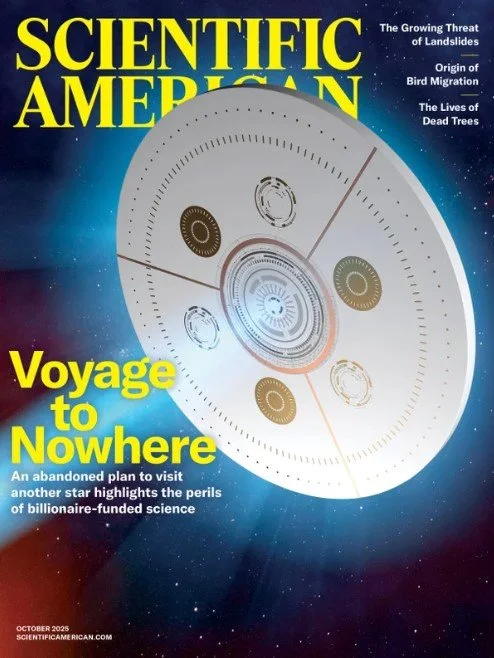
Voyage to Nowhere

Below is the text of a recent article on Project Starshot written by Sarah Scholes and published in a an issue of Scientific American, volume 333, Number 3, October 2025. It is captured here for reference since Long is quoted in the article several times.


Voyage to Nowhere, How a Billionaire’s Plan to Reach Another Star Fell Apart

An Abandoned plan to visit another star highlights the perils of billionaire-funded science.

n 2016 billionaire Yuri Milner hosted a press conference at One World Observatory, the atrium topping the slick skyscraper at the center of the rebuilt World Trade Center complex. Milner had grown rich investing in tech start-ups, and now he wanted to spend some of that money on sending a spaceship to the stars.

He called the plan Breakthrough Starshot: a project that would eventually take human technology to another solar system. The idea was that high-powered lasers would propel tiny probes to 20 percent of the speed of light, impelling them with enough inertia to launch them toward the nearest star system, Alpha Centauri, within 20 years. Milner and his Breakthrough Initiatives, a group of space science research projects related to life in the universe, were pledging $100 million toward a proof of concept. At the event, Milner was joined by, among others, Mae Jemison, a former astronaut and head of 100 Year Starship, an interstellar research program funded by the Defense Advanced Research Projects Agency; Pete Worden, former director of NASA’s Ames Research Center; and Stephen Hawking, world-famous physicist.

Zachary Manchester, currently an associate professor of robotics at Carnegie Mellon University, signed on for the project’s early stages. He remembers it seeming incredible that he, then a wide-eyed 20-something, was at the top of a metropolis, hanging out with people he considered legends—people such as Freeman Dyson, a physicist best known for positing that advanced civilizations could eventually cloak their stars in megastructures that siphoned their power. Dyson was one of several scientific luminaries who were joining the project, including Nobel Prize winner Saul Perlmutter and Martin Rees, then the U.K.’s Astronomer Royal.

In short, the Starshot launch event was flashy. A video preview narrated by actor Seth MacFarlane was also flashy. The text that went along with the announcement? Flashy. “With current rocket propulsion technology, it would take tens or hundreds of millennia to reach our neighboring star system, Alpha Centauri,” it read. “The stars, it seems, have set strict bounds on human destiny. Until now.”

Milner’s money wasn’t quite an Apollo-project investment, but it was more than anyone had ever dedicated to interstellar travel, a field with a history of relatively little funding and a trail of projects that never reached the stars. In the 2010s DARPA and NASA founded the 100 Year Starship research program to figure out how to send humans light-years away in the next 100 years. Private research groups such as the Tau Zero Foundation and Project Icarus also launched initiatives. None of them have come to much. Maybe this time the goal was within reach. After all, besides the money itself, the big names attached to Breakthrough Starshot gave legitimacy to an endeavor that might otherwise have seemed fringe. The announcement made a splash in the press, including a cover story in this magazine.

But almost a decade later Breakthrough Starshot is conspicuously quiet. After the initial big bang the project seemed to whimper out. Now there are no more big announcements, no multi-institution meetings and no more funding. What remains is confusion among even scientists working on Breakthrough Starshot about the project’s status. According to an e-mail from Worden, Starshot’s executive director, who declined an interview for this article, “We have put the program on hold and are working to transition portions to others.”

Between 2016 and today scientists and engineers on the project did make progress toward the stars—or at least toward understanding what it would take to make progress toward the stars. But engineering an interstellar journey is almost ludicrously difficult. With today’s rocket technology, it would take thousands of years to get to the nearest star. Processes and components need to be invented, iterated on and vetted, at great expense, most likely over decades. Sure, “$100 million sounds like a lot of money,” says Edwin Turner, an emeritus astrophysicist at Princeton University and one of the first people to be involved in Breakthrough Starshot. “It’s certainly more than pocket change for most of us, but it’s not really very much for huge technological programs.”

The total doled out, according to one insider, was far below $100 million anyway. The fact that most of the money never seems to have materialized means the case of Breakthrough Starshot isn’t necessarily one of waste. But it’s a study in the perils of relying on the ultrarich to fund science: when the guy with the billions is ready to move on, the whole project is off.

Breakthrough Starshot is based on a simple but technologically audacious concept: build a powerful set of lasers on Earth, and use them to propel “lightsails” on tiny spacecraft weighing about as much as a paperclip. A traditional rocket would carry the craft to space; once it was some 37,000 miles from Earth, the lasers would light up, shooting 100 gigawatts of power at the lightsails. Their combined photons would slam into the sails, powering them forward like wind on a sailboat. Ten minutes later the spacecraft would be zooming at 20 percent of light speed and already halfway to Mars—a journey that takes months with current technology. At that rate it would hit Alpha Centauri—specifically, Proxima Centauri, the closest star in the system—in a couple of decades. During its flyby Starshot would glimpse both the star and the Earth-size exoplanet known to exist in the star system. The craft would send a signal back to Earth before sailing on toward the rest of the Milky Way.

The basic idea of using light for propulsion dates to the 1920s, when Russian scientists Friedrich Zander and Konstantin Tsiolkovsky, pioneers of rocketry, proposed using the pressure of sunlight to push a vehicle through space. Some details of Breakthrough’s specific plans, however, came from the work of a University of California, Santa Barbara, physicist named Philip Lubin. Back in 2009, seven years before Breakthrough Starshot began, Lubin attended a conference at the Naval Postgraduate School in Monterey, Calif. There researchers were discussing focused energy in the form of lasers, microwaves, particle beams, and more, known as directed energy, “mostly for purposes of taking down threats,” Lubin says, meaning incoming missiles.

But as Lubin sat at the conference, he began to dream about other uses for the technology, especially if it were scaled up. Could it be used to protect Earth from asteroids rather than from intercontinental ballistic missiles? Or, he thought later, to propel a spacecraft far, far away? At home Lubin started crunching numbers. “I always want to figure out why it won’t work, why you cannot do this,” he says.

Despite his best efforts to defeat himself, it seemed the idea would work: You could direct energy at an incoming space rock, heat a portion of it up, vaporize that spot and shift the asteroid’s orbit just enough to curve it away from Earth. And you could probably also send a spaceship on a significant journey. Lubin eventually applied for and received NASA funds to research both plans.

After the explosion of a meteor over the Russian city of Chelyabinsk in 2013, Lubin’s planetary-protection work—under the project name DE-STAR—got more attention. Lubin, perhaps a future savior of the planet, was invited to give talks to other scientists, including one at the SETI (Search for Extraterrestrial Intelligence) Institute. There he mentioned that this same technology could also enable interstellar flight. A colleague told him he should talk to a guy named Pete Worden.

Lubin didn’t, but he did keep working on his interstellar laser ideas with continued money from NASA. In 2015 he spoke at a conference hosted by the 100 Year Starship project. There he finally met Worden, who suggested Lubin send over a written version of his ideas. Lubin responded with a roadmap for interstellar flight, later published in the Journal of the British Interplanetary Society.

Worden wrote Lubin back quickly. “I have a friend,” Lubin recalls him saying. “You mind if I send it to my friend?” Lubin told him sure, send it to whomever you want. The friend, of course, was Milner, and by January 2016 Lubin was meeting with Milner at his Bay Area mansion. In front of Milner was Lubin’s interstellar roadmap, bedazzled with yellow Post-it notes. “Yuri says to me, ‘You know, I’ve always dreamed, since I was a child, of going to the stars,’” Lubin recalls. “‘And now you’ve shown me the path.’”

Milner wanted to send the paper to experts who could evaluate its strengths and flaws. “If the reviews come back positive, then I’m willing to put in a fair amount of money,” Lubin recalls Milner saying. He mentioned $100 million. “Unfortunately that, by the way, never came true,” Lubin says. “There was no $100 million.” The top two scientists affiliated with the project declined to be interviewed for this story.

Before officially announcing Starshot, Breakthrough officials had quietly recruited other thinkers in the field. In addition to Turner, who already knew Milner through a separate project called Breakthrough Listen, which searches for signals from alien civilizations, there was Mason Peck, an engineering professor at Cornell University and previously NASA’s chief technologist. “That kind of opportunity does not come along every day, and I was all in from the very beginning,” Peck says. Kelvin Long, a physicist and aerospace engineer who co-founded Project Icarus, also hopped onboard early. He sent Worden a design study, which he had written in three days while stuck in travel, for a hypothetical space probe that could move at 10 percent of the speed of light.

At Starshot’s founding, the group identified around 30 problems to be solved before anyone could send an interstellar probe anywhere. Worden and James Schalkwyk of the Breakthrough Prize Foundation, working with three researchers from the Australian National University, wrote a chapter providing an overview of the project’s initial phases for physicist and editor Claude Phipps’s 2024 book Laser Propulsion in Space: Fundamentals, Technology, and Future Missions. Thirty-seven research groups, according to that summary, convened to understand and reduce the technology risks in those major areas. “Then the whole project came down to trying to figure out how to spend $100 million productively,” Turner says.

Sometimes members of the crew got a bit of money to support their research, sometimes not. Starshot did bring people together, though—in person and virtually—to talk about their personal research on those problems. “Breakthrough is essentially a set of meetings,” Lubin says. Other sources also cited meetings as a primary way scientists participated in the project.

Beginning in 2016, the Breakthrough Initiatives sponsored Breakthrough Discuss meetings “focused on life in the Universe and novel ideas for space exploration.” The meetings, which were never specific to Starshot but did frequently cover topics related to the interstellar mission, have continued through 2025, with a gap in 2020 and a virtual meeting in 2021. Smaller satellite meetings also convened over the years to discuss specific technological and scientific aspects of the problem.

While they lasted, the meetings brought scientists and engineers together to investigate where the technology stood, what problems they didn’t have solutions to, how feasible it was to overcome those problems and build something launchable, and what timelines and costs doing so would entail. There was palpable excitement in the early years—scientists felt they were part of a team embarking on an ambitious but tractable undertaking. They knew their biggest challenges were in certain areas: the design of the sail, the functionality of the laser system, the makeup of the spacecraft, and the construction of a communications apparatus that could signal back to Earth from light-years away. So, essentially, the whole system.

It’s hardly worth sending a ship to another star if you won’t be able to prove you’ve done it. Starshot would need to not just reach Proxima Centauri but also find a way to send back a signal strong enough to be detectable on Earth. It’s a considerable challenge, however, to point a signal in the right direction from light-years away when both the probe and Earth are moving. Plus, both those feats must be accomplished with diminutive instruments on a spacecraft the mass of a pen cap or two.

According to Peck, Milner might have had unrealistic ideas—or at least ideas that conflicted with some of the scientists’ suggestions—about what those signals should be like. “I do think Yuri Milner is very intelligent,” Peck says. “I do think he has an adequate technical background” for the project. But he wanted things like video or 4K images from Alpha Centauri. And that, in Peck’s view, was putting the cart before the horse, to make an ancient analogy for a 21st-century endeavor.

To Peck, getting just one computer bit of information from another solar system would be valuable. Perhaps the probe could send a yes-or-no answer to a single question—is there a certain percentage of oxygen in the planet’s atmosphere, for instance, or does the radiation environment seem suitable for life? “It’s only incrementally better to get a gigabit from Proxima Centauri,” he says.

According to the 2024 book chapter, the team found several ways to make comms somewhat feasible. The scientists could build a huge array of smaller receivers on the Earth end to catch weak transmissions. They also could enlarge the spacecrafts’ transmitting antenna and send communications in optical instead of radio wavelengths, which can transfer more data faster. The team decided to use the sun as a beacon to point the homebound transmission toward, helping the information reach the right part of the vast universe. Still, Long calls the communications problem the “elephant in the room” in that it didn’t get as much attention in initial research as other topics did—an assessment Carnegie Mellon’s Manchester agrees with.

Propelling the probes far enough and fast enough that they have something to communicate requires solving another problem: the lasers. Or, as the Starshot team called them, “the photon engine.”

The first issue, the team found, was that a single laser would need to be impractically powerful—incomparable to anything that exists today. The researchers could create an array of smaller lasers whose beams would combine into one with 100 gigawatts of power, but then they’d need to ensure the light waves lined up with one another, like sound waves that are in tune. “People made serious progress on that,” Manchester says. “They were able to do it with tens of lasers in the lab, which is a breakthrough.”

There was palpable excitement in the early years—scientists felt they were part of a team embarking on an ambitious but tractable undertaking.

But not quite enough of a breakthrough for Breakthrough. The project would need even more lasers, and those lasers would have to work outside the lab to reach deep into space—which poses another problem. “How do you get that out of the atmosphere without getting messed up?” Manchester asks. Turbulence in the upper air will cause the beam to twinkle.

They would need to adjust for that twinkling in real time. One laser, called a guide star, could shoot through the atmosphere constantly, and the scientists could use data about how it got distorted to correct the other lasers. But that correction would require millions of adjustments every second. In the 2024 book chapter, Worden and his co-authors pegged it as potentially the largest technical hurdle for the entire program.

The lasers pose a financial hurdle, too. To make Starshot feasible, the cost of powering them must come down from the current price of $100 per watt to around $0.01 to $0.05 per watt, according to Long. Peck is optimistic because, theoretically, the cost of laser power should decrease over time, similar to how Moore’s law predicted that transistors in computer chips should get steadily smaller as the years passed. Still, that discount isn’t instantaneous. “We were likely looking at a launch date not in the next 20 years, as the sponsor had hoped, but perhaps in 30 or 40 years,” Long says.

Regardless of how much the laser costs, what form it takes or when any of this finally happens, policy is an issue. A laser that blasts out the equivalent of four power stations’ worth of energy is, as the conference that spurred Lubin’s original research interest demonstrates, a weapon. The only solutions for that problem are international cooperation and trust, which aren’t at all-time highs right now.

Once the photon engine is up and working, that laser energy has to hit the lightsail of a given spacecraft and propel it forward with a power of about 100 gigawatts. The sail must hold up to the onslaught while withstanding acceleration at a g-force of 40,000—that is, 40,000 times the pull of gravity you would feel if you fell off a cliff.

Substances that can withstand both the rigors of warp speed and the shock of a laser-cannon blast and remain reflective tend to be heavy. Starshot envisioned a lightsail material that can stretch four meters wide but weigh only a gram. The initial Breakthrough phase aimed to identify potential materials and designs, a process led by Harry Atwater of the California Institute of Technology, who did not respond to a request for an interview. The leading candidate substance his team found, according to the 2024 summary, is silicon nitride. Atwater and his colleagues published that result in 2022. Engineers have been able to fabricate it at submicron thicknesses—less than one-tenth the thickness of Saran Wrap.

Ultrathin wafers of the material can be puzzle-pieced together into a larger structure that is mostly reflective and doesn’t absorb much light. Breakthrough engineers have done this assembly on the millimeter scale but not the meter scale. Atwater and his team also coded a computer simulation that could figure out how various lightsail designs would perform during interstellar flight.

Another group, based at the University of Sydney, worked on ways to keep the hypothetical lightsail stable. The researchers joined meetings in 2021 and 2022 and shared their findings, but they never received any money from Breakthrough. “The whole thing always was outrageous,” University of Sydney physicist Michael Wheatland says of the project’s ambition. “I never believed it. But I think my perspective on things like this is that if you do fundamental research to try to solve a problem in the context of some outrageous scheme like that, then you can do really useful research.”

And that’s what the Sydney team did. They knew the sail would constantly be pushed around by the laser beam as it accelerated, so the team had to find some way to push it back to center. “But that then gives you oscillations,” Wheatland says. Moving the laser could account for that, but like with the correction to untwinkle the lasers, the movement may be too much to ask of a bunch of lasers.

When the project started, people thought interstellar travel was crazy—or they didn’t think about it at all.

The sails are a separate problem from the spacecraft itself, which must be as small and lightweight as possible. Breakthrough calls the tiny spaceships “nanocraft.” The leading candidate is the brainchild of Manchester, that wide-eyed graduate student when the program began. Manchester’s early creations weren’t meant for voyaging beyond the solar system—or even beyond Earth’s orbit. As a graduate student at Cornell, working under Peck, he started designing postage-stamp-sized satellites around 2009. He called them, variously, Sprites and ChipSats. In 2011 he crowdfunded the project, and in 2014 he launched around 100 ChipSats to space. A glitch prevented them from deploying, though, and they burned up on the way back through the atmosphere.

After that disappointment, Manchester became involved with Breakthrough. His tiny satellites seemed like just what the team was looking for. “The notional idea was that some version of my ChipSat would end up being attached to that lightsail,” he says. Manchester went on to do his postdoc at Harvard University, working officially on non-ChipSat projects. But with Breakthrough’s help he was able to keep the ChipSat project on life support. “They were super nice to me during all of that,” he says. “They would help me out, and they gave me little bits of funding.”

In 2019 Manchester was able to go for launch again, successfully deploying 105 ChipSats at once. He showed they could communicate with one another in space, acting as a swarm. The federal government let him fly them only once. “Then the [Federal Communications Commission] decided that we were going to destroy the world with space debris,” he says—which wouldn’t be a problem if they were headed way beyond low Earth orbit, to infinity and beyond.

Breakthrough hasn’t gone beyond anywhere, of course. Still, in all four problem areas, the teams found that nothing was technically wrong with the basic plan. They also did enough research to find out what they didn’t know and what kinds of technical development (and money) would be required to make the concept reality.

Progress was almost certainly slowed by the fact that the $100 million never materialized. Although the Starshot grants weren’t made public, Lubin’s experience might illustrate the scale of the spending. His group got two grants, one for $116,000 and another for about $80,000. Some of his colleagues in Australia also got $80,000. “We got less than $200,000 spread out over eight years,” Lubin says. That was much less than NASA put toward Lubin’s directed-energy interstellar work, although Breakthrough’s press-centric approach meant its name was better associated with the project. “Breakthrough contributed less than 5 percent of the funding in our program in the end,” Lubin says. “So it was always a little blip along the way. But in the public mind the entire program was a Breakthrough program, and that is simply not true at all.”

Lubin calculates that overall, Breakthrough spent roughly $4.5 million on about 30 contracts. In late January 2025, after I contacted Worden and Avi Loeb of Harvard, also a Breakthrough scientist, a spokesperson for the Breakthrough Prize Foundation reached out. Worden and Loeb had declined interviews, but the spokesperson said, “I have a potential way to move your story significantly forward.” She later referred to a report on the project that would be finished around spring 2025 and made available to Scientific American, but that report had not appeared by the time this issue went to print.

At this stage the future of the program is murky. Starshot appears to be on indefinite hold, if not over, although there was no final announcement and no fanfare to match its beginnings. Peck is not sure where things stand. “As far as I can tell, they’ve put it on pause, at least,” he says. “And I think it’s probably not going to continue for the near future.”

Physicist Martijn de Sterke, part of the Sydney group, and his colleague Boris Kuhlmey, a Sydney physicist who’s helping with Starship-related research, heard only informally that Breakthrough Starshot was done. “It appears that this project has kind of disappeared,” de Sterke says. “We have not heard from them for probably two years.”

Some sources have interpreted the program’s end as a realization that an actual starship, though technically possible, is still distant. “I think it’s going to take 30 to 50 years of very hard work by a large number of very dedicated people, much like a Manhattan Project on steroids,” Lubin says. Maybe that timeline wasn’t appealing to Milner, some sources speculate, and neither was spending a Manhattan Project amount of money. Turner has a different perspective on how things turned out. To explain, he turns to the familiar example of medieval cathedrals, which took centuries to build—a length of time that humans rarely dedicate to any single project these days. “That [comparison] is often made as a kind of snide criticism of the short-sightedness of modern civilizations or people or profit motives,” Turner says. “But I think it’s actually a result of how fast technology is moving.”

The innovations behind a cathedral’s arches and finials didn’t change much over the 200-year course of its construction. But the technology undergirding our world is unrecognizable compared with that of just a couple of decades ago. “It’s very hard trying to imagine a major technological thing we’re working on now for which they could have done anything at all useful 200 years ago,” Turner says. “Nothing they could have done would make the slightest difference to us.” Maybe that’s what Breakthrough leadership decided about Starshot: it’s best left to the people of tomorrow.

Despite the project’s nebulous end and uncertain future, many participants spoke about Breakthrough positively. Manchester, for instance, sees it as at least a psychological success. When the project started, people thought interstellar travel was crazy—or they didn’t think about it at all. “Breakthrough changed society’s conception of this kind of stuff as a legitimate area of scientific inquiry,” he says.

Serious people worked on the project, did serious things, made serious progress—even if not directly on a path toward Alpha Centauri. “It’s still a long way off, but it’s a lot closer than it was five or six years ago,” Manchester concludes. The program also inspired people such as de Sterke and Kuhlmey to work on fundamental physics and engineering problems that might not have gotten attention otherwise. And maybe, at the end of the day, that will be Starshot’s legacy. “If there was a one-sentence summary of what Breakthrough was and did,” Lubin says, “it was to bring attention to the dream.”

Link to Original Article published on web site September 2025:

The Quiet Demise of Breakthrough Starshot, a Billionaire’s Interstellar Mission to Alpha Centauri | Scientific American

The Black Board

When I was at University I had nearly all my lectures presented on a black board. This may have been as high as 90%, although some of the lectures were presented using projection screens. The black boards were necessary since they allowed the lecturer to take the student through the process of a mathematical derivation so they could follow the reasoning and the foundational principles being taught.

They were also very useful since it allowed for the free flow of discussion. A student could ask a question, and after some back and forth new equations or graphs would appear on the black board which helped to elucidate the ideas. This aided the student in their understanding of the concepts but also helped to reinforce the lecturers own understanding.

I loved the black boards so much that I would even use them for self-study. During the lunch breaks I would go into a lecture room and have it all to myself and work through some physics or engineering problems I had not fully understood. My favourite was during half-terms where I could get a lecture room all to myself. I would take lunch in there with me, kick off my shoes and just be alone in my own thoughts in total solitude, explaining the concepts to myself, as though I was teaching them to others. This helped me enormously and also filled me with a personal joy and love for the institution that is a university.

The image below shows one of my last sessions where I had a lecture room all to myself and worked through some derivations on a black board. It was for a plasma physics problem and how to numerically model it using a Vlasov-solver code, that solves the collisionless Boltzmann equation, also known as the Vlasov equation.

I personally find black boards so helpful, and I even have two at home today that I use, although they are not as large. I also have a white board which I occasionally use but its not quite the same for me. I’m very old school, and like to work problems out with a chalk on board. For most of the problems I work on however, I’m sitting at a desk with a pen and paper working through a derivation. But I also find this limiting, and it feels very constraining for me. I’m a big picture thinker and I like to step back and to visualise the problem I am working on and pause for contemplation and review.

I am not alone in my love for the black board. The image below is the last black board of the physicist Richard Feynmann which contains a mix of problems on it, some of which appears to be metrics and relating to the action principle. It also contains some quotes on the board “what I cannot create I do not understand” and “know how to solve every problem that has been solved”. Feynmann believed in a foundational understanding from first principles, rather than the simple memorisation of facts. I read many of his books when I was studying my post-graduate Master’s degree and they helped me a lot.

The image below shows the office of Albert Einstein when he died. In addition to his messy desk, we see a black board of problems behind filled with mathematical equations. Again, they are problems associated with metrics and probably quantum field theory, a subject he was working on towards the end of his life in his search for a unified field theory.

In the image below we see the physicist Freeman Dyson, in his 90s, sitting in front of a black board of problems. I was fortunate to have corresponded with Dyson for a decade or so before he passed. A brilliant man and one of absolute humility. The problems appear to be related to cosmology. He was one of the clearest minds I had ever encountered. At the time I was the Chief Editor of a technical academic astronautical journal, and he would occasionally review papers for me. Watching his mind work was like seeing a knife cut through butter. There was no noise and a level of clarity rarely experienced.

Finally, as another example, we see below the physicist John Wheeler also using a black board to explain his ideas to students and faculty. Again, I was fortunate to have corresponded with Wheeler before he passed via his colleague Kenneth Ford. Wheeler was a remarkable man who also acted as the supervisor for Feynmann during his graduate studies.

Today, one of my concerns about education is that students are simply taught to memorise facts and methods to solving problems. For example, students are given previous exam papers and asked to work through them, in the hope that a future exam will simply be a perturbation of that question. Fair enough, this is a valid method, and I have used it myself. But I am very concerned that we are not teaching understanding, but memorisation and they are absolutely not the same thing. For example, we might as a society celebrate someone that wins lots of quiz shows because they can answer a lot of general knowledge questions, but that is not the same as understanding and neither does it equate to wisdom.

In my experience, the best knowledge is that which is hard earned through a rigorous process of learning. With my own children, when they come home from School with maths or science problems, I can see how formalised the methodology is and it concerns me a great deal. So when I can, I do try to get them in front of either my black board or my white board, and try to teach them to understand the concepts they are learning, from a big picture perspective. When I ask them to solve a problem I can also see very clearly whether they have understood it or not and there is no hiding from the shiny big board.

Sitting at a desk solving problems has its place, but it’s also quite hard work and can even be tortuous for students. Instead, I would advocate for an education system that went back to basics and got students in front of a black board where they could themselves attempt to understand and solve problems. Also, if they did this sometimes in groups, it could be a lot of fun as they jointly share the journey to getting to a solution, and through that process also learn about team work.

Nobody knows what the future will be like, and the one thing we can say about it is that it will be filled with uncertainty. The best we can do for the next generation is to give them the problem-solving capacity to address the sorts of challenges they may face. Analytical thinking must be a part of this method. In my humble opinion, the black board and chalk has a big role to play in facilitating that approach. There is a board and a chalk, and only your mind in between. Either you know the answer, or you don’t, but you can at least have fun in the attempt at trying to figure it out, and if the answer is wrong, simply scribble it out and try again to see where you faltered in the attempt.

The doing away of the black board in school education systems has been an awful setback in my opinion and one that should have been resisted by teachers who value a free-thinking student population that grow up with an imagination and an ability to think for themselves. It is just one of the many elements that has led to the decline of the western education system. I would also urge all households to get one and for families to spend time with their kids in front of a black board as a great teaching aid, but also a place where the children can grow in confidence as they realise a solution appears before their eyes. As we embrace new technological tools for learning, we should not neglect the important role played in some of the old school methods and a happy medium should be found in learning about the world.

The Sun God Shamash in Ancient Mesopotamia

Among some of the strangest archaeological finds on record is those of the ancient Babylonian and Sumerian societies. There are a set of images which describe a most peculiar scene that at first glance looks highly technological. In the image below, we see what appears to be a man dressed in a suit of armour, standing inside a contraption of some sort surrounded by doors. At his feet we see what appears to be smoke rising up, and rocket-like structures coming off his back. Other people stand by watching on. They all are holding a tool of some form, perhaps something like a ratchet for the purpose of operating the contraption. The image is from a Cylinder Seal dated to 2340 - 2200 B.C. What exactly is going on here?

This image, and others like it, is what drew me into an interest in Near Eastern studies, which is largely in the area known as modern day Iraq. To study them, I set about visiting every Near Eastern collection at any University in the world I could find which had artefacts, and I photographed everything. I literally have thousands of photographs of Mesopotamian objects. I was drawn into this most mysterious culture, which often gets neglected among the heightened interest of Egypt, Rome and Greece. Indeed, it is curious that we are not taught about the Mesopotamian cultures in our Schools.

When one examines this image for the first time, one is forced to speculate on whether we are looking at a potential flight capability here. Is this image, we see what looks like a man, perhaps a solider, about to take off in some kind of self-propelled human rocket suit? I became so interested in this, that I enrolled on Mesopotamian academic courses and built up a large collection of old and new books on the subject. Although I am yet to learn Cuneiform, the ancient written language of these people, I did get as far as learning how to transliterate proto cuneiform, which is fun, if not challenging. So, I think it is useful to properly describe what I have discovered about these images and ones like it and what exactly we are looking at here according to the interpretation of modern scholars. In particular, why it in fact does not depict a man in flight despite appearing to do so.

Throughout history, humans have worshipped the Sun, Moon and stars as well as other planetary bodies. The ancient Greeks and Romans went as far as assigning gods to each of the planets of the known Solar System. The ancient Egyptians even had Horus as the god of the sky and Ra as the God of the Sun. The Mesopotamians were no exception and in this article we will describe the Sun-God Shamash in Akkadian but also known as Utu to the Sumerians. He is often recognised by a version of an ancient star or sun symbol or a solar disc. It is Shamash that is depicted in that image above, and in fact he is seen to be rising out of the mountains as a representation of the Sun at dawn.

Symbols of Shamash the Sun God

Shamash is the brother of Inanna. He is the son of the Moon God Nanna or in Sumer the fertility goddess Ningal [Ref 1]. Research does not lead to a firm conclusion on who his father was. He is shown with streams of fire coming off from his upper arms and shoulders, somewhat similar to how fine filaments of plasma are often observed emanating from the surface of the Sun. These are controlled by magnetic fields and have the appearance of rivers of fire flowing away from its surface. Shamash has a long beard and is also depicted wearing the horned crown of divinity and in his left hand he holds a long saw-toothed knife like a pruning saw for the purpose of cutting his way through the mountains so he can rise up in the mornings dawn (sunrise) and goes down at dusk (sunset).

His clothing is typical of dress of other people in that era, a form of long striped skirt that goes down to his lower legs. He is also associated with the Netherworld (also known as the Great Dwelling [Ref 2]), but during the day he brings light and warmth to the lands below which he travels over. This is important for the function of agriculture. During the night when he disappears in the West it is assumed that he has gone to sleep.

The specific subject of interest in this article is how Shamash is depicted visually and often on these cylinder seals. He is often shown behind a set of stylised doors (known as the portals of the dawn) operated by attendant gods (called gate keepers) each surmounted by a Lion and a Lioness on top, who upon opening the doors will see a vista of distant mountains. These are likely the Zagros Mountains since the Sun rises in the East and the images often show Shamash rising out of the mountains towards the hemisphere of the sky which is the residence of the gods.

The Twin Peaks of Mount Ararat and the Araratian plain Through Which Shamash Likely Rises (photo credit: Serouj Ourishian

The Zagros Mountains are in modern day Northern Iran and South-Eastern Turkey. They have a length of 990 miles and a width of approximately 150 miles, and at their peak elevation rise to 14,465 ft. Often Shamash is depicted rising between two twin mountain peaks and these may have been the twin peaks of Mount Ararat known as Greater Ararat and Little Ararat in Turkey which rise to an elevation of 16,849 ft and 12,779 ft respectively. This is curious because an examination of a map shows that Mount Ararat is located approximately 600 miles from say the ancient Sumerian city of Uruk at a position of around North-North-East. This would mean that it can only rise in between the peaks during the winter, since in the summer it would rise much further to the right of the mountains. Speculating, this may have been one of the ways that the people from ancient Sumer kept track of the yearly solar cycle through the rising of Shamash between the peaks of this mountain range.

In terms of the Sun setting into the West there are no mountains but desert which stretches into modern Saudi Arabia. During the winter Shamash would have set into the South-West-West direction (further East) and during the summer into the North-West-West direction (further West). The nearest large mountain range would be the Hijaz and Asir Mountains close to the coast of the Red Sea which is beyond the visible horizon of ancient Mesopotamia. The Sinai Mountains of Egypt are also beyond the visible horizon. So, Shamash would have mostly set into a flat horizon - unlike the rising in the East. We must therefore conclude that the cylinder seal depictions of Shamash pertain solely to his rising in the East, and by implication perhaps there is no gate into the Netherworld towards the Western setting of the Sun.

The ancient Mesopotamians often used cylinder seals to put down important information about trade contracts, records of agricultural stock, general accounting of items or to depict scenes from their society and mythology. They were used from around 3400 B.C for over three millennia. These are made by pressing a sharp wedge-shaped implement into a cylinder stone of various different materials such as greenstone, serpentine and hematite. These can then be worn around the neck by inserting a thread through its central hollow column or press rolled onto wet clay to show an image of the seal. In the following figures four-cylinder seals are presented which give an insight into the function of Shamash in ancient Sumer.

In the figure below [Ref 3] we see him using his knife to cut away at the mountains and fight his way to the dawn. Others are showing perhaps waiting for the rising Sun, to include Enki with his rivers of fish and Ishtar who is preparing to hunt with her bow, Lamasu as a hybrid flying bird, the two faced Usmu who serves as the messenger of Enki.

Greenstone Cylinder Seal, by a scribe named Adda, with Shamash shown cutting through the mountains on the horizon so he can rise at dawn, Southern Iraq, ca.2300 BC, Akkadian, British Museum, London, No. ME89115. [Credit: K. F. Long].

In this figure [Ref 4] Shamash is fully risen and is stepping on top of the mountain beginning his day-long trek across the sky. Cuneiform symbols are also present and discussed further below. We note the difference in height between the two mountains consistent with the two peaks of Mount Ararat. The attendant 'gatekeepers' are also shown to control access.

Serpentine Cylinder Seal, Shamash rising on the horizon to bring the golden dawn, flames of fire ascending from his shoulders, Southern Iraq, ca 2300 BC, Akkadian, British Museum, London, No. BM89110. [Credit: K. F. Long].

In the next figure [Ref 5] the description at the Louvre states that Shamash has now had his sunset behind the mountains of the West. However, as described in the above assessment of the mountain ranges this doesn’t quite fit since there are no mountains to the West, so instead perhaps the image may depict Shamash in his full glory, perhaps at the high-Sun point of the morning around midday. Indeed, this could be a similar depiction to that of the Egyptian god of the Sun Ra who is often identified primarily with the noon Sun.

Serpentine Cylinder Seal, Shamash has his sunset and disappears behind the mountain of the West, Sumer, ca 2340-2200 B.C, The Louvre Museum, Paris, No. AO2280, The Louvre Museum, Paris. [Credit: K. F. Long].

Finally in the final figure [Ref 6] we see a seated figure within the mountain that historically archaeologists believed to be Shamash, but this is also believed to be a separate god of the underworld known as the bull-man Nergal (who is the consort of Ereshkigal the Queen of the Netherworld). On the left of the image, he has been defeated in battle, and he is depicted burning inside the mountain whilst an attendant of Shamash lights the fire with a torch. On the right of the image he is inside the symbolic mountain of the underworld locked up with his mace shattered in defeat. This imagery is important since it illustrates that Shamash acts as the gateway between the world of the living and the world of the dead.

Hematite Cylinder Seal, showing Victory of Nergal, god of the underworld, Akkadian, Babylonia, ca 2340-2200 BC, The Louvre Museum, Paris, No. AO2485, The Louvre Museum, Paris. [Credit: K. F. Long].

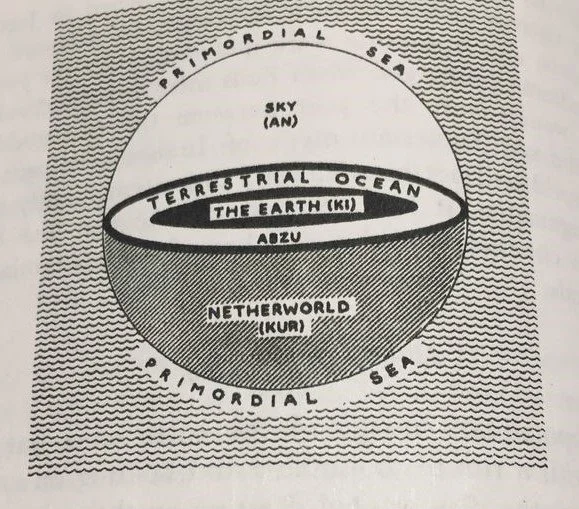
The people of Sumer had a cosmological model for reality which appears to be simpler than the models we have developed today. It was essentially two-sided with one half occupied by the living and the other half occupied by the dead, although both domains were ruled by the gods. However, it was possible for the living to interact with the dead through a kind of bridge or tunnel (an 'erech' [Ref 2]), which facilitated the joining of the two realities. At the entrance to this tunnel was a gate, and it would not be inappropriate to refer to this as a form of Stargate, since it was through these gates that the Sun and the Moon would pass. Indeed, we learn that when there was a new moon it was considered that the Moon was taking its day of rest in the Netherworld.

Sumerian Cosmological Model

During the daytime Shamash would rise high into the sky above our heads, moving from East through South towards the West, and this was believed to be him travelling in his Sun Chariot. This also allowed him to observe the world below and the coming and goings of people and so to utilise his divine justice or divine compassion when required. For this reason he can be thought of as an all seeing Omniscient God during the day.

The purpose of Shamash within the Netherworld was to assist the spirits of the dead through a tunnel towards his abode at the extreme western end of the world where the Sun set. Thus, whilst the rising of the Sun represents the re-birth of the world, the setting of the Sun represents the world of the dead. Shamash was important for the people of the living since he afforded an opportunity for them to take care of their ancestors who were dead on the other side, living in dreadful conditions with only dust to eat and dirty water to drink [Ref 7]. These could be provided by the living and facilitated for the dead within the netherworld by Shamash who controlled the gate; music and festivities may have played a role in this process.

In general, it is not possible to travel back through the gate from the dead to the living, and the goddess Inanna is the only one to have ever achieved this [Ref 8]. But if you did, then strict regulations must be observed including wearing no clothes [Ref 2]. Any festivities associated with an interaction between the living and the dead by a temporary joining with the Netherworld would presumably come to a head at the rising of the dawn when Shamash is able to open the gate.

Shamash features in the Epic of Gilgamesh [Ref 9], as Gilgamesh goes on a journey eastward to find Utnapishtim who the gods made immortal. He firstly makes his way towards the Cedar Forest. He finally arrives at two high mountains called the Twin Peaks "their summits touch the vault of heaven, their bases reach down to the underworld, they keep watch over the sun's departure and its return" [Ref 9]. There the scorpion man tells him that "no-one is able to cross the Twin Peaks, nor has anyone ever entered the tunnel into which the Sun plunges when it sets and moves through the Earth" [Ref 9]. Gilgamesh is told that he has 12 hours to run through the dark tunnel as fast as the wind before the Sun sets and enters. In some versions of the Epic Shamash is said to set over the twin peaks of Mashu. In the poem Inanna's Descent to the Netherworld it states that within the Netherworld there is a place described as a 'lapis lazuli mountain' [Ref 2].

In some ways Shamash at the rising of the Sun is similar to the Hindu god Vishnu the preserver and at the setting of the Sun is similar to Shiva the destroyer. Together these are a part of the three-form Trimurti since they are connected by Brahma the creator. Similarly, it could be argued that the Sumerian cosmology is also a trinity since the dead and the living are connected by the bridge or gate that is facilitated by Shamash. This similarity may not be a coincidence given that Mesopotamian cultures conducted trade with the Harappan cultures in the Indus Valley [Ref 10] which borders modern day Pakistan and India and with trade often comes a sharing of ideas which can work either way.

Finally, we note the Cuneiform symbols for Shamash which featured in the second cylinder seal image above an is also shown below. Although called Utu in Sumerian he is also known as Samas which is made up of the Akkadian logogram. Samas comes from the Akkadian word for Sun Samsu [Ref 11]. The figure below shows a symbol for the Sun but on top of a grid-like symbol, which speculating may be the symbol of the scribe responsible for describing the journey of Shamash. The right hand figure below appears to depict a 'star spade' and it has the appearance of the Sun rising up on the end of a spade since Shamash is cutting his way to the dawn. However, the lower part of the symbol is also very similar to the Cuneiform symbol for 'day' and so this may signify the rising of the Sun for a new day (Utu-e3) [Ref 12] as Shamash awakes.

Cuneiform symbols (a) a star and grid shape (b) a star spade.

The Sumerian cosmology was fascinating and how they saw their gods intimately linked to the celestial objects in the sky. It was the basis of our first astronomy and yet they appeared to have a sophisticated understanding where the Sun, Moon and Planets were given a real personality, character and role. Our version of what the cylinder seals really meant is part speculation, but it is our best guess after centuries of studying these unique artifacts, which on face value, appear to be highly strange and it is no surprise to those who may not be familiar with the traditions of this ancient culture to misinterpret what they are seeing.

Yet, when looking at the images of Shamash, it is difficult not to impose our modern knowledge of technology on to their depictions and at least ponder the possibility that the ancients may have mastered flight and that perhaps, it is our interpretation that is wrong. One might be attempted to adopt this interpretation since there are other depictions in the Near East that also point towards a flight capability, such as with how Zoroaster in Zoroastrianism is also shown in what appears to be a winged vehicle. This would be pure speculation of course, yet it is fun to imagine such possibilities.

Unless evidence emerges to suggest otherwise, for the present we are left to the interpretation of archaeologists and those that perform the transliteration of this most ancient world. In that what we are seeing here is the depiction of the Sun rising in the East and setting in the West. In reading this article, I hope that like me, you never look at the Sun the same way again, particularly as it sets in the West on the horizon. For according to the Mesopotamian beliefs, it is the land of the ancestors and where we go when we die.

References

  1. https://en.wikipedia.org/wiki/Utu (last accessed 15 June 2021).

  2. S N Kramer, The Sumerians, Their History, Culture, And Character, The University of Chicago Press, 1963.

  3. https://www.britishmuseum.org/collection/object/W\_1891-0509-2553 (last accessed 15 June 2021).

  4. https://www.britishmuseum.org/collection/object/W\_1873-0901-1 (last accessed 15 June 2021).

  5. https://collections.louvre.fr/en/ark:/53355/cl010147553 (last accessed 15 June 2021).

  6. https://collections.louvre.fr/en/ark:/53355/cl010149674 (last accessed 15 June 2021).

  7. K Kelly, The Netherworld, Death and Burial, The First Civilization: Mesopotamia 3500-2000 BC, University of Oxford Distance Learning Course, June 2021.

  8. Inana's Descent to the Nether World: Translation, The Electronic Text Corpus of Sumerian Literature, https://etcsl.orinst.ox.ac.uk/section1/tr141.htm (last accessed 15 June 2021).

  9. S Mitchell, Gilgamesh, A New English Version, Profile Books, 2005.

  10. H Crawford, Sumer and the Sumerians, Second Edition, Cambridge University Press, 2004.

  11. ref. oracc.museum.upenn.edu/amgg/lisofdeities/utu (last accessed 15 June 2021).

  12. J A Halloran (Editor), Sumerian Lexicon, A Dictionary Guide to the Ancient Sumerian Language, Logogram Publishing, 2006.


The Minoan Civilization and the Richat Structure

In recent years, a very strange looking structure has received attention as being a possible location for the mythical City of the Atlantean Empire; a civilization discussed by Plato in his great works Timaeus and Critias, and also recorded within the Egyptian mythology of Horus recorded at the Temple of Edfu in Egypt. We are referring to the Richat Structure, also known as the Eye of Africa. This idea has been particularly promoted by the Content creator Jimmy Corsetti.

We won’t go through the various lines of evidence in this article and readers should seek out the podcast Bright Insight for good coverage of this subject. Although we will summarise that the structure bares striking similarities to the claimed City of Atlantis as described by Plato. This includes the vicinity to the Pillars of Hercules at the Straights of Gibraltar, having a watery entrance for ships to sail straight up to the City, a ring structure with intermediate regions of land and water and the proximity to the Atlas mountains in the North. It was said to be surrounded by great fertile plains.

It is unknown how the Richat structure was formed, but it is believed to be a result of some volcanic process. Yet we should also acknowledge that it is unique in that there are no other structures like it present on the Earth. It is approximately 40 kilometres in diameter which is around 25 miles. For the ring structure, it was said that there were three rings of water and two rings of land that surrounded the city centre. This then connected to a canal which connected to the Sea.

In the account by Plato, approximately 9,000 years ago there was a great war that took place after the Atlanteans had conquered parts of Libya and Egypt but were eventually defeated by the defending Athenians - residents of ancient Athens in Greece. If the Atlanteans ever existed, they were certainly a Naval power, and this gave them the flexibility to move up and down the Mediterranean at ease for the purpose of trade or war.

The problem is, there is very little surviving evidence to support the existence of Atlantis, and this presents an issue for historians. Since their existence may have been so long ago, it is very difficult to find that evidence, and if it does exist it is likely underneath the Sea consistent with the ocean levels for what they were during their existence. However, might we search for evidence of their existence by an examination of other cultures that emerged in this region and in particular any unusual artefacts they may hold?

Are there other ancient Naval cultures we might turn to in our search for a connection? There is, and one of those is the Minoan civilization centred around the island of Crete which is around 3,260 square miles in area, and historians credit them with the first civilization in Europe. It is believed their society existed in the periods 3100 BC to 1100 BC. Since their base of operations was around a large island, to conduct trade with other cultures they would had to be a sea fairing society.

Not a lot is known about their cultural beliefs and societal organisation. They were known to have two writing systems called Cretan Hieroglyphs and Linear A, neither of which has been fully deciphered. They did not call themselves Minoan, and that was a later term phrased by an archaeologist in reference to King Minos, a ruler of Knossos, which is one of the sites that still exists in Crete with its famous Palace of Minos. In addition to the Island of Crete, the Minoan civilization had settlements around a group of islands in the Aegean Sea. These are all locations of critical trade routes for sailing vessels to Africa, the Middle East and Europe.

It is also interesting because the oldest evidence for anatomically modern human habitation in Crete dates to 10,000 - 12,000 years before present, which lines up with the Younger-Dryas catastrophe (12,900 - 11,700 years before present) and so is at least suggestive of a connection. In other words, is it possible that the people who founded the Minoan civilization, were the survivors of an ancestry that went back to an earlier time when the climate went through an abrupt change. There is also a DNA haplogroup connection of people today in Crete to a group from Anatolia (modern day Turkey) - which is also the location of the Gobekli Tepi site.

An aspect of the Minoan culture that is interesting is their ceramics, with beautiful patterns of triangles and spirals. The artefact below is one such example that this author stumbled across known as Philistine Bichrome Pottery and there are suggestions this type of design may have had connection to the Minoan culture, and also the Mycenaean. This particular piece was believed to have been manufactured in ancient Canaan, a region of the Southern Levant in the Ancient Near East which encompasses Egypt, Iran, Anatolia, Armenia, the Levant and the Arabian Peninsula. This piece, possibly dates to around the 12 Century BCE.

Philistine Bichrome Pottery

The reason this piece attracted my attention, was because of the unique circular design on the surface. In particular, the design is not a set of concentric circles, but instead they are offset with an asymmetry about the centre. One is forced to speculate, that in this design, are we seeing a pattern that preserves the geography of a once special place. In particular it has an interesting similarity to the Richat structure, as shown below when compared with a geographic image.

Comparison of Richat structure with Minoan Pottery design

For any comparison between the pottery and the geographic site of the Richat structure (as a claimed City of Atlantis) to be feasible there are several features that must be present in both. The first is a central offset region to represent a city centre, and this is present in both, although more prominent in the pottery. The second is the requirement from Plato that there would be three rings of water and two rings of land. This certainly appears present in the Richat structure, and although there are four rings in the pottery, it is perhaps not so clear what they might represent. But if such a city did exist, and the memory of it was passed down over time, could perhaps it have been preserved in the legacy of the Minoan pottery and other cultures?

This is all speculation, especially since the evidence for the City of Atlantis is not strong in the first place. Yet, other than conducting extensive underwater expeditions to retrieve artifacts and study monuments, perhaps the only way we might build a case for its existence is to find links with the other civilizations that sprang up after it. As a Sea fairing culture, with a history of having the people first appear in the Mediterranean at a time that coincides with a major catastrophe such as the Younger-Dryas, the above is at least food for thought. The Minoan and Mycenaean civilizations are certainly candidates for where such a link may be found.

Speculations on a Quantum Observer Dependence to UAP Orbs

The following article is highly speculative and contains several conjectures without proof. These are not suggested as hypothesis, but merely ideas from which after further thoughts hypothesis may emerge. This is written to spark conversations on the likely physics basis of the objects we will be examining. For any fellow physicist reading this, you are asked not to take this too seriously, but more as a conversation piece from which further discussions may be facilitated. The author fully acknowledges that all the ideas suggested below may be wrong and there are alternative ideas which may be considered instead, for which you are encouraged to propose if insights into this strange phenomenon are to be elucidated. In essence, the article below is an attempt to bring together several ideas in order to construct a synthesis of understanding as to the physics nature of the objects under examination - widely known as orbs, a frequently observed aspect of unidentified anomalous phenomena (UAP).

As mentioned in a previous post, since this author has seen both plasma like orbs and spherical metallic looking structures, we have made the assumption that these are one and the same object but viewed under different conditions, particularly pertaining to the day or night, but also what energy state the orb is in. We have termed this an orb equivalence principle (described in a previous post <Read Here>) and we fully accept that this connection between what may be two separate classes of objects may be erroneous. Yet it was made to see where such thinking might lead.

One of the topics that has come up in association with UAP orbs is a connection to the conscious observer. This might either imply that orbs are themselves manifest of intelligence, or they are a technology that is constructed by an intelligence yet has an ability to connect to the observer through this technology. For this to be true, there would have to be a quantum connection between the observer and the observed. There is no evidence for this in physics, although one of the interpretations of the quantum theory from Niels Bohr was an observer dependence to any measurements and so the idea should be considered, even if we cannot prove it. This is also known as a Copenhagen interpretation.

Such a phenomenon associated with orbs would apparently be termed Psionics - although this author is not personally aware of any physics theory that would support such a fantastic notion. We know that the American intelligence established had a project in the 1970s called Project Stargate, which investigated the potential for psychic phenomena in military applications and this author knows some of the people associated with that study. This was also related to an earlier Project Sun Streak <Read Here>.

The idea of a conscious observer connection to the observation of orbs, struck a chord with me since during the observations I have personally experienced I did sense an observer dependent phenomenon. In particular, with the daytime sightings I had, on each occasion I tried to grab an optical aid, such as binoculars or a phone camera, but when I did so the object disappeared. This gave me a sense that it was aware I was observing it, and I also felt that I was aware, that it was aware - an instinct I cannot explain or justify but is one I experienced. On the second observation for example, as I saw the object I was approaching a tree tunnel and had the presence of mind to slowly get my camera ready in order to try and take a photo, since I sensed that if it saw me doing so it would vanish (as it did). But why did I act in that way? What gave me the feeling that I should take such a precaution since I had no real basis for thinking so? Indeed, this perception contradicted the fact that other observers around the world have apparently been able to take perfectly good photos of similar objects so why would I be any different? I can only report how I felt at the time.
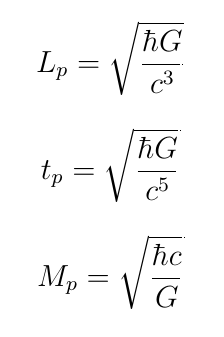
This is all an act of high strangeness indeed. Although I admit this is a purely subjective interpretation, I cannot deny the possibility of a Psionics related hypothesis, even if I personally find it absurd from an objective measurement point of view. For example, I have never been convinced by the claims of remote viewing and I have expressed my scepticism to those in the UAP community. This is because I have no idea how this would work in practice, but if it did, we can surely say that it would likely have a basis in quantum mechanics; such as in the probability of a particle (through its wavefunction) to exist outside of its potential well.
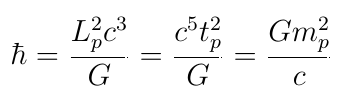
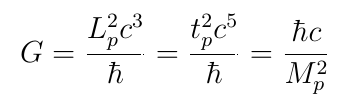
In addition, the idea of a quantum mechanical interpretation to the phenomenon has also made me think about a different idea to explain the flight characteristics of objects. What if an object could behave like a particle with mass or a particle without mass and so move between these two extremes? This way, when we see characteristics indicative of instantaneous acceleration or cloaking, might we in fact be looking at motion that is manifest of a quantum nature, and it merely appears to us to have these characteristics as the external observer, but for example when the object vanishes this would be consistent with a significant increase in the uncertainty in the position of the object. This is opposite to the current thinking that supposes that any such hypervelocity motion would be associated with gravitational effects described by an updated version of the General Theory of Relativity.

There are two uncertainty laws in physics pertaining to measurement which we now define, where dx is the uncertainty in position, dP is the uncertainty in momentum, dE is the uncertainty in energy of a quantum state and dt is the uncertainty in time in terms of the duration of a quantum state or the pulse duration of an energy excitation. These are given by inequalities as a function of the Planck constant h as follows:

In terms of the first uncertainty equation, when an object is constrained to a small box and not undergoing extensive motion, we can say that its position is well known (dx —> 0) and all of the uncertainty is in its momentum (dP —> infinity). Conversely, when the object appears to undergo instantaneous acceleration all of the uncertainty goes into its position (dx —> infinity) and its momentum becomes well defined (dP —> 0).

In terms of the second uncertainty equation, when an object is constrained within a small box and not undergoing extensive motion, we can say that its energy is well defined (dE —> 0) and all the uncertainty is in its pulse duration (dt —> infinity). Conversely, when the object appears to undergo instantaneous acceleration all the uncertainty goes into its energy measurement (dE —> infinity) and its pulse duration becomes well defined (dt —> 0).

For any particle the total energy is given by the sum of the potential energy V(x) and the Potential energy T, where the two terms are defined within a sum by:

So that for a massless photon where m = 0 we find that:

The momentum is given as a function of the frequency v, wavelength lambda and Planck's constant h so that:

Therefore the energy is given by:

For a particle with mass, in the non-relativistic limit the total energy can be approximated by the first two terms in a series expansion:

The first term is simply the rest energy. The second term becomes the classical kinetic energy equation when we substitute for the mass and velocity in the momentum. So that when the particle is at rest (p = 0) the total energy is approximated by the kinetic energy:

For completeness, we should say that in quantum mechanics the total energy of a particle is represented by the time-independent Schrodinger equation:

Where H-bar is the Hamiltonian operator, psi(x) is the wavefunction of the particle and E is the total energy eigenvalue. Then written in one-dimension the wave equation is given by:

The exact form of the total energy equation depends on what case one is considering. This includes classical, relativistic and quantum scenarios. We do not go into any further detail here however and instead focus on simple equations to garner insight. But in this context a particle’s wavefunction cannot be simultaneously localised in both position and momentum space, and so if the wavefunction is narrowed in position space such as to determine an accurate position, then this requires that the wavefunction in momentum space is spread out.

We can then take this standard quantum theory for measurement and apply it to the objects that are seen, and we propose to states on a continuum known as a lower energy state and an excited state. The lower energy state is likely to be manifest of a slow-motion object with a dull luminosity towards the infrared. The exited state is likely to be manifest of a faster motion object with a bright luminosity towards the visible light, then ultra-violet and even x-ray wavelengths in terms of any expected emission.

In the table below an attempt is made to quantify these two states of lowest to highest energy and what the expected properties will be, as well as an excited state in between. In particular we assume that at the extremes of the lower energy state (perhaps towards some ground state) the objects behave similar to a particle with mass, and at the extremes of the higher energy states the objects behave similar to a particle with no mass.

Within this paradigm, when in an observed mass configuration, the objects appear as material objects and may even appear mundane. When undergoing some rapid vanishing act, the objects have an essentially zero rest mass and are manifest of pure energy - that is all of their mass is converted into energy. Between these two states are other modes of operation along a line of a continuum of performance properties, and with characteristic emission wavelengths for the light that appears visible to an observer and this depends on the degree of excitation above a minimum ground state level.

For me personally I have seen three types of objects. (a) Spherical looking objects in the daytime under slow motion that looked very much like a material you could touch, possibly metallic but also possibly some composite (b) white objects at night shining as bright as the stars (c) slow moving yellow/golden orbs usually on their own at night. Each of these may represent the same object but under different regimes of operation mode. The specific mode they are in will determine how they appear, the brightness of any light emission and the colour of that light.

It is interesting that the author has personally observed these three states, and collectively they represent three separate data points from which has enabled this synthesis. Without those observations such speculations would not have been made. The author has also relied on the observations of other witnesses across the globe in the construction of this model, which is put together as a conjecture for consideration. This is the conjecture formed by this author and we will call it the Quantum Evanesce Principle or QEP, where an object can exist between a state equivalent to a large particle with mass analogous to an electron, or one that is massless and analogous to a photon.

Speculating further, at very high energy, since all of the mass is converted into energy, it is no longer constrained by the limits of special relativity and so can for example travel at the speed of light and for which in its metric time has no meaning and the spacetime interval between two points is zero, otherwise known as a null interval, where ds^2 = 0. This means that when in this mode Lorentz contraction and the effects of time dilation would not apply, provided the orb was travelling at a speed v = c. To do this, the orb would have to instantaneously transmute from an object mass at low speed, to an object with no mass at high speed, and then into one that is superluminal. Otherwise, to merely approach c would imply an extreme degree of length contraction. Once the object can travel at a speed equal to the speed of light, all distances along its path would collapse to a single point and so it would instantaneously arrive at its destination. In principle, this means that such objects could travel here from anywhere in the Universe. Similarly, since there would be no time dilation associated with the journey, no time would have elapsed.

We might take this idea further and suppose that the orbs can operate like atoms in atomic energy levels, in that they have a fundamental ground state and are able to become excited into higher energy states. Since these higher energy states may be unstable there would be a limit to how long they could remain in those states and eventually would have to decay back down to a fundamental ground state level, where they could remain for an indefinitely long time and where the uncertainty does not apply since they were now governed by classical laws.

The colours of the orbs shown in this graphic are arbitrary and not in any particular order. A full study of historical observations would be required to determine the likely regime of EM emission for different types of orbs.

If the orbs act in a way that is analogous to atoms, then we might also have an explanation for what some observers report as erratic behaviour, where the objects appear to appear and re-appear at different locations, giving rise to the perception of instantaneous acceleration. But instead, we might be looking at the equivalent of an interference pattern. For an individual particle like an electron, when it passes through the holes in a two slit experiment, an interference pattern is traced out, since we cannot predict where in the pattern any individual electron will land. Similarly, it may be that the orb momentarily acts like a wave, and when it re-materialises so that it is again acting like a particle, there is no certainty about where it will emerge, and potentially it is on any spot of an interference pattern. The question is, what would generate the equivalent of the two holes in the first place to cause the interference pattern, and this would have to be a capability of the orb technology itself.

One suggestion may be that the orbs have the capability to open some higher dimensional worm hole for an instant, perhaps from the quantum vacuum of space, analogous to an Einstein-Rosen Bridge as imagined in 1935 by Albert Einstein when he was trying to describe the transport of electrons through a field theory. But in the opening of these higher dimensional constructs, might they act like the effective slits, from which the wave passes and emerges on the other side as an interference pattern. We acknowledge this is wild speculation.

But wait, you might argue that this is impossible since quantum effects do not have a visible influence over macroscopic objects. This is mainly due to the incredible small value of the Planck’s constant. This has a value of h = 6.626*10^-34 Js, or a reduced Planck’s constant value of hbar = h/2pi = 1.054*10^-34 Js. The Planck constant is also known as the smallest possible quantum of action or energy transfer in a physics process, and it is related to the energy E and frequency f in a light wave through E = hf.

Since Planck’s constant is extremely small any uncertainties in measurements will also only be noticeable at microscopic scales such as at the atomic level. But for a macroscopic object the uncertainties would be so small they can be considered negligible when compared to their mass and momentum. At least this is our experience and why quantum effects do not permeate into the macroscopic world or it would cause chaos for our ability to exist and survive based on reasonable projections of the future.

Consider for example the case of a m = 10 kg spherical orb moving at a velocity of v = 10 m/s but with an uncertainty in its velocity of order dv = 10^-10 m/s. The uncertainty in the momentum would be given by mdv = 10 kg * 10^-10 m/s = 110^-9 kg m/s, and the uncertainty in its position would be given by dx > h/(2pi*dp) = 1.054*10^-24 m. Since this is such a low value it cannot possibly have any influence on a macroscopic object.

The idea that a macroscopic object is not influenced by the characteristics of their quantum states is known as quantum decoherence, since the superposition of states that characterise the quantum system become definite states that are entangled with the surrounding environment and any quantum effects are averaged out and therefore negligible. For this situation to be reversed, where quantum effects were influencing macroscopic objects, they would have to take on the property of quantum coherence. How could this possibly be achieved?

Particles can also be viewed as waves, as originally proposed by Louis de Broglie in 1924 and within this perspective matter can be seen as de Broglie waves, where the wavelength is associated with a particle momentum p and the Planck constant lambda = h/p. This insight is what led to the development of particle wave equations such as by Schrodinger in 1925.

Whilst an atomic sized object will be characterised with wave-like properties, its wavelength will be extremely small when compared to the large mass of the object, as shown by the de Broglie equation for wavelength lambda = h/p = h / (m x v). But the de Broglie wavelength for quantum particles is very small, such as at the pico-meter scale, where 1 pico-m = 10^-12 m and this is known as the atomic scale. Since for macroscopic objects the mass is even greater, and the wavelength is inversely proportional to the mass, the greater the mass the smaller the wavelength, and so it becomes so small that it is impossible to observe any interference.

What if Planck’s constant could be changed for an instant so that quantum effects are visible on a macroscopic scale? This would have profound implications for phenomena such as the Photoelectric effect for quantised energy, blackbody radiation emission, the scattering of x-rays by electrons in Compton scattering and quantised energy levels in atomic spectra. Yet, what if it was possible to artificially change the value of the Planck’s constant so that a macroscopic object would be subject to quantum laws in a visible way? Let us consider this as a thought experiment.

Again, let us consider a 10 kg mass moving at 10 m/s and let us say we want to observe an uncertainty in the position of around dx = 1 cm = 0.01 m. The uncertainty in the momentum would then become dp = hbar / (2dx) = hbar / (20.01) = 5.27x10^-33 kg m/s. Since the momentum uncertainty is also related to the velocity uncertainty through dp = mdv, then dv = dp/m, so that for a 10 kg mass we get dv = hbar / (2 x 0.01m x 10 kg) = 5.27x10^-34 m/s. Then for the velocity uncertainty to be noticeable, it would have to have a value that exceeds the velocity we are examining, so equal to or greater than 10 m/s so that

This is an enormous value compared to the present value which was cited earlier. It is also worth noting that the Planck’s constant is linked to gravity through some fundamental units in terms of the Gravitational constant G and the speed of light c. Using the reduced Planck constant, this leads to the definitions of the smallest scales known as the Planck length Lp, Planck time tp and Planck mass Mp as follows

Speculating, if it was at all possible to change the speed of light, the gravitational constant, or the Planck time, Planck length or Planck mass, even for an instant, then this would give rise to a different value of the Planck constant, i.e.

Alternatively, if we wanted to equate these terms with respect to the gravitational constant, we would find the following forms

The gravitational constant has the current value of G = 6.674x10^11 m^3/kgs^2. If we assumed the reduced Planck mass calculated above as a macroscopic value at hbar = 0.2 Js, and kept the speed of light the same and the Planck mass the same this would lead to a required value for the gravitational constant of G = 1.266x10^23 m^3/kgs^2, which seems absurd but that is what we compute. Alternatively, to have the same effect the Planck mass would have to be increased to a value of 947,833,923 kg or approximately 16 orders of magnitude higher than its current value.

These extreme orders of magnitude changes suggest that if the orbs were operating in a quantum state but on a macroscopic level, then they would likely be using some other mechanism that what is described above. To my mind, it suggests a revision to our spatial scale in terms of our fundamental definitions of the Planck scale, and this may be related to higher dimensions, perhaps where the Planck values are distributed over several dimensions, so that the artificial manipulation of one is made easier than suggested by the above calculations.

To perform manipulations of the sort described above, this would likely suggest some understanding of a quantum description of gravity, since it would require an ability to dial down the rest mass of the object, where all relativistic limitations to flight are removed. In relativity, as an object with mass undergoes relativistic speed, it will also undergo a relativistic mass increase, as well as time dilation and length contraction. But if you can dial down the rest mass to a zero value, then the object will perform like a photon. It will not undergo time dilation or length contraction, and its position will effectively be spread out since it is everywhere and everywhen simultaneously.

How this would be achieved is anyone’s guess but would require an on-board technology that likely has access to the neutral quantum vacuum and possibly hyper dimensions of space. One idea was published by a friend on mine years ago, Dr Richard Obousy. In his doctoral thesis [“Investigation into Compactified Dimensions: Casimir Energies and Phenomenological Aspects”, Baylor University, 2008] he proposed accessing the quantum vacuum and increasing the energy density of one dimension of space, so that the other dimensions would be inflated. This remains the only proposal I am aware of for how to produce something like a warp bubble type effect and is an original idea; although I am out of date with the current literature. It relied on a connection between Casimir Energy, compact extra dimensions of space and the Cosmological Constant, where the constant was equated to the vacuum energy density:

The assertion is that general relativity shows that within the physics of a compactified space, this effects the expansion rate of a non-compact space, so that a fixed compactification radius for one dimension can result in the expansion of the three-volume due to Casimir effects. That is to say the act of contracting a dimension of space is able to inflate the remaining dimensions. Obousy further calculated that for the local Cosmological constant this is characterised by 10^42 J/m^3, and the amount of energy required to be injected locally, assuming a 10 cubic metre sphere, to inflate a dimension would be given by

Alternatively, if we were to assume a 1 m cubic sphere (like the orbs discussed in this article) then energy requirements would still be 10^42 J. Clearly such a large amount of energy is beyond our current civilization technological capability. Indeed, it is unlikely that the orbs are also accessing the level of energy and might suggest they are using a mechanism based on physics which is currently unknown to us

Since these objects may be able to operate in this manner, this may imply they are unpiloted and autonomous drones of some form but manifest of high intelligence. This would suggest they operate under different conditions to other objects that have been observed, such as saucers, which may be piloted and still capable of hypersonic velocities. Since several observers have seen the orbs being deployed from saucers, this would support the idea that they are some forms of sub-probe deployed by a piloted craft.

In summary, we do not know the origin or the nature of these orb-like objects. But it is the speculation of this author that they are likely an intelligence and consciously aware technology. They are also likely not from our world, and one of the considerations for this is the extraterretrial hypothesis. In addition, they likely have a function in being here and the different types of orbs that have been seen likely relates to the different functions of operability. Understanding this, may give significant insight into their mission and purpose.

To derive a complete model, similar to the one suggested above, a comprehensive survey would be required of all orb observations and their characteristic physics properties to include brightness, luminosity, colour, size, speed and in the context of the background conditions. This data could then be assembled into a form of ‘taxonomy’ (for want of a better phrase) and then the relationship between each object defined. This is a suggested project that others with more time may wish to undertake.