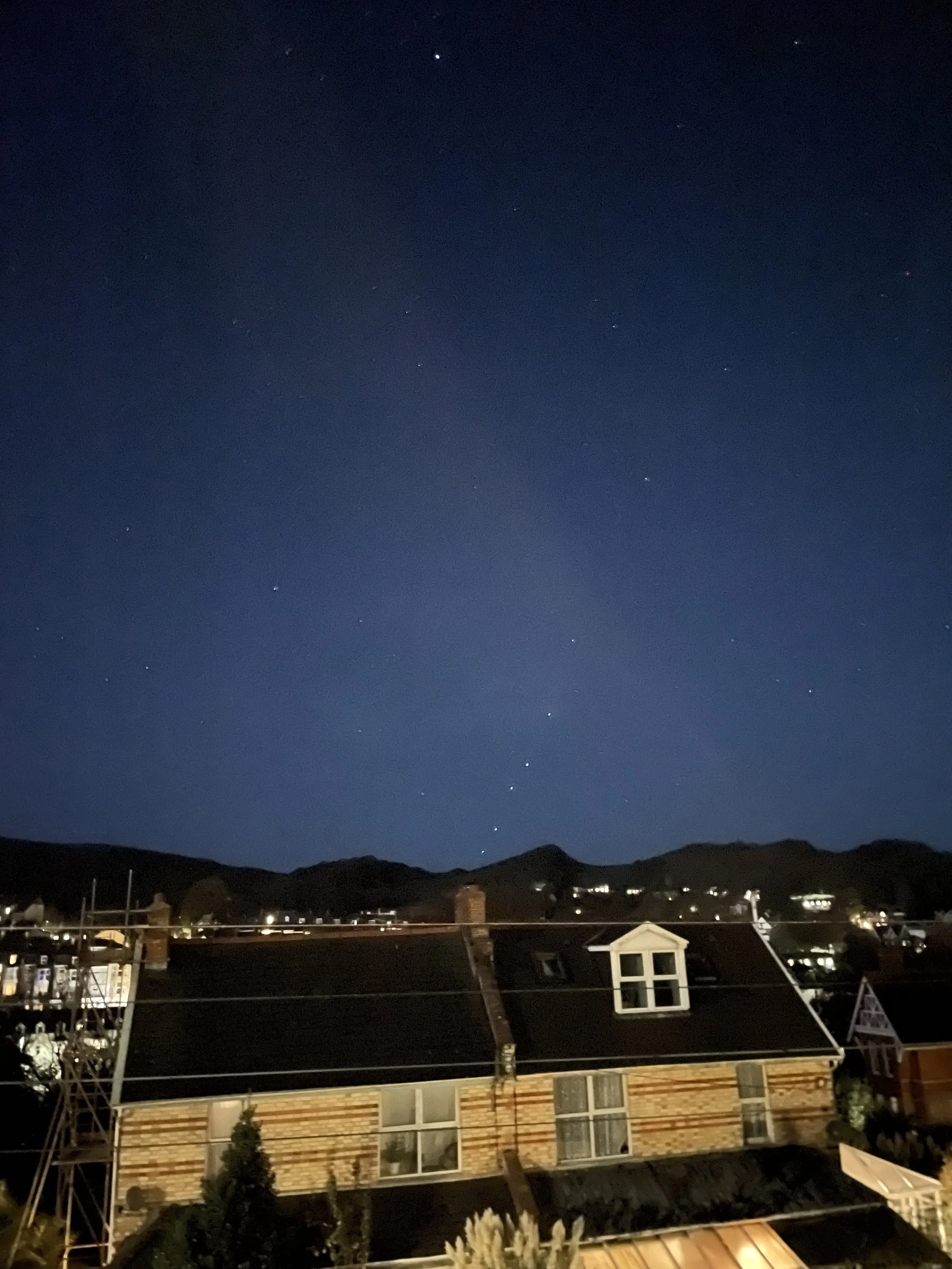
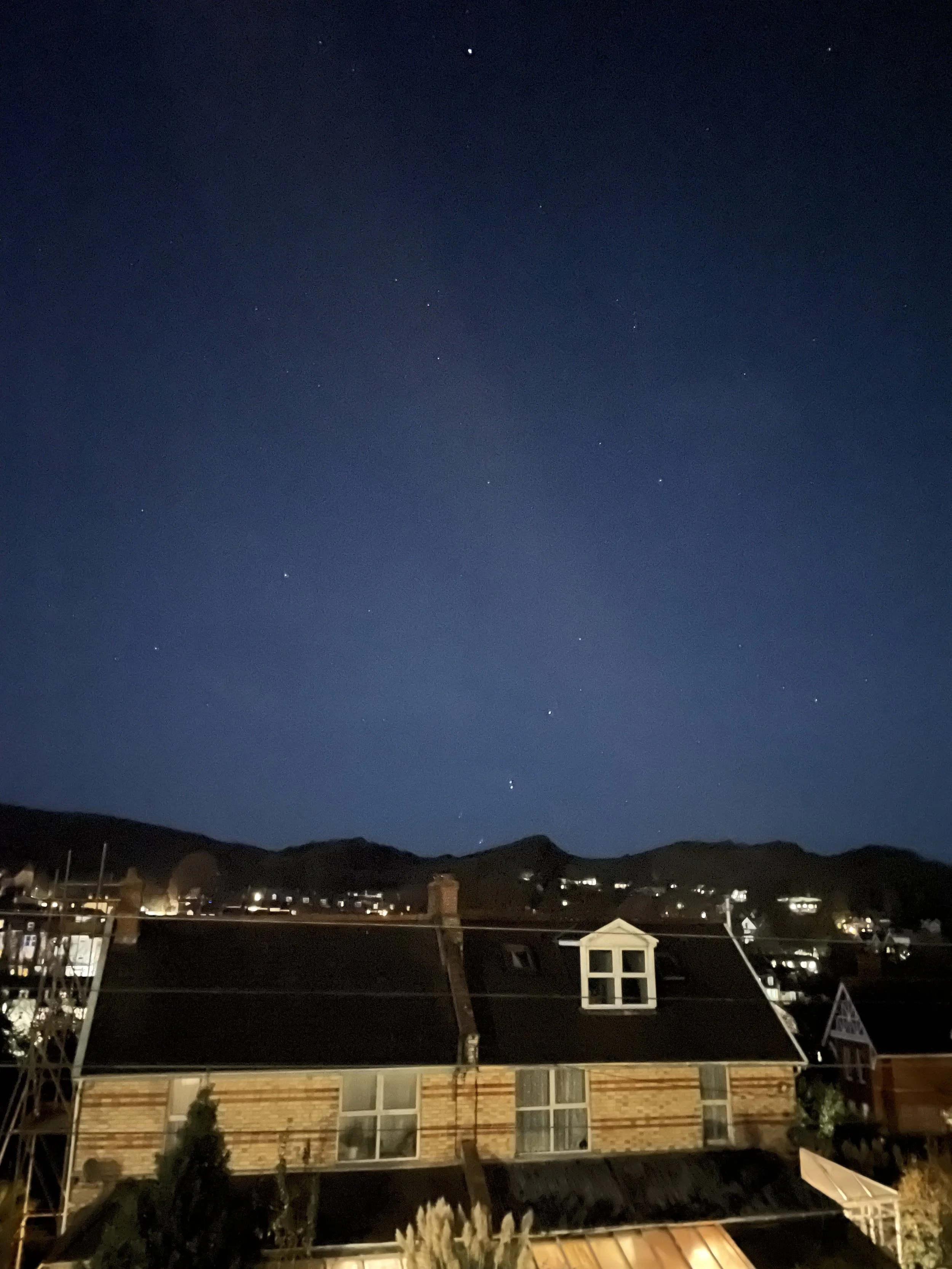
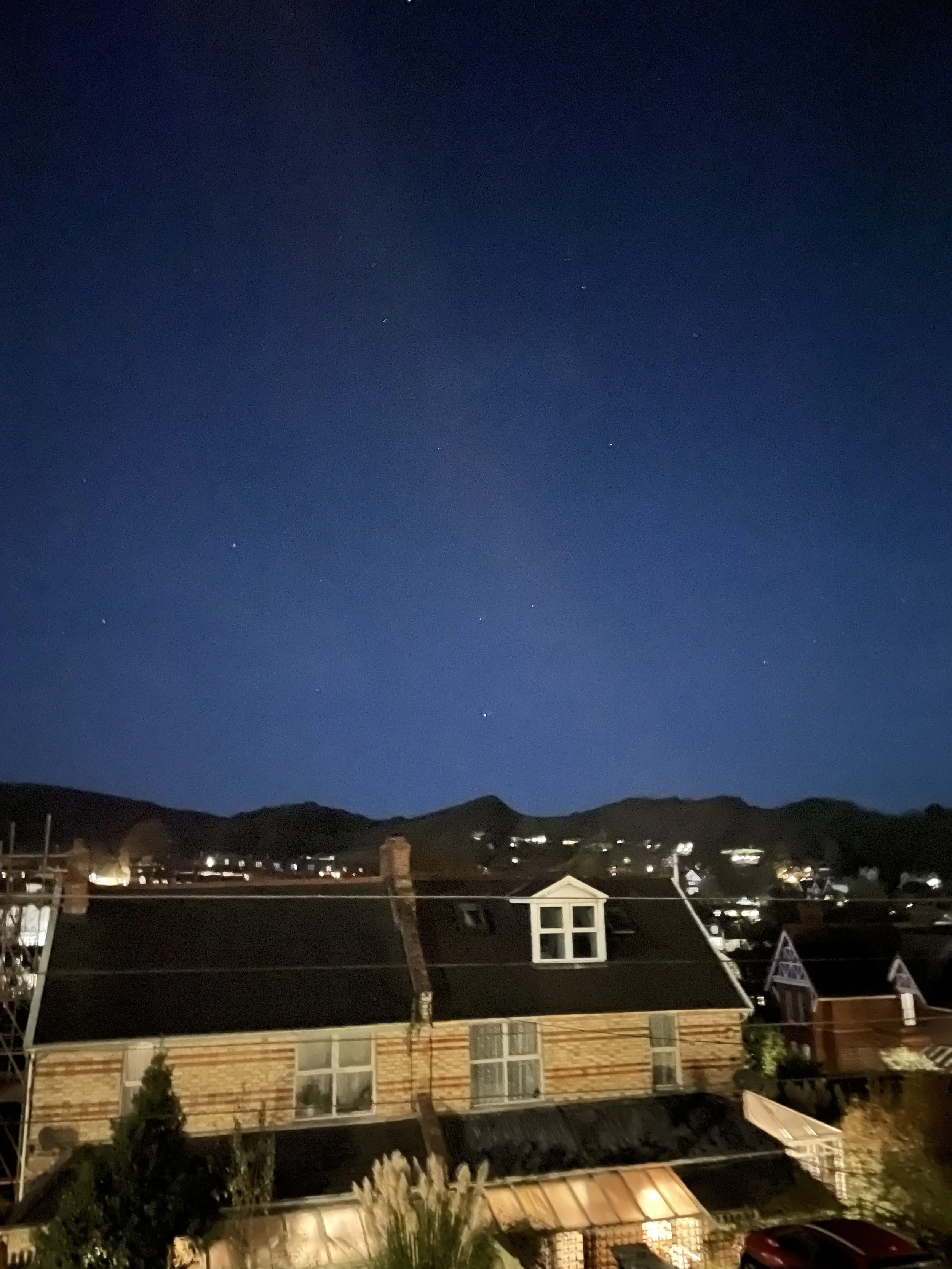
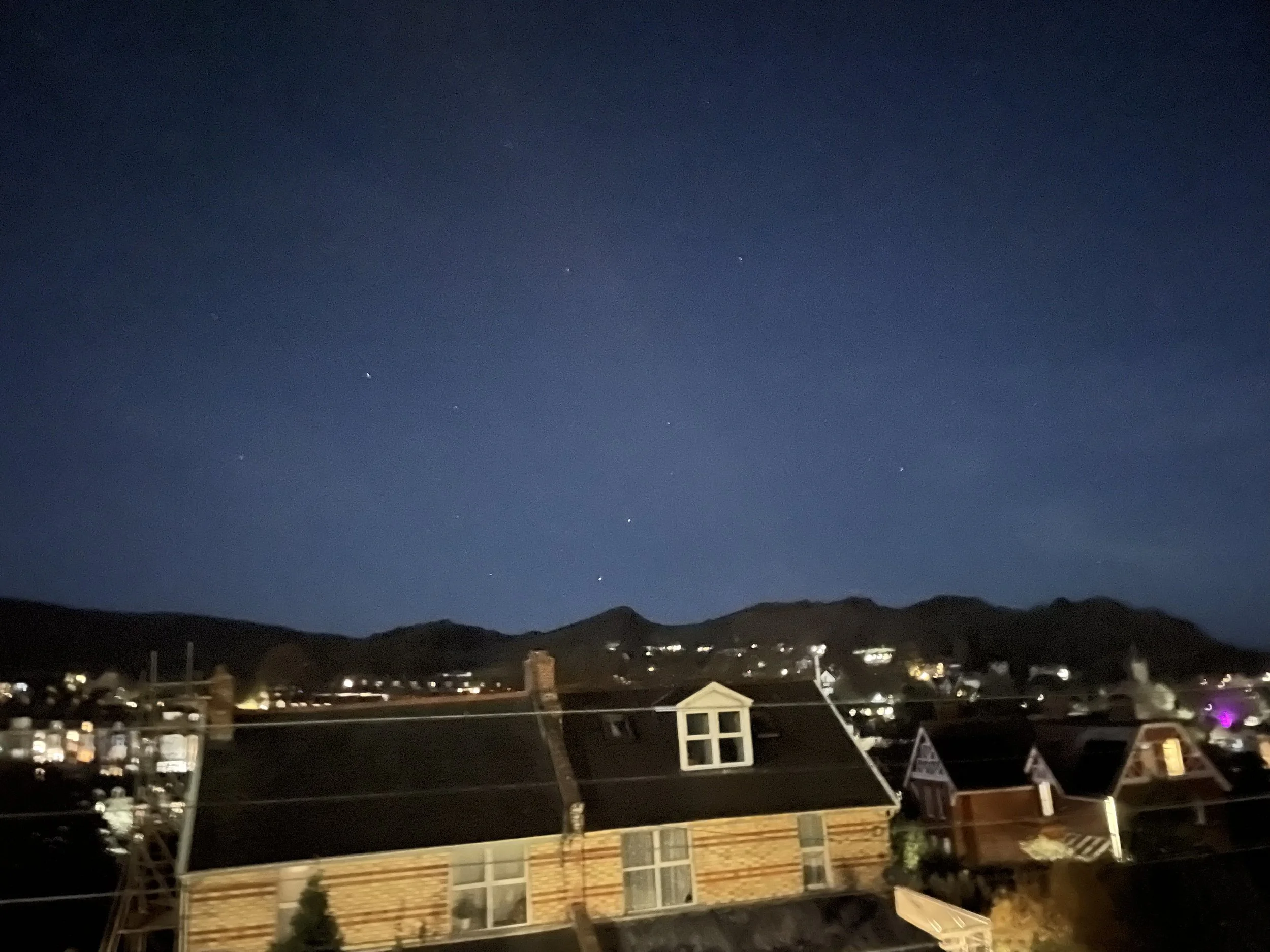
The Rule of Three in UAP Orbs

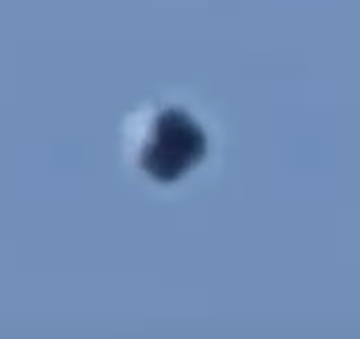
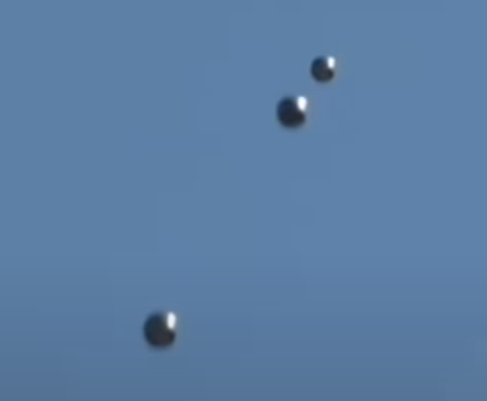
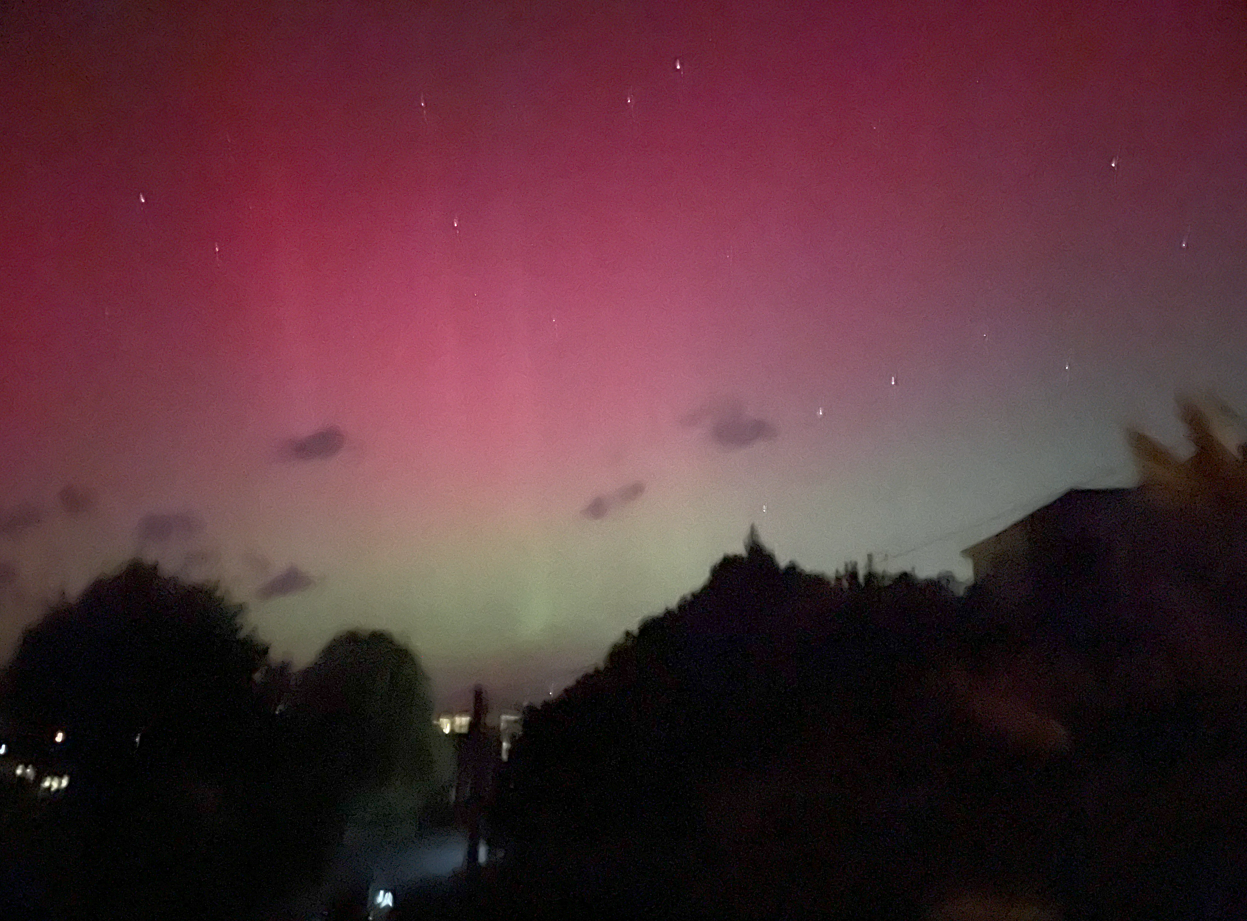
In the previous articles we have discussed UAP orbs, that is one of the objects associated with Unidentified Anomalous Phenomenon or UAPs. An unusual characteristic of the observations surrounding these objects is that they often appear in a group of three. Although on many occasions they are also seen on their own as a single orb or as a part of a giant cluster of ten or more. A single object could still be a part of a larger group, they are just split off to perform a specific mission. Similarly, as a larger cluster, they might still be divided into multiple smaller groups of three when the need arises. It is constructive to consider what could be the reason for this on average clustering around a number of 3 objects. Although we preface this article with this is pure speculation on my part. There are several reasons we might consider.

Safety in Numbers: In the animal kingdom, we know that animals will tend to gather in large groups to avoid predators, or so that on the event of a predator attacking, the probability that any individual animal will be the victim is statistically minimised. However, there is very little difference between 1 and 3 for this to be a factor here, especially in the case of an advanced Extraterrestrial Intelligence (ETI) for which we might suppose this is their nature, and for which they are unlikely to have any predators of their own. Although we might speculate that if any individual object got into any difficulty, then the other two objects could come to its assistance as a back-up. For example, if an orb lost its ability to take flight, one orb on its own may be insufficient to lift it to safety, but two orbs may be sufficient. Therefore, we may be looking at a form of engineering redundancy to ensure success of mission or recovery of objects - so that no orbs are left behind.

Forward Operating Stealth: In the military special forces, a Battalion will often use small teams of people to infiltrate an enemy territory or to go ahead of the main battle force as a forward reconnaissance. This team is typically around four in number. However, given that the orbs are often so bright, they do not appear to operate in a highly clandestine way, but on the contrary quite out in the open. Being seen by us does not appear to be a major concern for them, and on occasions they seem to have deliberately aimed for that goal.

Full Spectrum Coverage: Is it possible that each orb has a specific spectrum of capability in operation or performance, but an individual orb does not cover all capabilities. Yet between three of them they would cover all the capabilities. To use an analogy, we might consider the primary colours of Red, Blue and Yellow, from which all other colours can be constructed. Some similar principle could be operating here, and it is only when the individual orbs mix or integrate their capabilities that a maximum performance utility can be achieved. Such a capability might be needed in a defensive scenario for example.

Stability of Manoeuvres: It is well known that a tripod is one of the most stable structures. Is it possible that moving within a gravitational field such as the Earth, that under certain manoeuvres, a stability of flight is achieved when three orbs are able to joined together into a triangular configuration. Think of how on an aircraft will have a requirement to manage the stability in the three axis of Pitch, Roll and Yaw for example. Also, in a classical description of physics, from both Newton and Einstein’s Generation Relativity theory, there are three spatial dimensions of length, width, height or x, y, z, and so this may be relevant. This would not be the case however when we consider higher dimensional field theories such as string theory, which proposes there may be up to eleven dimensions of space.

Natural Optimisation: However, the orbs form, if they are not simple mechanical machines but more analogous to organisms or living structures, then producing groups of three may be a manifestation of this process. In plants, clovers will have three leaves on average as a standard arrangement for capturing sunlight. In nuclear fission, an atom will produce on average two fragment atoms of lower atomic mass. If there is such a thing as a larger source orb that produces smaller orbs, then 3 may be the optimum that results from this process. The physics principles upon which the orbs are based would determine this number.

Parallel Processing: The writer Arthur C Clarke has speculated in his 1968 book Profiles of the Future, that the purpose of life is the processing of information. If we assumed that the orbs were some fundamental components of the structure of reality (such as in a simulation universe) then the orbs may be equivalent to processing nodes, that float around the world recording information. In our own civilization, we have constructed large supercomputers for the purpose of calculating large mathematical problems, but we have found those systems are more efficient and faster if we can parallel process the information, instead of using a series processing system. Could the orbs be leaning on each computationally as a means for processing the information they are gathering more efficiently. Also within the paradigm of a simulated universe constructs, we might view these orbs as the equivalent of repair wardens that maintain and manage reality so that we may inhabit it.

Forces of Nature: We tend to think that in physics there are four forces (if we neglect the Higgs force) and this is gravity, the strong nuclear force, the weak nuclear force and electromagnetism. However, gravity operates on a much larger scale compared to the others and this is why it is described using General Relativity. Whilst the electromagnetic force operates over large distances (infinite) the two nuclear forces are short range. So, three objects could be related to control within these principal three forces. In summary, whist this is also all speculation, the presence of three orbs may be related to the deeper symmetries in the fundamental structure of our universe and the best way to navigate between them.

These are all interesting ideas which can be considered in more detail and then tested against the many observations around the world to see which ones can be ruled out. This then might lead to a good explanation for the rule of three. However, there is another possibility that we might consider and this one intrigues me the most.

Generation Physics: In the field of physics, theories and experiments have demonstrated that there are two main types of particles in the standard model, called Fermions (matter particles like quarks and leptons) and Bosons (force carrying particles like photons and gluons). Yet, the Fermion particles are further divided into three generations of matter. The first generation is up quark, down quark, electron, electron neutrino. The second generation is charm quark, strange quark, muon, muon neutrino. The third generation is top quark, bottom quark, tau, tau neutrino. It is not fully understood why the Fermions have three generations of particles, but there is a difference in mass between them. The first generation forms more stable matter (like protons, neutrons). The second and third generation are heavier and unstable and decay into the lighter first generation particles. It has been speculated that the heavier particles likely existed during the high energy phases of the early universe and may have played some vital role in its early evolution. According to theoretical physicists, the standard model and its associated equations seem complete and consistent under the three family of particles paradigm. There are also reasons in physics to suggest that three generations may correspond to deeper symmetries related to quantum numbers.

Is it possible that orbs exist in some natural state but can for a brief period take on other much more complex states, but then eventually decay back to the original state, the same way that the second and third generation of particles in the standard model eventually decay back to the first generation. In other words, the orbs may only be able to hold a certain configuration for so long before they become unstable and they decay back to a different structure.

One idea that intrigues me is a proposal from the American mathematician Eric Weinstein that the third generation of matter may be an imposter. This is referred to as the Weinstein Impostor Assertion and is a component of his proposed Geometric Unity theory. His suggestion is that under certain high energy conditions (more like those in the early universe) that the third generation might unify with other (so far unknown) particles, which would indicate a different role or origin compared to the first and second generation of particles. I do not have an opinion either way on whether this idea is plausible.

The reason why I think all this discussion about first, second and third generations of matter may be important, is the apparent ability of particles to take on complex forms under the right physics conditions, but those forms are unstable and they decay back to a more stable form. Could it be that the three orbs so often observed are manifest of a complex and higher energy form, but eventually they must return back to their point of origin, where they lose their complex configurations and take on a lower energy state.

This is not completely unreasonable, given that people have reported seeing orbs spitting out other orbs, which is perhaps a process of fragmentation of a larger object. Yet this fragmentation may only be temporary, and they eventually re-combine to form the original stable structure. Provided the orbs are not just mechanical engineering machines, but equivalent to some intelligent living system, this would be my current preferred explanation for the rule of three.

For me personally this explanation would fit since when I have seen a cluster of three at night they were bright white lights. But when I saw an individual orb at night it was yellow/golden and less bright. This implied a different level of energy or excitement.

To take this idea further, some have speculated that the orbs are not just intelligent, but manifest of an entity with a consciousness. An individual orb may have the appearance of an individual consciousness but when it recombines with its original form (3 goes to 1) that individual consciousness may dissolve into a single form. An analogy might be the way people who have undergone a near death experience or using psychedelics report dissolution of ego. I would tend to think of the way that groups of solid ice cube dissolves back into liquid within a glass of water. In which case some form of phase transition may be involved.

A further point that we should mention, but for which I have no evidence, is the claim by many of observing flying discs from which the orbs are often released. If this was the case, then we may have it backwards. Historically, people have been more excited about the possibility of seeing flying discs, but these may simply be the cargo carries and instead what is important is the orbs once released. The single orb may then be the stable state, for which they are contained on the carrying vessel, prior to being released in an excited form to perform whatever function they have. Again, all speculation, but food for thought.

All the above are just ideas, and I have only put this list together since it seems to be a question others are asking - why the rule of 3 on average? - and so I thought these ideas which I have listed may spark some thinking in others as to the reasons. My own preference, would tend towards an explanation that sees orbs exist in a highly complex and perhaps higher energy state for a short time, but then they must decay back to a simpler lower energy state later in which they lose their individual form. More observations would help to clarify these ideas and I also do not have a full picture of the literature.
The City and the Stars

In the story ‘The City & the Stars’ the writer Arthur C Clarke proposes a definition of the ideal machine: that “no machine may contain any moving parts”, which I feel should really be called his 4th law. The central character - Alvin - is different from his contemporaries because this is his first life and in some ways he is responsible for the renewal of human civilisation to come. But Alvin has a passion, to get outside of the city and explore, an almost infectious obsession that drives his every action. Eventually, he is helped by what can only be described as a deliberate and mischievous anomaly in the computer program (called Khedron) that shows him the way. There is a fundamental paradox in the story. The city of Diaspar is a perfect place, but the world outside is not. After a long period of galactic war the city of Diaspar is the last resting place of humanity, protected from any would-be invaders by a large domed shield.

Humanity was once a star-fairing species but has been forced to adopt an insular existence. Diaspra is also a form of dystopia, offering its inhabitants all they could ever want including immortality, but inhibiting their freedom to explore the world outside.

Outside the city is the human settlement of Lys, an apparently technologically less advanced place with no interest in space travel, consisting of mortal people who have perfected mental telepathy. In Lys, Alvin meets a companion called Hilvar and together they explore the planet. Eventually they meet an ancient extraterrestrial creature and his fellow robot that were loyal to their masters - 'The Great Ones'. Their journey leads them to the discovery of a spaceship and they are able to leave Earth and travel to meet a powerful but child-like being of pure intellect called Vanamonde, who can travel through space instantaneously. They establish a telepathic communication with the being. From this encounter they learn the truth of what happened to the rest of the human race and the terrible deeds of the insane being known as 'The Mad Mind', a form of mentality which had been imprisoned inside a black star.

Like much of Clarke’s writing, this story contains a powerful blend of credible science fiction and large ideas which border on the metaphysical. Clarke maintains a perfect balance between these two limits and demonstrates, as he does with many of his other books that he is a corking good writer, as C. S. Lewis once described him. ‘The City & the Stars’ is one of my favourite science fiction novels by Clarke. I left the book wanting to know more, about where Alvin travelled to next.

Like much of science fiction literature, there are stories which contain real parables about our actual society and in particular the two characters Alvin and Khedron are interesting. Alvin is the adventurous one, always wanted to explore what is around that next corner, over that next hill, or to climb that highest mountain. He represents the curiosity in the human species that has helped us to migrate across the vast lands of Africa, into Europe and Asia and beyond. They don't need to have reason for their adventures, but are just inspired by the call to adventure. Khedron is the mischievous one, the person that likes to play. He represents the contrarians and the mavericks and the awkward people in our societies that just won't play ball with the normal rules. Any attempt to contain them just makes them worse.

An example of a scientist that stood out like Alvin was the American physicist Richard Feynman, who just loved to play with science for the pleasure of finding things out. He had an infectious curiosity that also made him a great scientist. An example of a scientist that was like Khedron who would act as a contrarian to the established view was the British born physicist Freeman Dyson; a man who expressed many controversial views, but also come up with many creative ideas. Another is the British scientist and environmentalist James Lovelock, celebrated for his ‘Gaia’ theory of Earth as a self-regulating system, but demonised by many in the environmental movement for his views on nuclear energy. No person is perfect, but these particular attributes of their characters have more value to society than any flaws in their personalities pointed out by others.

As we seek to develop human society towards a more perfect model, for sure we need a sense of conservatism in our actions to ensure that our civilization is stable and able to function. But it is the characters of Alvin and Khedron that takes us to the next level. It is a bit like the ancient Chinese philosophy of yin and yang in that a stable system needs the seeds of creativity to ensure it does not stagnate, and an unstable system needs the seeds of order to ensure it does not develop into full blown anarchy. Yet, our educational systems have been developed to reward the conformist and by definition to punish those that do not. What we see as bad behaviour, may actually be a necessary component of our society playing out in that they too have a role to play in ensuring that our societies continue to evolve towards new horizons.

A key factor which protects the contrarians and the mavericks among us is the ability to conduct free speech, but this is something that has come under considerable threat even in the Western World in recent years. In particular, scientists are no longer free to express their opinions without consequences and there is always a political angle to consider in their deliberations. If they say something that goes against the majority they may face being ostracised, banishment or the ending of their career. This is amazing considering the inquisition experience that Galileo Galilei went through at the hands of the Catholic Church in the 1600s when he pushed the view that the Earth rotated around the Sun; we appear to have learned nothing. Whilst it is true that those mavericks may express opinions which can cause offence, it is better to have an open society where such views are publicly debated. The preservation of free speech at the risk of offence has a far greater benefit to contemporaneous society than does the policy of shutting that free opinion down. Science is really the pursuit of knowledge and higher truths, and our capacity to attain that knowledge is only facilitated by the maintenance of scientific objectivity in our various societal discussions.

In the construction of a starship society what sort of a culture do we want to develop? We certainly don't want authoritarianism but neither do we want anarchy, yet some degree of both order and chaos seems essential to our progress. We have over the centuries experimented with many governance models within the different nation states of Earth, but none of them have been shown to be perfect. The only way we will tend towards a more perfect model is to continue the tradition of free speech and allow models to play out. This would appear to be an essential social-experiment before we can put people onto a starship and have confidence that it would make the journey.

Story telling has more to tell us than just entertainment. They play out scenarios about our own civilization and where we are going which can teach us so much about ourselves. Clarke's ‘The City & the Stars’ was a wonderful book like so many of his other books and those of other science fiction authors. Yet, in thinking about building a city in the stars, it would seem apparent that we firstly need to figure out how to properly build our own cities on Earth. This is not to say that we must perfect those Earth based cities before we can make the attempt at an interstellar journey since often more is learned about something in the act of making the attempt. But it would seem that by paying more attention to how we govern ourselves and take care of our citizens, this would increase the probability that any future mission into deep space carrying human crews would be successful.

Originally posted on IRC web site and moved here: 24th April 2020

Memories of Freeman Dyson

Recently, I was very sad to hear of the recent loss of the physicist Freeman Dyson on the 28th February 2020. It just so happens that I last got an email from him on 8th February, only two weeks before he had passed. I did not have an impression that anything was wrong with his health, but I did get an impression he was very busy. My last words to him were “God speed and ad Astra” and little did I know this would be a metaphor for spiriting him away on the next great journey that awaits him in this fantastic Cosmos.  I was not surprised to hear that he had passed away given how old he was, but I was saddened by it since Dyson had shown me tremendous personal support and kindness in the decade or so that I had corresponded with him as a fellow scientist.

As a student I had first come across his writing by reading about the struggles of Richard Feynman in solving the problems of quantum electrodynamics and how it was Dyson’s 1948 paper that had shown some clarity on what Feynman was saying with his unusual diagrams. This, and his work on Project Orion, a nuclear bomb advanced propulsion concept, had made him a legend as one of the smartest people on planet Earth.

I first made contact with Freeman Dyson when I was the Chief Editor of the Journal of the British Interplanetary Society and I would ask him to review papers. I will never forget the very first review he ever did for me, because it just struck me as the thoughts of an incredibly clear and logical mind that was able to cut through the noise of a scientific paper and get straight to the heart of the argument and dissect it to its fundamental truths. When I interacted with hundreds of other authors and reviewers over the years, nobody else demonstrated an equivalence of thought in quite the same way, and it was an example to me of what the uncluttered mind of a human being was really capable of when high reason and truth is ones goal.

When I was the Vice President of Icarus Interstellar, a United States non-profit I was involved with co-founding, in our bid to win the NASA/DARPA 100 Year Starship competition, Dyson had agreed to support us after I asked him and had approved his name to a signatory of support; among other great science and science fiction people, this letter also included both Patrick Moore and Les Shepherd, who would shortly after pass away. Unfortunately, although we went onto win the 100 Year Starship, others that we teamed with clearly had other plans and so we were unable to execute on our vision.

So it was that in 2012 I moved on from Icarus Interstellar and worked to found the Initiative for Interstellar Studies in the United Kingdom, also called the Institute for Interstellar Studies in the United States. Once again, Freeman Dyson was supportive, and agreed to serve on the advisory committee and did so for the first five years of its operation whilst I was the leading Executive Director.  In his characteristic efficient style his response was to the point “I am willing to serve if needed”. I would correspond with him a few times a year and consulted his opinion on various issues. He was also very supportive of the Breakthrough Initiatives Project Starshot effort to send a space probe towards the nearest stars within decades, and served on its advisory committee. This is an effort which I also supported serving on the same advisory committee.

Over the years, I had many wonderful conversations with Freeman Dyson. In one such conversation we discussed the accelerated expansion of the universe and the nature of dark energy, and Dyson just went for the jugular and questioned the very meaning of the name “I think the idea is wrong because the name ‘dark energy’ is misleading. The right name for ‘dark energy’ is ‘non-linear expansion’. It describes the shape of the universe, not the existence of a new form of energy”.

In another dialogue we discussed Project Orion. I had read Dyson’s earlier papers when he had been a proponent of the project and then his later reversal. I had spent many years working as a physicist on thermonuclear weapons development and I was attracted to Project Orion as an application of this technology. Yet it seemed to me that although it would not be desirable to launch something like an Orion from the surface of the Earth (due to the risk of atmospheric contamination of radioactive material), given that the space around the gas giant Jupiter was so radiative anyway why couldn’t we launch from there instead? Dyson came back along the lines: “We wouldn’t need to go that far, all we would need to do is launch outside of the Earth’s magnetosphere and that was sufficient”; an indication to me that there were circumstances in which he might support the launch of such an energetic reaction engine. Even the American astronomer Carl Sagan had said he couldn’t think of a better use for such a technology.

We never discussed his well-known criticisms on anthropogenic global warming in any detail, but I was aware of his views and it was such a pity that his unbiased intellect was not listened to merely because his views were contrary to the consensus. He was never carrying some political perspective here and only giving his well-qualified views as an objective physicist. Ultimately, I believe a failure to listen to his opinion will harm the environmental movement in the long-run and this is tragic. Fortunately, those views are online for others to read and watch.

In 2011 I had organised a symposium in London on the Philosophy of Olaf Stapledon, the British philosopher turned science fiction writer. Having read all of the writing of Arthur C Clarke I had then turned to those that influenced him, and this included Stapledon’s 1930 ‘Last and First Men’ and his astonishing 1937 novel ‘Star Maker’. Dyson admitted himself that Stapledon is the one that really originated the idea of a star surrounded by a large artificial sphere able to capture all of its radiative energy – and he expressed a personal wish that at the very least they should be known as Stapledon-Dyson spheres, rather than just Dyson spheres; always wanting to make sure proper credit was given. This was a man of integrity.

In my own paper, later published in 2016 in the journal Axiom and titled ‘Is the Concept of (Stapledon) Universal Mentality Credible?’ I leaned heavily on Dysons viewpoints quoting him in various parts from his wonderful 1979 book ‘Disturbing the Universe’ to illustrate his belief in the potential of a conscious universe: “The laws of subatomic physics cannot even be formulated without some reference to the observer. ‘Chance’ cannot be defined except as a measure of the observer’s ignorance of the future. The laws leave a place for mind in the description of every molecule…..I do not feel like an alien in this universe. The more I examine the universe and study the details of its architecture, the more evidence I find that the universe in some sense must have known that we were coming…..I do not claim that the architecture of the universe proves the existence of God. I claim only that the architecture of the universe is consistent with the hypothesis that mind plays an essential role in its functioning”.

For some time, I was elected onto the governing council of the British Interplanetary Society, and whilst there I was one of the people that put his name forward to become an honorary fellow of the Society. I was very pleased to see that happen eventually in 2017, and his acceptance letter to the BIS is shown below also giving some interesting views on a few topics, writing from the Institute for Advanced Study.

By my count there were only a handful of people that got interstellar studies going in the 1950s and 1960s in what I call the ‘Foundation Age’ leading up to around 1973. In that list I cite Les Shepherd, Eugene Sanger, James Strong, Carl Sagan, Robert Forward, Robert Bussard, D. F. Spencer, L. D. Jaffe and Freeman Dyson. In particular his 1965 Science article on ‘Death of a Project’ and his 1968 Physics Today article on ‘Interstellar Transport’ clearly laid out what was possible with Project Orion type technology. His estimate for when the first interstellar missions could begin using Orion type technology, driven by 2% economic growth was two centuries hence; so around the year 2168. Time will show if his prediction was accurate.

I had an enormous respect for Freeman Dyson and he is one of the few people that I have a photo of in my office, because he was purely inspirational in his conduct, and also in his unwillingness to stroke his own ego; without wanting it or intending it, ironically this made him a leader. Yet, in discussing his leadership of the Space Studies Institute with me as its past president, he was self-critical that he was not the right man for the job in carrying on the legacy from the visionary Gerard O’Neil (I am sure many in the Institute would disagree with him). That self-critical humility, immediately struck me as fresh and unusual from such a high achieving man who was also very kind with the time he gave to others.

He will be sadly missed and it is up to the generations that follow him to continue to demonstrate the example of high reason which he continually showed, something that is particularly needed in these times when reason is often trumped by emotion and social network trolling as people who cannot win an argument through logic resort to underhand tactics and ad hominem attacks; and truth itself is allowed to be a variable rather than a constant that we are all collectively striving to understand.

Freeman Dyson always said he wanted to be a contrarian in debates because it’s the best way to test the logic of the dominant view. He also appeared to enjoy building his own reputation as a heretic. As we seek to solve our problems on Earth and move out into the stars, treasure the few contrarians that still exist, for those are the ones that will prevent us from making our biggest mistakes, and ultimately help us to achieve our biggest goals. This example of his uniquely special character may be the biggest legacy he left us. I for one will miss the conversations I was privileged to enjoy for over ten years with one of the greatest scientists that ever lived and fundamentally a superb human being. It would be fitting if he were reborn as a star.


Originally posted on IRC web site and moved here: 9th March 2020

Fusion Energy Exhaust

In studies of advanced fusion spacecraft the engine exhaust is often depicted as a white jet of collimated gas emitted from the rear of the vehicle. A case in point is the Daedalus study, a theoretical research project into an interstellar flyby probe conducted by the British Interplanetary Society in the 1970s. In almost all of the depictions it is shown with a very bright white emitting jet from the engine. An example of this is shown in the beautiful image below by Nick Stevens. The powerful engine associated with this vehicle would have a thrust of around 7.5 MN and an associated jet power of 40 TW, releasing energy at a rate of 4.42*10^13 J every second.

Yet, realistically what would the colour of the exhaust plume be and would you even be able to see it. This is worth some examination. The table below shows several calculations for key fusion reactions that might be expected to be utilised within an advanced fusion engine. The last one is the proton-proton reaction which is very difficult to ignite due to its incredibly small cross section, except at the centre of the Sun where it is achieved thanks to the massive gravitational pull.

Also shown in the table is the expected frequency range of the total energy emission. This is then translated to a wavelength for the radiation. It is shown that the wavelength range is given as 20.6 - 123.5 pm, where 1 pico = 10^-12. To write this another way this is a range of 2.06*10^-11 m (0.02 nm) to 1.235*10^-10 m (0.1235 nm). Then looking at these wavelength range on any electromagnetic spectrum it is shown that they correspond to x-rays.

These x-rays are generated from several physics processes within a fusion engine. This may be from Bremsstrahlung radiation, Synchrotron radiation (relativistic) or Cyclotron radiation (non-relativistic) and it really depends on the type of fusion engine being used, i.e. magnetic bottle trapping versus laser induced inertial confinement fusion.

For the wavelengths calculated above, these x-rays are outside of the visible part of the electromagnetic spectrum. This means that a lot of it would not be visible to the naked eye, although it could be detected in x-rays detectors. That said, its possible that some of the emission would approach ~100 nm range which begins to tend towards the extreme ultraviolet. Even though there is less of this light being emitted, compared to those in the x-rays, it will be incredibly bright from our perspective, and would tend towards a light purple colour - perhaps violet.

So this then might be a recommendation for any artist depicting an advanced fusion propulsion engine, to perhaps paint the jet exhaust lightly with a tint of purple/violet haze within it. This might not look as spectacular as say the images like the one shown above, but it would be more realistic. That said, any humans looking at this light would have to be a a very safe distance and also behind an x-ray shielding screen, since the dose of radiation from the jet emission would be too dangerous to observe directly.

This also means that launching any such vehicles would have to be away from Earth orbit with its orbiting satellites and human crewed space stations or we can expect much damage to occur. The vehicle would have to be ‘tugged’ out first to a safe distance before switching on the engine. Although astronomers from Earth would be able to observe it through their detectors speeding off towards infinity and that would make for some good images.

The image above is of the Daedalus spacecraft and credited to Nick Stevens.

Originally posted on IRC web site and moved here: 6th June 2024

The Black Hole Evaporator Engine

In 1960 the American physicist Robert Bussard published a paper that some considered the solution to the problem of true interstellar travel. It was a proposal to use a special type of engine that did not require carrying vast quantities of fusion fuel, but instead would utilise the natural hydrogen fuel of the interstellar medium that is dispersed throughout the space between the stars. It would do this using a large magnetic funnel to scoop up the fuel and then direct it through a fusion reactor. The paper was titled ‘Galactic Matter and Interstellar Spaceflight” (Astronautical Acta, 6, pp.170-194, 1960) and it received wide coverage and enthusiasm.

However, in the years that followed it quickly became clear that there may be some fundamental problems with the idea of the interstellar ramjet that may make it unworkable. From a physics perspective, it was quickly realised that one of the problems with using hydrogen is that it has a very small cross section. Indeed, this is why modern day fusion reactor laboratories are attempting to ignite isotopes of hydrogen instead, such as deuterium and tritium. In addition, even if you could capture these interstellar protons, they would have such a substantial energy that they would first have to be moderated down to a lower energy in order to pass them through a fusion reactor.

Another issue identified was that in order to get started in the first place, some quantity of fuel would be required to get up to sufficiently high velocity, and so the vehicle mass would be far from small. Finally, calculations conducted by others suggested that as the starship moved through the interstellar medium, this material would act as a form of drag on the vessel, and so introduce inefficiency into the motion that was likely significant and even critical to the design.

Years later, an idea was to occur to this author but based on speculative calculations conducted at the time on what happens when high energy particles are collided together. It was based on two developments in physics occurring at the time and it even led to a study undertaken by the International Space University in a post-graduate project titled “Project BAIR: The Black Hole Augmented Interstellar Rocket” by Andrew Alexander, co-advised by Kelvin Long.

The first was the construction of the European Organization for Nuclear Research, known as CERN or the large particle accelerator in Geneva, Switzerland.  One of the experiments in this facility was known as the Large Hadron Collider, which achieved its first collisions in 2010 with energy of 3.5 TeV. However subsequent to this it was upgraded to a 6.5 TeV beam until it shut down for further upgrades in 2018.

Prior to the high energy collisions, speculation was mounting in the literature from the field of General Relativity and its successor String Theory, that there may be extra-dimensions, and in particular four-spatial dimensions, with the implication that the Planck Length (and the associated Planck mass) could actually be much larger (and much lower) and would occur around the ~1TeV scale. This led to the speculation of what happens when two high energy particles collide, so that they collapse inside their Schwarzschild radius to produce a mini-black hole. If such a microscopic black hole was created, then according to the best theories it would rapidly decay completely via Hawking radiation effect. This caused a frenzy of discussions in the media and even a court case to try and prevent the LHC from switching on.

Whilst some were concerned over the possibility of generating mini-black holes on Earth, it also seemed possible that this physics effect may have an application to the interstellar ramjet, and in particular the issue of the very small cross section of hydrogen and the difficulty with causing it to undergo fusion at high energy. The idea that occurred was to allow the high energy protons to be magnetically scooped up as designed for the interstellar ramjet, but rather than try to moderate them down to lower energy or to capture them, to just allow them to naturally collide with each other, if a sufficient number density could be assembled. If the predictions of higher-dimensional physics were correct, then the collision of these protons would result in a collapse into a mini-black hole and the immediate evaporation of various particles via Hawking radiation. Some of these particles would be neutral so could not be directed magnetically, but some of them would have charge, and then if they could be channelled rearward, this would represent an effective exhaust. Hence the mechanism was called a Black Hole Evaporator Engine.

Black Hole Evaporator Engine (graphic by Adrian Mann, Concept Invented by K F Long)

The idea was pursued a little, and it was even proposed that some of the particles could be injected into a large ring collider, much like CERN, so as to increase the probability of particle collisions. Subsequent calculations found that it was likely to be an inefficient propulsion mechanism, but the work done on this innovative project was not sufficient to rule out its plausibility.

As we seek to cross space in search of planets around other stars, it is clear that just like the stars, we are likely going to have to use similar energy mechanism to make this a reality. This includes fusion, which is the source of power at the heart of all stars and is responsible for their birth and lifetime through the stellar structure and evolution of the main sequence. But it may also be possible that the death of a heavy star, in its final state as a black hole, may also have lessons to teach us, in that a black hole may give us the drive power we need to explore the galaxy and beyond.

Top article image credit of interstellar ramjet Rick Sternbach.

Originally posted on IRC web site and moved here: 9th October 2019

Extraterrestrial or Hyperdimensional Hypothesis

Recently, the nuclear physicist and writer Stanton Friedman passed away. He was a prolific author of books on the unidentified flying object phenomenon and gave hundreds of lectures. His belief, was that alien visitations were true and he was a proponent of the ‘nuts and bolts’ perspective, in that alien technology is here today and governments were aware of this. This is known as the Extraterrestrial hypothesis, and it makes the claim that observation of craft in the sky or claims of visitations and abductions, are best explained by the acceptance that a non-human intelligence has travelled here on an alien starship purely to visit the planet.

Many follow his view point and he leaves behind a trail of dedicated researchers who also subscribe to this perspective. The idea that aliens are visiting our planet from another planet around another star, is attractive to many, and some want it to be true. This could be because they see it as a possible solution to the problems of our civilization and our inability to solve them ourselves, or it could just be because the idea is cool. That said, not all subscribe to this opinion.

The French/American researcher Jacques Vallee takes a radically different perspective, despite the fact that early on in his career he had supported the extraterrestrial hypothesis. But his views began to change, and a factor in this was the absurdly large number of visitation cases being reported, which made the Earth and its people appear to be like the equivalent of the local interstellar zoo for travelling alien tourists.

Instead, Vallee advocated for a different idea, known as the interdimensional hypothesis. This holds the view that visitations originate from other realities and dimensions that coexist alongside our own reality, perhaps in a multiverse of universes. In particular, the fact that our history is littered with ideas of mythological or supernatural creatures (goblins, elves, giants, dwarfs) might suggest that we are in fact witnessing a psychological phenomenon that has been with us for as long as human beings have existed.

Vallee makes some chief objections to the Extraterrestrial hypothesis, which were first laid out in his paper titled “Five Arguments Against the Extraterrestrial Origin of Unidentified Flying Objects” (Journal of Scientific Exploration, 1990). It is worth listing these arguments in full and to make some counter-point comments as a devil’s advocate argument:

  1. That unexplained close encounters are far more numerous than required for any physical survey of the Earth; Although this does not take into account the vast number of planets around other stars that could be inhabited. If the galaxy is teaming with life, then the numbers of reports would correlate with a crowded galaxy. That said, it seems unlikely that many different species would be visiting Earth independent of each other, without interaction, communication and potential conflict among themselves over say visitation rights, for which we would then become aware of.

  2. That humanoid body structure of the claimed aliens is not likely to have originated on another planet and is not biologically adapted to space travel; It could be that a species downloads its consciousness into a biological form that is grown at the destination, in an attempt to increase the interaction and encounter potential, by making efforts to appear like humans. Certainly it is difficult to see how a life-form that had evolved on another planet could easily integrate into our micro-biome not having evolved here without significant genetic engineering modifications or some layer of skin that is equivalent to a space suit.

  3. That the reported behaviours in many of the abduction reports contradicts the hypothesis of genetic or scientific experimentation on humans by an advanced intelligence. This would be true, except for the situation where visiting aliens had a form or anatomy completely different to our (as different as say a jelly fish to us) and they had no idea how we operated because we were so alien to them. However, if the aliens are ‘advanced intelligence’ and have figured out star travel, then this implies they should easily figure out our anatomy without the need for crude experimentation techniques.

  4. That the extension of the phenomenon over all recorded human history suggests that it is not a contemporary phenomenon. Unless one considered that all past observations and reports, pre-dating the development of modern industrialised society, were just stories due to the lack of education, informed opinion and the ability to rationally comprehend observations and also record them reliably. But then how do we explain that not only did the reports continue, but they increased? Yet, is it possible we are looking at a long-term project that involves the manipulation of humanity through religious inspiration?

  5. That the apparent ability of unidentified flying objects to manipulate space and time might suggest radically different and richer alternatives. The reported flight capabilities of such craft certainly go beyond what the existing or projected aerospace capabilities of our modern technological societies can achieve. And there is sufficient data, observations from pilots and radar measurements from radar stations, to clearly demonstrate that objects are being observed. The question is, are people seeing what they really think they are seeing and is what they see external to themselves or an image generated internally to the brain?

Whatever ones views are on the Extraterrestrial or Interdimensional hypothesis, it is clear that from the vast number of reports annually across the globe that some strange phenomena is occurring. Perhaps none of these hypothesis are true, but instead we are witnessing a psychological phenomenon which results in an as yet unknown symptom of our brain tissues exposure to certain technologies. We certainly live in a technological world, and electromagnetic fields are moving through the airspace almost as a constant background sea upon which our consciousness now swims. Who is to say that this isn’t having an effect on our brain, causing delusions, hallucinations or merely manifesting our best fantasies or worst nightmares but as a waking dream state?

It is clear however that something is going on, and it is wrong for governments to take the attitude they do, which tends to be dismissive of peoples claims. If this is not visitations by aliens from other stars or from other dimensions, then we could be looking at a global phenomenon of a form of mania, in which case this should also be of interest to governments, who are charged with looking out for the well-being of their populations.

Perhaps an indication for what is occurring may be given by the ultra-high secrecy with the way that governments have handled the UFO topic, as provided by hundreds of documents which are clear evidence of false statements and hidden truths. This suggests that they do know things that they are not sharing with the general public. One thing is for sure, the conversation is not likely to end any time soon and the reported sightings will surely continue into the future.

Top image credit, a clip from ‘Earth versus the Flying Saucers’ movie, 1956 (Columbia Pictures)

Originally posted on IRC web site and moved here: 19th September 2019

Stellar Scale Engineering

The concept of stellar engineering refers to the deliberate orchestration of artificial changes to a star or other similar astronomical object for the purposes of engineering a useful construction, power source or some other function. Its minor cousin, planetary engineering (the engineering of planets) has been nicely discussed by others [1].

In 1964 the Soviet astronomer Nikolai Kardashev proposed [2] a scale for measuring the output of interstellar civilizations in the Cosmos that can be used for long distance communications. This has come to be known as the ‘Kardashev scale’, and three types of civilization were defined.

A Type I civilization has the capacity to store all of the energy which reaches a home place from its parent star. For the Earth this is of order ~10^17 Watts, when the reality is that today our power consumption for the present civilization is around ~10^12 Watts or equivalent to an energy consumption of ~10^19 erg/second (where 1 erg is equal to 10^-7 J of energy).

A Type II civilization has the capacity to harness the total energy of its parent star. The total power output of the Sun is around ~10^26 Watts or equivalent to ~10^33 erg/second. The proposed way by which this can be achieved is through a device known as a ‘Dyson-Stapledon sphere’, more on this below.

A Type III civilization has the capacity to control energy on the scale of the entire galaxy. The total power output of the Milky Way, defined as its luminosity, is around ~10^37 Watts or equivalent to an energy consumption of around ~10^44 erg/second.

Further work by the American astronomer Carl Sagan in 1973 proposed [3] a method of extrapolating and interpolating intermediate values, on the assumption that there was a Type 0 civilization that would control around 1 MW of power. Using this scale, it is possible to show that human civilisation on Earth has an average world power consumption of around ~10^12 W, which means we have a Kardashev value of around 0.7. Many other versions of the Kardashev scale have now been proposed, but they all largely agree we are far from the masters of our own local energy sources as a young species.

The ability to engineer astrophysical sources, such as stars, is an interesting idea which we could equally expect a more advanced civilization to have attempted. It is useful to briefly discuss some of the structures that could be engineered in the universe by those other species or by a future human kind.

Dyson-Stapledon Spheres: These objects were first suggested by the British philosopher Olaf Stapledon in his 1937 novel Star Maker [4]. The idea was later picked up and refined as a thought experiment by the physicist Freeman Dyson in 1960 [5] who reasoned that such a structure would be a result of the escalating energy needs of a technological civilization. Such a sphere, or set of orbiting structures would completely encompass a star and capture all or the majority of its power output. It would be uniquely distinguished by an infra-red emission spectrum which would make such structures detectable to long distance observations.

One has to ask however, whether such an advanced civilization with escalating energy needs would instead choose to occupy other star systems by interstellar diffusion, rather than huddling around the light of one lone object? More credible versions of this idea known as a Dyson Swarm consists of many large number of independent constructions orbiting in a dense formation around a star. Another variant is a Ring World, a hypothetical orbiting structure around a star, but rather than a complete sphere, it is instead a ring. The idea was popularised in a 1970 science fiction novel by Larry Niven [6].

Matrioska Brains: This is another type of hypothetical that is really an extension of the Dyson-Stapledon sphere, but instead of power output purely for energy conversion the output is used to drive massive computational capacity. The idea was conceived by Robert Bradbury and the concept takes its name from Russian Matrioshka dolls, since the analogy is adopted so that there are the equivalent of nested spheres within each other, each built around a star, and drawing all of its power output. The inner shell would have the temperature of the outer stellar atmosphere and the outer shell would be so cool as to be equivalent to the temperature of space. In theory, such a large computing architecture could be full artificial intelligence, or create full artificially simulated universes for people to exist in. The Matrioshka brain concept looks even more complicated that the Dyson-Stapledon sphere.

Shkadov Thruster: This is the term used to describe a type of megastructure which is able to use a stars radiation output to create usable energy, such as for the purpose of producing thrust and therefore actually accelerating the star through interstellar space, and any object orbiting it, in any direction. Several variants or classes of stellar engines have been proposed. It involves the use of a large mirror or light sail to balance gravitational attraction and radiation pressure outwards from the star, such that the net pressure of the star would be asymmetrical and the excess radiation in one direction would act as net thrust to move the star from its original position. Any planetary system that is in orbit around the star, would also be dragged through space, and so the entire Stellar System could in principle be moved. This author used a similar idea to a Shkadov thruster in a short science fiction story titled ‘The World Movers’ published in 2015, although the thrust generation was also originated from negative energy density gravitational fields [7].

All of the above megastructures are different types of Stellar Engines that could in theory be constructed by advanced extraterrestrial civilizations or by future human kind. This presents interesting observational opportunities, in looking for either ‘live’ stellar engines or ‘dead’ stellar engines, the remnants of a once forgotten civilization.

There has been several postulated sightings of potential stellar engines by the Kepler Space Telescope. This includes the objects KIC 8462852 and EPIC 204278916, but the analysis is so far inconclusive. The former, known as Tabby’s Star is an F-type main sequence star located in the Cygnus constellation at a distance of around 1,276 Light Years. Astronomical studies of changes in the stars brightness could not be attributed to intrinsic variability and one of the hypothesis being proposed to explain the unusual blocking of the light emission is a stellar engine.

We do not yet know whether advanced extraterrestrial civilizations exist, let alone have built large megastructures, but certainly observational programs that seek such structures out, or eliminate their possibility, will add to our knowledge of life in the universe. It would seem that in our pursuit of enquiry as to the various manifestations of existence, our most powerful tool is that of the imagination, which enables us to see alternate futures that may or may not exist, and therefore help to direct our research programs. Indeed, this may be the most important service that the literature of science fiction has given left us as its legacy.

[1] M. J. Fogg, Engineering Planetary Environments, Society of Automotive Engineers, 1995.

[2] N. Kardashev, Transmission of Information by Extraterrestrial Civilizations, Soviet Astronomy, 8, 217, 1964.

[3] C. Sagan, Cosmic Connection: An Extraterestrial Perspective, 1973.

[4] O. Stapledon, Star Maker, 1937

[5] F. Dyson, Search for Artificial Stellar Sources of Infrared Radiation, Science, 131, 3434, pp.1667-1668, 1960.

[6] L. Niven, RingWorld, Ballantine Books, 1970.

[7] K. F. Long, The World Movers, Published in Visionary, A Science Fiction Anthology in the Spirit of the British Interplanetary Society, BIS Publication, 2013.

Originally posted on IRC web site and moved here: 21st August 2019

Interpreting the Aliens

Quite a few years ago now I worked on a project with the U.S military. This was a dozen officers mostly of rank Captain and Major who had the task of developing a strategic contingency plan for a potential ET invasion. To be clear, this was a scenario training exercise and did not reflect an actual fear of a real threat to humanity. It was a lot of fun to see how these outstanding officers grappled with the various issues and assessed the limited data they were given in the scenario for events unfolding in the distant cosmos that pointed towards artificial megastructure engineering that was headed our way.

Since they were members of the military, they were very much threat oriented and this indeed was a part of their brief. To identify the threat and develop a mitigation strategy for the purpose of defence or even elimination of the threat. But this bothered me a little, since there was insufficient information to lead to a firm conclusion that a threat was imminent and I wanted to encourage the officers to think more out of the box in terms of questioning the chain of command instructions. In the military this is not really permissible of course and a chain of command is important for minimisation of errors, but given the gravity of the subject matter I wanted to encourage them to see a bigger picture and to develop an ability to challenge authority when it is appropriate.

Around the same time, a film had just came out titled ‘Arrival’ which was based on the short text ‘Story of Your Life’ written by Ted Chiang. In this story objects arrive on Earth and it is the task of the scientists to establish a line of communications with them - a species referred to as the heptapods. It was an excellent film and I have seen it several times since.

But one of the main issues that the story centres around is a misinterpretation of the intended message. The scientists believe that the heptapods are communicating “offer weapon”, which is then also interpreted by China to mean ‘use weapon’, when in fact the species is communicating the word ‘offer tool’ or ‘offer technology’. They simply want to establish a trading relationship with our species.

Knowing about this misinterpretation in the film, I decided to have a bit of fun with the excellent officers. I told them that in this hypothetical scenario a message had been received from one of the distant ET craft and that it was symbolic in nature, constructed from a group of Hieroglyphic like symbols.

I asked them in groups of three to see if they could work out what the message said. I gave them a set of 7 picture cards and firstly they had to put them into the right order. If you want to have a go at this yourself, then don’t scroll down yet since the answer is at the bottom of this post.

The officers split into their respective groups and they were given half an hour or so to come to a consensus about the message and also to put the cards into the right order. The chosen symbols were actually borrowed from ancient history on Earth and I used a combination of Egyptian Hieroglyphics and proto-Cuneiform since I had familiarity with both languages. I wanted to see how they would interpret the images.

A historical example in the history of Earth where a miscommunication occurred leading to tragic consequences was the Voyage of Captain James Cook who in the 1700s had landed on the coast of New Zealands North Island. Pulling alongside the East side of the Turangunui river near present day Gisborne he encountered the Maori inhabitants. But a leader from this tribe was immediately shot and killed whilst they were undertaking a ceremonial challenge to greet the new arrivals. Cook and his crew had misinterpreted this as a hostile gesture of war.

The military officers correctly put the cards into the right order as should be expected from what was highly intelligent individuals. But next came the issue of translating the message. There was a variation in the answers and this is to be expected since the challenge was somewhat ambiguous but they really enjoyed the task having spent the prior few days immersed in physics and engineering lectures so this was a welcome distraction. It was so long ago now that I don’t recall all of the group answers but for sure there was a variation.

The truth is that there was no right or wrong answer, since I had made up the message, but I wanted to leave in their minds a clear impression that (1) instructions for the annihilation of another should always be questioned when the consequences are so large (2) that messages can be misinterpreted and it was important to develop a critical thinking capacity and come to your own conclusion rather than just blindly follow the orders of another if its unethical.

This is especially important when we live in a world with an incompetent leadership class across the political spectrum who neither serve the interests of the people who elect them, or make sensible decisions that lead to the improvement of society or the global community. Indeed, I would argue it’s even worse than that, in that we, the people of planet Earth, are deliberately deceived by every government of every country in the world on a regular basis. This points towards a profound problem in the human culture and the models we have adopted for how we elect our leadership class.

Given this, if ET was to come and visit us, we should be very careful about who we listen to and what information is communicated to us and therefore what are the motivations? Indeed, even on Earth one has to wonder in a geopolitical context what one nation is saying that is misinterpreted by another nation and how this can lead to dramatic consequences for everyone. Actions matter, but words matter too. Yet leaders across the world of all political persuasion are not careful with their words, but in fact they practice the opposite. We appear to live in a time where nation state diplomacy for the settling of disputes and civil discourse as a means for solving arguments is all but at an end. I worry about that. I worry about how we misinterpret each other.

When I was a child we learned the phrase “sticks and stones can break my bones but words can never hurt me”. But in the real world of nation state rivalry words can lead to chemical, biological or thermonuclear Armageddon. Words matter a lot!

So what did you come up with? My proposed answer is shown below. Remember this was just a bit of fun and I hope you enjoyed the challenge too.

Message read from Right to Left. The actual message intended was a request to meet in our system (star) at the first light (sun rise) and walk (foot) in the place where the mountains are (mountain), then to greet each other and in exchange a gift of precious metals (jewels) and tools (arrow) would be given to the humans. In return the aliens requested permission to mine (plough) hydrogen fuel (water) from the Sun (star) upon which their starship (boomerang) would then move off on a new trajectory away from our solar system (star).

Image credit at top: from the movie ‘Arrival’.

Originally posted on IRC web site and moved here: 15th March 2024

The Physics of UAP Orbs

In a recent post I discussed the possible origin of UAP orbs; these are anomalous objects seen by observers (including myself) of unknown origin which also appear, in some reported observations, to not meet any of our current definitions for aeronautical or astronautical machines. Here I explore some of the unusual properties or orbs, from a physics and engineering perspective, that may give some indications of their nature. Before you read the material below, I want to be clear that I do not have any special insights into the nature of these objects and neither do I claim a strong preference. Instead, this article should be read as an exploration of some of the issues as a way of painting a picture for how we might begin to think differently about them and study them as a genuine field of scientific enquiry. It is hoped that this will prompt others to build on some of the discussions below and put forward perhaps more viable ways of examining the subject matter.

Observations of the Phenomenon

I wish to iterate that this analysis is performed under the assumption that they are not machines constructed by humans and operate under some degree of high intelligence. That said, given the capacity for government agencies to manipulate public opinion for the purposes of political convenience, we do also emphasise that such a possibility of human made constructions cannot be ruled out at this time. Yet, proceeding under the stated assumption. This will be based largely on my personal observations but including an extension to the observations of other observers where useful images were collected.

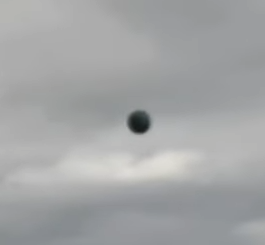
There are two types of objects that I have personally seen. There are the orange/yellow orbs at night which have always been on their own, and I have also seen them as white orbs clustered in groups of three. Then there are the white/grey metallic looking spheres during the day for which I always only saw one on its own. They may be the same object, but I do not know that. Yet, since they always seem to come from/to the direction of the Sea, this would not be unreasonable and for the purpose of the analysis shown here I do make this assumption, although I also acknowledge the possibility that such an assumption may be erroneous and there is the possibility of conflating two separate phenomenon. We will refer to this assumption as an orb equivalence principle.

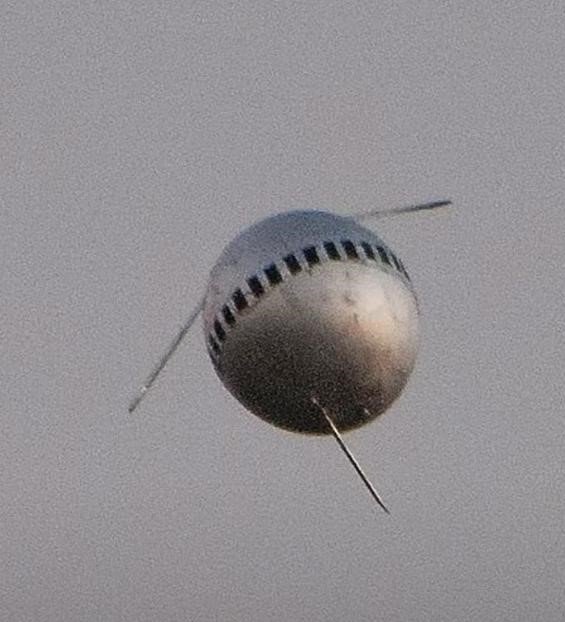
Below is an artificial intelligence generated illustration of the sort of object I have personally seen in the daytime. Approximately 3 - 6 ft in diameter, grey/white in colour, possibly metallic but also there is the possibility of some composite material or other. Note that a black band was observed around the outside equator which possibly has some engineering function or reveals something about how two hemispherical shells were integrated. I saw this object on three separate occasions, twice within several hundred feet of me and on the third occasion at perhaps half a mile’s distance. On each occasion I failed to get a photograph of the object or to look at it through binoculars since when I attempted to do so, it disappeared and there was no trace of where it had gone. Whilst speculative, it felt to me that the object was aware I had noticed it and only then vanished, and this might indicate some observer dependence to the phenomenon. I also felt that it wanted me to see it, but only briefly, and not sufficiently long to over observe it; merely to get my attention. Whilst I did not observe these characteristics, it could be argued that this rapid vanishing may have been indicative of either an advanced cloaking capability or instantaneous acceleration so that the object went from my visibility. Whilst the former may still be within the capability of our existing technological capability, the latter would not be and may imply a none-terrestrial origin.

Artificial Intelligence generated illustration of the object seen during the daytime by the author of three separate occasions in an observing time lasting seconds in duration each.

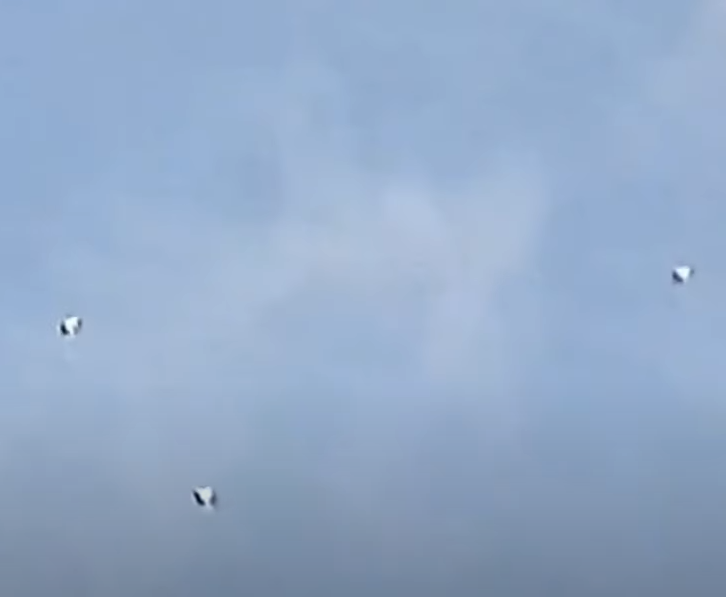
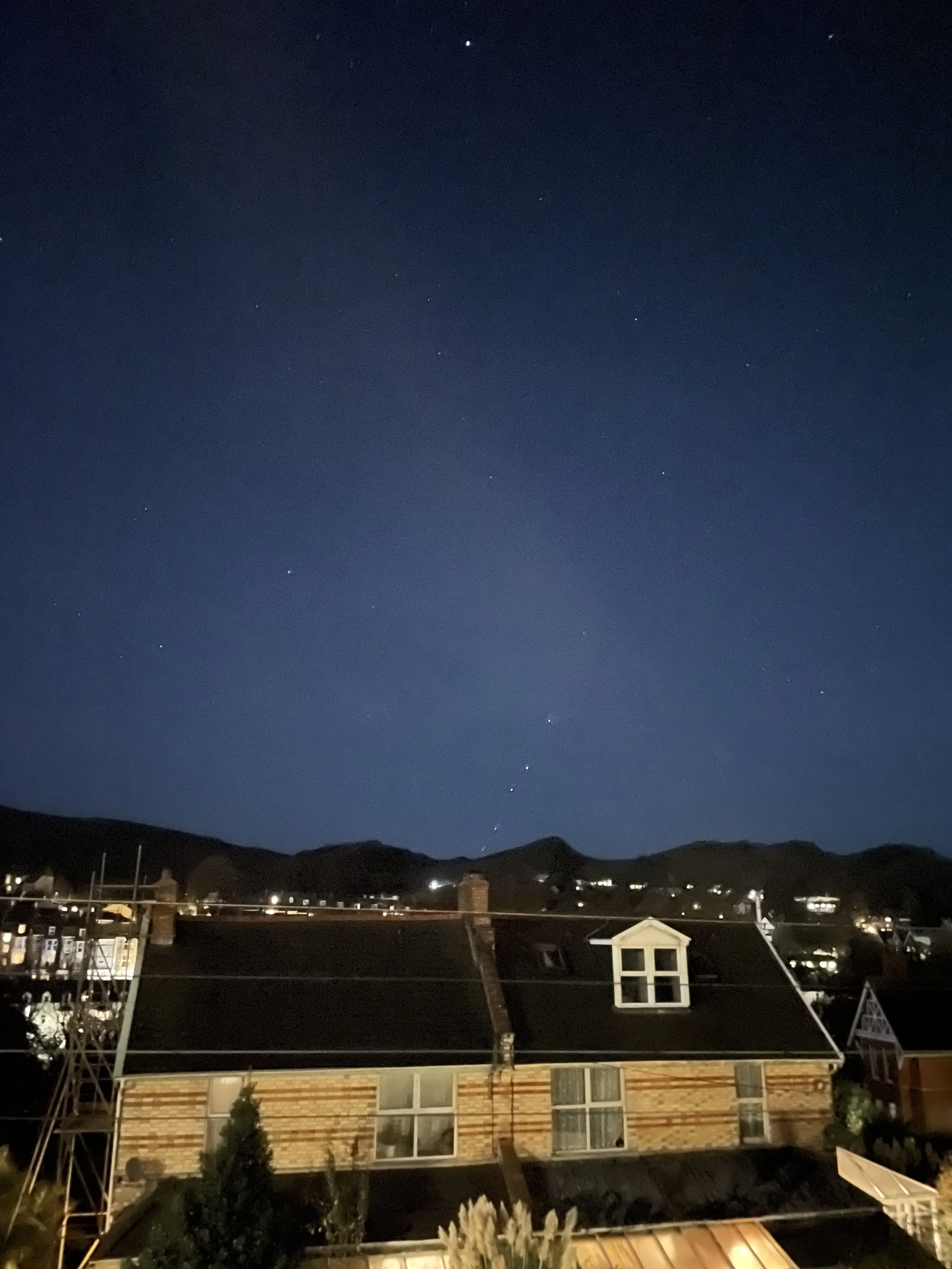
In the nighttime, I observed three white orb’s going on and off in sequence and then re-appearing in a different position. I then observed them entering a large town from the direction of the Sea and floating among the streets and buildings in an ominous manner that appeared as though they were searching for something. Although I did take photographs, they are not of great quality, and it was a windy night. But the image below for example clearly shows one of the orbs in two photographs taken seconds apart in which you can clearly see it has moved position. Given the similarity, the light at the bottom right may also have been one of the objects but I do not recall. I also have other photos of the objects, but I will not show them currently since for personal reasons I do not want to reveal the location of the events.

Photographs taken by the author at 01:47 hours, where one of the three orbs is seen entering a town, clearly visible to the observer but hidden among the street lights.

The observation of three white orbs occurred on the 3rd October 2020. The observations of the white/grey spheres during the daytime occurred on 10th September 2023, 14th October 2023 and 26th March 2024. The image below shown an artificial intelligence generated image of what the white orbs might look like at night if viewed close.

Artificial Intelligence generated image of white orbs at night which were observed as a cluster of three for around two hours duration in the early hours of the morning by the author.

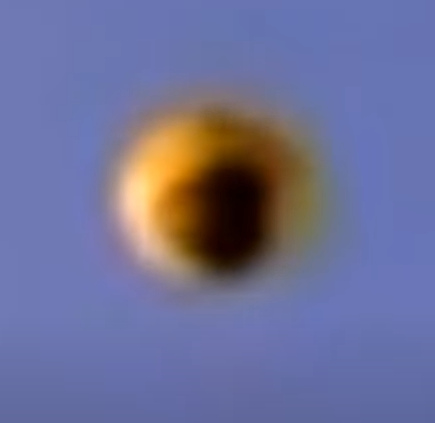
In addition to these, I have for many years been seeing an orange orb, typically golden/yellow/orange in colour that floats above me moving at moderate speeds. I had largely dismissed what I was seeing as optical diffraction effects since when I checked on some of those occasions the passing corresponded with a near flyover of the International Space Station. Yet as an optical effect it was very weird since the orbs appeared to be only hundreds of feet from the ground and had the appearance of a floating kind of buoyancy to them. Since they were coming off the Ocean, I do not think they would have been lanterns. Although I had dismissed them in the past, I now pay them more attention since the observations seen from 2020 but also from discussions with colleagues it is clear what I have been seeing is not the ISS as I had thought. Yet, I remain open minded to explanations here.

Artificial Intelligence generated image of yellow/golden orbs at night seen by the author on many occasions over years but potentially over several decades.

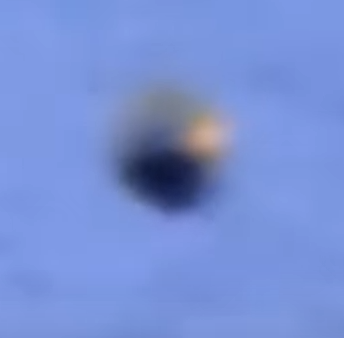
On top of this, I have lived in three separate locations since 1993 and although I had never given it any attention, I am quite sure I have been seeing this same orange orb for all those years in those three different locations. Although I had dismissed it previously, I am now questioning if what I had been seeing was of a more profound nature but largely neglected by me. I have seen them so many times that I did not take many photos but in recent years have tried to make an attempt. Below is one such sequence of the same orb object in flight.

Actual photographs of an orb observed on 1st January 2021 taken at approximately 1 minute apart by the author. The same object has been seen on many occasions over several years.

There is another aspect to the phenomenon that I would like to mention for which I feel may be important. When I have seen these objects I have not felt startled, or amazed, or jumping with excitement, the way that you may expect someone to do in encountering such a strange thing - especially for a curious scientist. Instead, I have found myself to be rather nonchalant, and on hindsight I find this a little puzzling. An analogy I might use is that of someone discovering they had a shadow for the first time, but then clearly recognising it as as the sort of shadow they have seen many times before and are not therefore surprised. It is almost as if these objects are ever present, at the periphery of our vision and a permanent part of the construction of reality, and for some reason, we do not react to them - the same way that Gorillas in the African jungle may not react to a zoologist sitting in the bush observing them, they just carry on as normal. Whilst a lot of the discussion over orbs focusses on the technological, I feel that this particular component of the experience may give some important insight into the phenomenon.

Given all the above, despite my training in scientific scepticism, it has forced me to reconsider the nature of what I have been seeing and whether all the apparent UAP sightings by me are also related to what other people have been reporting around the world and for which I have for so long been neglecting as the fantasies of the fringe. What has forced this re-evaluation was likely seeing the three white orbs at night and then the three observations of orbs during the daytime which was highly peculiar to me, and then after this came a reconsideration for the orange orbs I have seen for years.

I am currently reading the book The Invisible College by Jacques Vallee, and in this book he states: “Instead of asking, like the physicist, “Does the phenomenon interact with measurable quantities of its environment?…we will review what is experienced by the witnesses, we will observe what they do as a result of these experiences…”

He then proposes that the phenomenon is a kind of control system on the progress of humanity, analogous to a thermostat on the temperature of a house. Perhaps we might speculate, that if this is the case, then the moments in time in which humanity may be going off the rails, we might expect to see an enhancement of this phenomenon. The year 2024 has been important for two reasons (1) the apparent approach of nation states towards a global third world war that may also go thermonuclear (2) the significant increase in ‘drone’ sightings, particularly on the East Coast of the United States, but also in other places around the world, to include Japan and the United Kingdom.

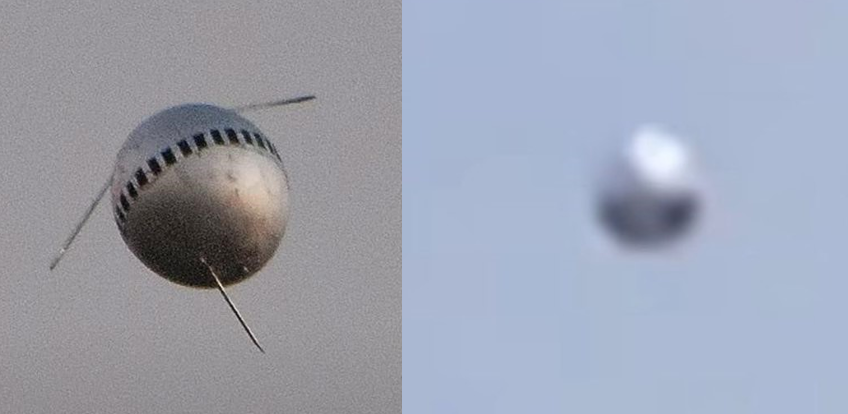
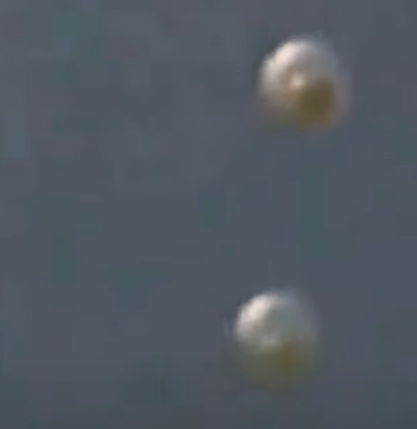
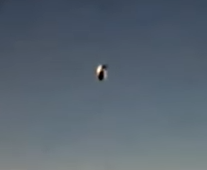
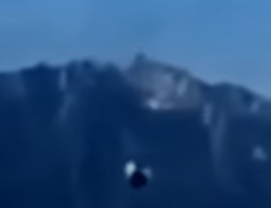
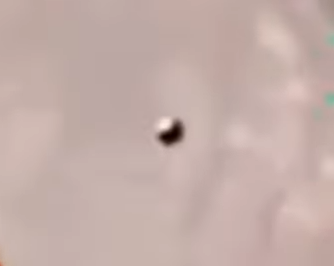
The two images below show similar spherical objects to what I have seen, seen in San Diego and in Japan for example. Although these are different to what I have seen, which could be a reflection of either different classes of objects, cultural bias of the observers, or the uncertainties associated with subjective observations.

Objects seen in San Diego in 2014 (left) and Japan (right)

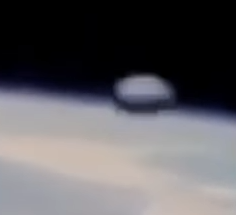
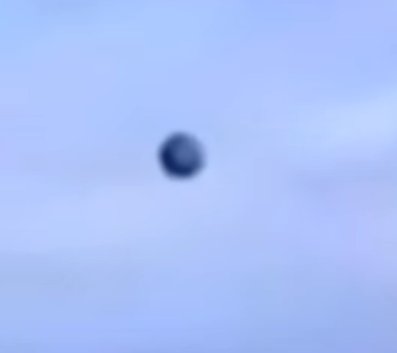
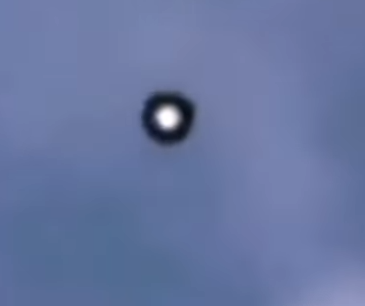
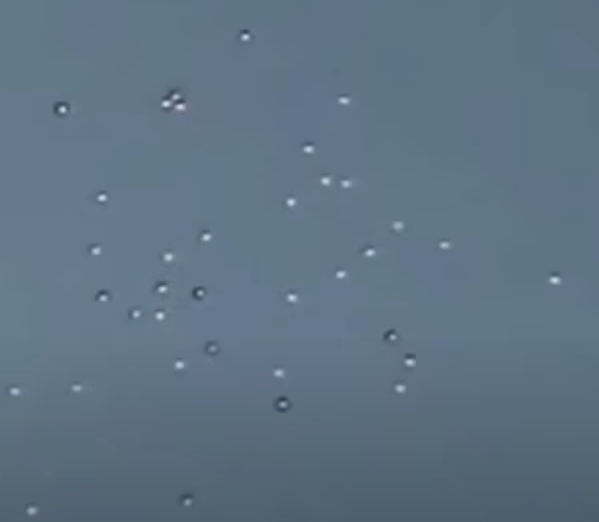
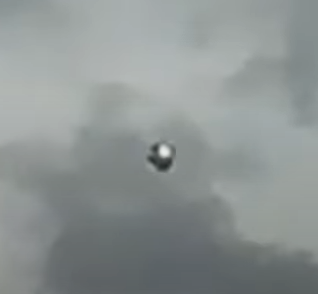
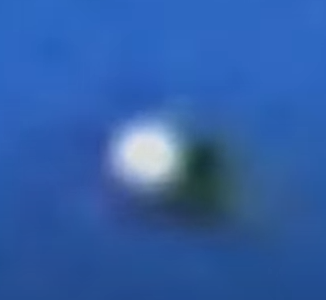
For an even more dramatic collection of still photographs, see the gallery below taken across the world spanning from 1999 to 2023. These stills were largely sourced from the collection kindly provided by Jenined and the full video can be seen <here>. Seeing this large collection of photographs of orb shaped objects, how can anyone deny that something strange is most definitely going on in our skies, and possibly also in our seas and space?

From this author’s perspective, putting aside what is measurable from a scientific standpoint, in terms of what I did because of these experiences; I started to take it seriously. As someone who has advocated for advancements in deep space exploration and advanced propulsion theory, since around 2007 or so, it is difficult not to reflect on whether this has been a part of a deliberate strategy, where getting my attention was seen as constructive to a large unseen strategy. This is not to say that I am any more important than any of the other thousands of people that have seen similar (or more exotic) phenomenon, but I can say at least that I am a person of credibility in terms of aeronautical, astronautical and astrophysical education, and perhaps my voice adds some weight to those of others who make similar claims.

A particular way that I responded to what I saw as an integration of issues (1) and (2) above was in the drafting of a letter to the leaders of the United Nations Security Council <Read Here>. How naïve I must have been to think I would get any meaningful response or have any influence. Yet, compelled to write it I felt and did. I also felt compelled to support other political activities, where a case was made towards peace, although I acknowledge this could be driven out of an anxiety for a pending global war. I have also felt compelled to come forward and make contact with people in the UAP community to share that I have also been experiencing the ‘phenomenon’. This has included these public posts online, which for a professional scientist is a considerable risk to my reputation. Yet I believe in the pursuit of truth as the highest quest of a scholar and so proceed I did. I would now like to turn my attention to the objects themselves and to provide for some first order analysis of what we are looking at from a physics and engineering perspective.

Analysis of the Phenomenon

Here is a basic breakdown of the observed characteristics of orbs, as taken from my own personal experiences but also considering the observations of others:

  • Size: 1 - 6 ft

  • Elevation: Sea Level to Orbit

  • Speed: Static to Hypersonic

  • Shape: Spherical to Elliptical

  • Brightness: Dull to Luminous

  • Colour: White, Orange, Yellow, Blue, Red, Grey…..

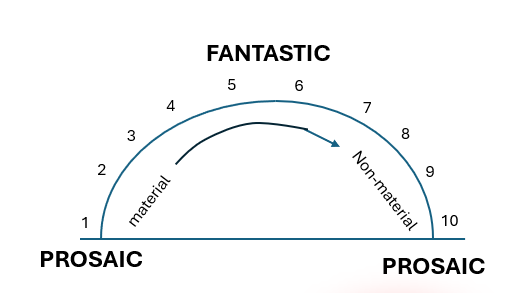
Although this author would like to state that he has never seen any hypersonic flight, instantaneous acceleration or flight to orbit as reported by others. This therefore does still allow for more prosaic explanations to the phenomenon. Although see the comments below where the possibility of instantaneous acceleration is allowed for.

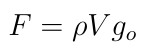
First, let us consider some terrestrial considerations from our knowledge of flight. If the spheres were mere balloons, then they would be contained of a lighter than air gas such as helium with a density of 0.178 g/L or hydrogen with 0.089 g/L. It would remain stable in the air through buoyancy based on Archimedes principle, where the upward buoyant force on an object is equal to the weight of the fluid it displaces. The buoyant force F is given as a function of air density rho, volume of the spherical balloon V and gravitational acceleration g_o such that the force is given by

Yet this would mean that the combined weight of the object (to include any mechanisms, payload, power supply) would have to be less than the weight of the displaced air for the balloon to rise.

We can take the example of a 6 ft diameter (0.9156 m radius) spherical balloon filled with helium so that it has a volume of 3.205 cubic meters. The weight of the air displaced would be 1.225 * 3.205* 9.81 = 38.51 N. The weight of the helium would be 0.178 * 3.205 * 9.81 = 5.59 N. Subtracting them we find the net lift to be 32.91 N. Dividing this force by acceleration due to gravity we can estimate the lift capacity as 3.35 kg. It is difficult to see how an object of this low mass could also exhibit the flight characteristics reported by observers, since it would require an enormous power source to generate the required energy for motion. That is to say that an assertion of a balloon in the observed scenarios described above would not be consistent with the rapid vanishing, since it would imply more mass than this to generate the power required.

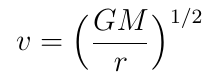
It is also unclear as to how these objects are deriving their power. To move at even moderate velocities against winds at altitude will require some level of navigational (pitch, roll, yaw) stabilisation control. Power usually derives from some form of battery, which has mass. If we assumed this object could move to Mach 5 instantaneously from around 10 m/s, this would require an acceleration of around 1700 m/s2 and would involve an energy change of around 4.85 million Joules or 1.16 kg TNT equivalent, so it represents a large explosive equivalent to around 5 sticks of dynamite (a single dynamite stick is around 200 grams and produces around 1 million Joules of energy). Yet we hear no noise associated with this sudden change of motion as should be expected with such an energy change.

To have a reasonable power source to make this change, if we assume the object is 10 times more massive at 33.5 kg, then this implies an energy change of 48.5 million Joules or 11.59 kg TNT equivalent. If we increase the mass again by another factor of 10, to around 335 kg, this is now the mass of the smallest feasible Ultralight aircraft such as an Aerolite 103 or TL-Ultralight stream, and the energy change would require 484 million Joules or 115.7 kg TNT equivalent.

Here we have made the moderate assumption to M = 5, but in many cases the reported motion is much higher. The speed of sound at sea level for air is defined by the ratio of specific heats gamma = 1.4, the Rankine constant R = 8.31 J/mol, the Molecular weight m = 0.0287 kg/mol and the temperature at sea level 298 K (~20 Degrees Celsius). This is then given by the speed of sound as follows

Since at altitude the air temperature changes this also changes the speed of sound, but for now let us assume a Mach number relative to this value, so that M = 5, implies 1,715 m/s (1.71 km/s or 3,836 miles/hour) and M = 10, implies 3,430 m/s (3.43 km/s or 7,673 miles/hour). For comparison the Lockheed SR-71 Blackbird cruised at 2,200 miles/hour, which is 0.983 km/s or 983 m/s, at an altitude of around 80,000 ft. Since the air temperature is a bit cooler at 288 K (~15 Degrees Celsius) then this calculates to a speed of sound of c_o = 340 m/s, so that M =2.89. Also, for comparison, to reach orbit a rocket must achieve a velocity of

Where G = 6.674*10^-11 Nm^2/kg^2 (gravitational constant), M = 5.98*10^24 kg (mass of Earth) and r = 6.4*10^6 m (radius of Earth), so that v = 7.9 km/s (17,676 miles/hour or equivalent to M = 23 at sea level). Escape velocity is sqrt{2} times this value

To give v = 11.2 km/s (25,054 miles/hour or equivalent to M = 32.6 at sea level). The reasons these calculations are useful is because they allow is to see that if an object suddenly accelerates to velocities of order M = 5 or 10, then we are looking at a performance that exceeds the Blackbird and is approaching the requirements for rocket velocities that leave Earth. Yet we know rockets take enormous amounts of power and certainly make a lot of noise. This immediately implies a new type of technology that goes beyond rockets and explains why people will jump to the conclusion of other worldly as a point of possible origin.

In this article I have made an equivalence between the daytime spheres and the night-time luminous orbs, that they are assumed to be the same object but appearing different under different lighting conditions. As already mentioned, we refer to this as an orb equivalence principle and it would stand as a hypothesis to be validated or falsified, such as using sensitive detectors which can go beyond the human vision range. If one is to make this equivalence, that the daytime spherical orbs are also the night time luminous orbs, then this might tell us something about their physics operation. It may be that during the night-time it is not possible to shield their glow and hence why they appear luminous. But during the daytime, perhaps due to the way that light is scattering around the object, any tenuous glow is not visible. The light from the orbs may be overwhelmed by the luminosity of the sunlit sky during the daytime. During the night-time however, since there is a large contrast between the light of the objects and the background night sky, the light emission surrounding their surface becomes visible to the human eye.

Think of how an Aurora may be present but not visible during the daytime since the wavelengths of its tenuous light emission are not visible against the background of the dominant blue sky, particularly since the light from the Sun is approximately 10,000 times brighter than an Aurora. The sky is blue due to Rayleigh scattering of the light as it passes through the Earth’s atmosphere and blue light has a shorter wavelength and scatters more than other colours. So, an Aurora may be present but we do not see the scattering of its light. Similarly, an orb may have a glow around it during the day, but we do not see the scattering of its light and only highly sensitive light detectors could pick it up. Instead, all we would see is the material structure underneath, such as a metallic or composite shell.

This then brings us to the question of what could cause the luminous glow, and it likely has its origins in some form of electrostatic field, such that the air around the object is ionised into a plasma state. This means that the surface of the sphere would be electrically charged with respect to its external environment. This would be a reasonable interpretation.

One possible operating mechanism then might be along the lines of the Biefeld-Brown effect, where an ionic wind surrounds the sphere and transfers momentum to the surrounding neutral particles. For example, if a sphere was to be surrounded by an ionized gas so that it forms a plasma sheath where electrical charges accumulate on its surface so that it is conductive, it would acquire a net electrical charge. If an internal component of that sphere was then magnetized, this might allow for the generation of a Lorentz force. So a conjecture here would be that the objects can ionize the space around them, giving rise to the light orb effect, but then generate an internal force by the motion of a magnetic field within that ionized space. A similar suggestion has been made in the Biefeld-Brown effect as a theory of electrogravitics, although this involves a force generated between two asymmetric electrodes when a high voltage electric field is applied. To test these sorts of ideas, one would need to get near the orbs or spheres and measure the electrical field around them which would provide for valuable information.

This yet this would require an on-board high voltage system and capacitors sufficient to generate the effect. However, we acknowledge that the experiments on this effect have largely remained controversial. But it is likely that the means of propulsion derives from something relating to an electrogravitic effect, where the machine can interact with either the Earth’s gravity field or the Earth’s magnetic field, or both. Although such an effect ‘may’ give some explanation as to the means of propulsive motion, it would not explain any instantaneous acceleration or an ability to move ultra-fast, which would imply some other form of technology is in operation.

In terms of generating an internal energy source this would require some form of nuclear reactor, since chemical reactions are too low in terms of Joules/kg. A typical chemical reaction may only release around ~1-10 eV of energy for example, or up to around 44 - 142 MJ/kg (gasoline to hydrogen combustion). In contrast, for nuclear fission the energy release is around 200 MeV per nucleus or 82 million MJ/kg. For nuclear fusion it is even larger at around 340 million MJ/kg. So nuclear fission is 6 orders of magnitude larger than chemical reactions and fusion reactions is an order of magnitude larger than fission reactions, or 7 orders of magnitude greater than chemical reactions.

Again, we have the problem of mass. How could such a small and apparently lightweight object contain a nuclear reactor? We might turn to alternative radioactive sources, such as Plutonium-238 or Americium-241 as used or proposed for deep space robotic missions (e.g. Voyager 1 and 2); yet although these materials have very long decay half-life’s they also carry a weak power density for the requirements of our high manoeuvrable orb objects. Therefore, in all likelihood, if we are to accept possible characteristics, such as instantaneous acceleration, none of the above power sources would be suitable.

An exception may be matter-antimatter annihilation reactions, which would be a highly efficient energy conversion process at 100%. If we take 1 kg of matter annihilating with 1 kg of antimatter for example, all released as photons travelling at the speed of light at 300,000 km/s, then from Einstein’s equation we find

This amounts to 180 Billion MJ/kg of energy release. This is 10 orders of magnitude greater than chemical reactions, or 4 orders of magnitude greater than fission, or 3 orders of magnitude greater than fusion. This would certainly give the required energy, but it is difficult to see how one could orchestrate a controlled containment and release of matter-antimatter for this purpose. That said, this is from the perspective of our technological state of art. At the very least, if any human society had engineered such an ability they would hold technological supremacy in their hands. If no human society has achieved this (and there are reasons for thinking this is doubtful), then this would point towards an advanced technological society that is ahead of ours. Are there other options for energy generation we might consider?

There may be a way to derive energy from the neutral vacuum. For example, it is possible to use lasers to generate an electromagnetic field to produce particle pairs to include matter-antimatter in what is known as a ‘Dirac Sea’. Using an electric field strength of E_o = 2.4e^18 V/m would require an intensity of I = 1.5e^28 W/cm^2 and a diffraction limited spot power of

Where lambda is the laser wavelength. The physics of this has been examined by others [D. Crowe, “Laser Induced Pair Production as a Matter-Antimatter Source”, JBIS, 36, pp. 507-508, 1983]. But again all this would need power which implies mass so is beyond our current technological capability.

There are many alternative ideas out there which could be examined further as the basis for extracting energy from space or its contents thereof. An excellent review of such ideas was published by the American Institute of Aeronautics and Astronautics [M. G. Millis and E. W. Davis, “Frontiers of Propulsion Science”, 227, 2009] which also included a discussion of the Biefeld-Brown effect, although they had concluded: “In spite of previous speculation about possible new physical principles being responsible for the thrust produce by Asymmetrical Capacitor Thrusters and lifters, we find no evidence to support such a conclusion”.

In a recent book, although based on research over a decade, it has also been proposed that a theory of quantum inertia may give rise to incredible propulsion effects [M. E. McCulloch, “Quantised Accelerations, From Anomalies to New Physics”, Polaris Books, 2024]. There are also exotic ideas for wormholes and warp drives [F. S. N. Lobo et al., “Wormholes, Warp Drives and Energy Conditions”, Springer, 2017] and although our understanding of the physics of metrics is currently at a preliminary stage despite over a century of theoretical and experimental research, provided we can source negative energy this subject is likely to elucidate insights that have value. There are also ideas for mining the quantum vacuum by using two parallel Casimir plates and this research has promise.

To achieve an appropriate understanding for the physics and propulsion of these anomalous orbs, a comprehensive program of research would be needed which encompasses a review of all these innovative ideas and how their expected effects and performance correlates to the observations. This may result in a self-fulfilling research program that leads to the maturation of orb technology within our own technological capability; unless that has occurred already (and there are reasons for thinking that it might). However, the reality is that research into these potentially game changing, low TRL, propulsion technologies, receive very little funding support or widespread interest from academics and this needs to change of revolutionary breakthroughs are to be made. To steal a quote from the astronomer Carl Sagan, and reword it a little, absence of evidence for a coherent physics explanation for the functionality of orbs, is not the evidence of absence for the existence of such a technology, considering the many observers who have reported seeing them (including this author).

Ultimately with the above, and in particular with the daytime sightings, one clearly needs more observing time to gather more data. I am disappointed that I have not been able to get the daytime objects on camera, yet I know what I have seen. Ironically, since I have been paying attention to the phenomenon, I have not been seeing them, much to my disappointment and despite becoming more active in searching them out - my eyes are always on the skies. I only seem to see them when I am not looking for them. Has the phenomenon done with me?

The Five Observables

In terms of the physics of these objects, we can also examine the five observables put together by the US Defence Department as a comparison:

  1. Anti-gravity lift: It is certainly not clear how these objects are achieving lift. There appears to be no associated noise so that rules out a motor. Yet they appear to have some degree of intelligent control. This would certainly suggest a novel type of propulsion system that does not rely upon the reaction engine principle.

  2. Low Observability, or Cloaking: At night, the orbs were hazy, and had the appearance of a plasma. The daytime objects appeared to vanish quickly, and this could have been due to the use of visibility cloaking technology, but this is conjecture, and I did not witness the transformation from visible to invisible. Yet the fact remains, they did vanish.

  3. Hypersonic Velocities without Signature: No trails were ever visible. Neither did I observe these objects moving at high speed. Yet again, their sudden vanishing, might be consistent with a move towards a hypersonic velocity, but I did not observe that.

  4. Trans-Medium Travel: I only observed both the orbs and the spheres traveling through the medium of air. That said that they all appeared to come from the direction of the Ocean, or returning that way, which might suggest a trans-medium capability. I just did not observe that and this would again be speculation.

  5. Sudden and Instantaneous Acceleration: Unfortunately, I never observed any rapid acceleration or deceleration along these lines. However, given that I was not looking in the time that they disappeared, their vanishing might be consistent with an instantaneous acceleration, I just did not observe it. Clearly, I should have kept looking.

If it is not the case that the orbs involve some electrostatic field to give the Aurora like effect, but the orbs and the spheres are still the same object according to my orb equivalence principle, then we might be forced to consider another characteristic which we will define as a phase change:

6. Phase Change: On the basis of the some observations by others, we are also tempted to suggest a consideration of another characteristic which we define as a phase change from one material state to another, such as from a solid to a plasma but without going through the liquid or gas phase, that is solid-to-plasma transition or direct sublimation to plasma. Although this would normally involve an extremely high temperature to undergo heating beyond the sublimation point, and yet without leaving any loss of material such as through vaporisation. This idea is merely left for speculation.

In terms of the object vanishing rapidly, we might consider an example. If an observer is h = 100 ft above sea level, then the distance to the horizon is given by

But for an object to disappear to the horizon distance in ~5 seconds would imply a velocity of 8,877 miles/hour or a Mach number of M = 12. Instead, we could argue that the human eye will not see the object that far due to the diminishing size of the object as it moves away. So let us consider that the object is D = 6 ft in diameter, at what point will it become so small it will no longer be visible to the human eye? The human eye has a resolution of around 1 arcminutes (1/60th of a degree) so we need to know at what point does the object go below theta = 1 arcminute of resolution. This is given by the distance

This would still imply a velocity of over ~5 seconds of 2,833 miles/hour or M = 3.7, yet there was no sound.

It is also not clear that a sphere would be the ideal object to utilise in moving through the atmosphere due to its relatively high drag and low aerodynamic efficiency, although its performance does depend on its speed. With a drag coefficient of around 0.47, even a smooth sphere does poorer than an object like an airfoil or bullet. At low-speed laminar air flow the air will move over the sphere, detach quickly, and create a wake behind it, which is a source of drag. This means that at low speed the sphere will not generate meaningful lift and so that cannot be its mode of operation. At high speed the air flow becomes turbulent, but this does improve the performance since the wake size is reduced. So, it is possible that a sphere is optimised for high speed travel. This is why a golf ball is pitted to promote turbulence near the surface and delay flow separation which reduces the drag. Lift can be enhanced by spinning the sphere in a physics mechanism known as the Magnus effect, but I did not observe the objects spinning. An advantage of a sphere is that it is an isotropic shape and since it has no specific orientation it will remain stable in free flight. A sphere will also distribute heat uniformly around its surface and so this may be an explanation for its form.

One of the critical aspects of my observations on the daytime sightings is the rapidity by which they disappear. Having considered this there are three possibilities:

  1. It is a technological machine of material construction that has some advanced capability for hiding itself as in the use of stealth technology, so that it may still be there, but it is no longer visible to the observer.

  2. The rapid disappearance may be consistent with instantaneous acceleration. I just didn’t witness that aspect of it (although others have reported it). But if it moved from near zero velocity to say 1,000s km/s it would be gone from its position in less than 1 second and if we were not directly observing it then we would miss that aspect of it; as I did.

  3. Since the objects vanished on each occasion after I tried to enhance my observation using an optical aid (binoculars or phone camera), it may indicate some level of awareness that I had now noticed the object. Although it sounds fantastic, I cannot rule out a conscious observer dependent phenomenon. I have developed a possible hypothesis relating to this but will leave that for another time.

In consideration of the different observations, we have to ask if they represent the same object or different classes of objects. For example, each observation could be representations on a continuum of orbs depending on the properties they emit and whether they are observed at night or during the day as shown in the images below.

Artificial Intelligence generated images of orbs.

Given all the above, we can create a category of orb according to six distinguishing features which are now described as a part of a morphology. This is a different way of characterising the objects from the US Department of Defence five observables. These are:

  1. Shape: In general, the spheres appear to be spherical but have some ability to deform their shape into more oblate spheres. We might term this a degree of ellipticity as a deviation from spherical symmetry. We define this with the use of a compression factor b/a, for the two semi-axes a and b, and where the flattening is defined by f = (a-b)/a. Alternatively the eccentricity e of an ellipse is defined between e = 0 (circle) and e = 1 (parabolic ellipse) or when e > 1 (hyperbolic ellipse).

  2. Colour: In this article we have explored orbs that go from white, to orange, yellow. Others have reported seeing blue and red orbs. it is interesting to note that all of these colours appear in the spectrum of white light when refracted in a prism to reveal the different components. This might indicate that any light falling upon the object at night (or coming from the object) is refracted into a particular frequency. That colour may also give some indication as to the spectral power distribution and temperature of the objects external surface and this would require an infrared thermometer to measure the surface temperature (although would not give information about the internal temperature). The other thing about the colour is we might consider two possibilities (a) that the colour represents operability, as in when the orb is performing particular functions this is reflected in its colour emission (b) another possibility is that the colour represents different stages of an orb such as in its life cycle, the same way that we look at the colour spectrum of a star, and as the orb moves through its life cycle it changes colour (c) another possibility is that each orb has a different colour simply because it is a different class of orb from the other ones and so the colour represents function.

  3. Luminosity: As indicated, this may be related to the colour. The luminosity is best expressed as a characteristic power distribution and will have different wavelengths at different temperatures. Since when observed the objects appear to have one dominant colour, this might indicate some degree of Rayleigh scattering from a light source within the orb to produce a concentration of shorter wavelengths and hence say an orange colour. A yellow orb would emit around 550 - 565 nm. An orange orb around 565 - 600 nm. A red orb around 600 - 640 nm. Ultimately, it would be constructive to get illumination readings of an orb so as to discern its emission spectrum.

  4. Size: In general, the objects have been seen as small as a standard football size, say around 12 inches, to as large as perhaps 6 ft, with a medium size of around 3 ft or approximately 1 m. This would appear to rule out an occupant controlling the orb and points more towards either remote control at distance or a high level of autonomy within the orb to direct itself. This would be expected if for example we were looking at a highly sophisticated reconnaissance probe.

  5. Motion: The objects appear to float along but also have the appearance like a form of buoyancy, suggesting they are subject to some external forces which prevents them from remaining in a stable position all the time, but rather oscillate about a stable equilibrium point and then to adjust for that. We can rule out wind forces based on the notes written above, but perhaps we might consider that they are moving along magnetic field lines. A magnetic field line would not be in a fixed position but would be dynamic and always changing. The objects also appear to be able to move very slowly, or to hover in a static position, or to even travel at superfast speeds at indicated above.

  6. Fragmentation: On occasions it has been observed by some witnesses that a single orb will fragment into two orbs, or will eject several orbs from within it. This is a rather peculiar phenomenon, but it has also been caught on film several times. This reminds me of being analogous to fire or water, where parts of it might split off into a separate part, yet it remains the same substance as the original source material. This might give some indication as to the nature of the intelligent structure that makes up the orb, that it does not have a central processing brain, but instead the intelligence is contained within the substance itself, so that if any part splits off, it will contain the same information; but this is wild speculation. Alternatively, we might refer to the existence of multiple orbs as ‘clustering’ although they would appear to us as a swarm of separate objects.

Based on the above we might consider constructing a morphology chart of types of orbs based on a combination of the different characteristics, such as the ellipticity and the wavelength associated with any luminous emission. This would be like the way in which astrophysicists construct charts of the evolution of stars or types of galaxies for example.

Morphology of orbs in terms of ellipticity and wavelength of dominant light emission

Instead, we might consider how to organise the different types of orb like objects under different characteristics. For example, if we take the five characteristics defined by the US Department of Defence, then we can plot them as follows, where example (i) pertains to zero characteristics being observed and so is consistent with known objects and (ii) pertains to all characteristics being observed and so is fully consistent with an unknown object or a UAP. This is generated in what we refer to as pentagonal spider web diagrams. The different positioning of the footprint may give us insight into the extremes of observations.

Descriptions of limits: (1) Anti-gravity lift, 1 = none observed, 2 = fully observed (2) Cloaking, 0 = no cloaking, 0.5 = partial cloaking, 1 = fully cloaked, which corresponds to an inverse opacity scale from 0-100% (3) Hypersonic velocity, Mach numbers 1 - 10 shown (4) Trans-medium travel, 1 = none-observed and in a single medium only, 1.5 = air and sea travel, 2.0 = air and space travel (5) Instantaneous acceleration, 0 = static object or slow object with no change in speed, >>1 = complete vanishing of object within a second or less indicative of rapid acceleration.

In the construction of these spider web diagrams the dashed line is drawn from the approximate data point at right angles to the line of origin and extended until it meets another dashed line. The footprint is then constructed by joining the different dashed line intersection points to create an approximation for the characteristic footprint space. We can take this further by illustrating with several examples to see what the footprint of characteristics looks like for different imagined case studies and these are shown below.

Descriptions of limits: (1) Anti-gravity lift, 1 = none observed, 2 = fully observed (2) Cloaking, 0 = no cloaking, 0.5 = partial cloaking, 1 = fully cloaked, which corresponds to an inverse opacity scale from 0-100% (3) Hypersonic velocity, Mach numbers 1 - 10 shown (4) Trans-medium travel, 1 = none-observed and in a single medium only, 1.5 = air and sea travel, 2.0 = air and space travel (5) Instantaneous acceleration, 0 = static object or slow object with no change in speed, > > 1= complete vanishing of object within a second or less indicative of rapid acceleration.

Using the Pentagonal 5 characteristic observable methods the author has plotted the footprint of his own three observations which are shown on the pentagonal spider web diagrams below. It is the similarities in the characteristic footprint that had led the author to propose an orb equivalence principle. Although we note that for all the three diagrams the objects were moving in the direction of from/to the Ocean, which might indicate a trans-medium capability, it was just not observed. Also, for diagram (c1) the rapid vanishing of the object on three occasions may indicate an instantaneous acceleration capability, it was just not observed.

Descriptions of limits: (1) Anti-gravity lift, 1 = none observed, 2 = fully observed (2) Cloaking, 0 = no cloaking, 0.5 = partial cloaking, 1 = fully cloaked, which corresponds to an inverse opacity scale from 0-100% (3) Hypersonic velocity, Mach numbers 1 - 10 shown (4) Trans-medium travel, 1 = none-observed and in a single medium only, 1.5 = air and sea travel, 2.0 = air and space travel (5) Instantaneous acceleration, 0 = static object or slow object with no change in speed, > > 1 = complete vanishing of object within a second or less indicative of rapid acceleration.

We can also quantify this using a form of metric which we might refer to as an Observability Rating (OR) which is equal to the sum of a combination of multiplicative factors and where we use the Greek letter Omicron:

Each term is then quantified as follows:

  • f_1 = {1 —> 2}. This would likely be based on a subjective observation on whether any lifting surfaces or propulsion devices were visible. An object that displayed an obvious lifting surface or propulsion machine would tend towards —> 1, but an object with no visible means of lift would tend towards —>2.

  • f_2 = T = I/Io, which derives from A = -log10(Io/I), from Beer-Lambert Law, where A is the absorbance (0 clear to 1 opaque), I is the intensity of the transmitted light, Io is the intensity of the incident light. An opaque material will have T = 0 and transparent T = 1.

  • f_3 = {v/c} = M, where M is equal to the Mach number, defined as the ratio of the vehicle velocity to the local speed of sound at the approximate altitude.

  • f_4 = {1 —>2}. This would be based on an observation of the vehicle in air only (1), also going into the water (1.5) or going into space (2.0).

  • f_5 = {[(v - u)/t]/go}, where u is the initial velocity, v is the final velocity, t is the time duration of the observation, go is acceleration due to gravity.

These terms are then bought together into an equation expressed below:

Using this metric, a sighting which had an OR << 1 likely has a terrestrial explanation since it displays few of the observed characteristics, whereas a sighting which had OR >> 1 definitely meets the definition of a UAP and could not be explained within our existing technological state of art, therefore implying a consideration of ‘other’. None of the terms in each characteristic can actually be zero or the entire metric will become zero, so instead it would be better to define terms that tend towards zero under a low observability rating (i.e. 0.1). The situation where OR = 1, might correspond to f1 = 1.0 (lift mechanism obvious), f2 = 0.1 (fully visible no cloaking), f3 = 1.0 (Mach = 1.0), f4 = 1.0 (air only), f5 = 1,000 m/s / (10 s * 10 m/s2) = 1.0, and might represent some kind of military aircraft.

Alternatively, we might base such a footprint pattern on the six observables listed by this author which creates a hexagonal spider web diagram arrangement.

Description of limits: (1) Shape, 1 = perfect sphere, 2 = elliptical (2) Colour, defined along the electromagnetic spectrum, 1 = black, 10 = white, other colours in between in the order black, red, orange, yellow, green, blue, grey, white. The actual value of the colour would be defined as a wavelength normalised to another wavelength as emitted blackbody radiation (3) luminosity or brightness, normalised to some standard candle yet to be defined, 1 = none luminous, 2 = very luminous (4) Size, normalised to a standard size yet to be defined, 1 = very small, 10 = very large, perhaps in the range 1 ft up to 12 ft (5) Motion, normalised to a standard size such as Mach number at Sea level, 1 = sound speed, 10 = ultra-fast motion (6) Fragmentation or clustering, 1 = 1 object observed, 10 = 10 objects observed. These parameters and their ranges are somewhat arbitrary and are more illustrative than anything with the intention of promoting discussion on how we can characterise orb type, behaviour and performance.

For the footprints shown here these are for the three classes of objects observed by the author. Example (a2) is the white lights seen at night in a cluster of three. Example (b2) is the orange like orbs seen at night usually as single objects. Example (c2) is the spherical objects seen in broad day light and always on their own. Each gives a very different footprint when illustrated like this. by studying the different permutations of footprints possible we may be able to elucidate insights into their nature and operability.

In this version the shape or geometry is defined by an equation for the deviation from spherical symmetry. The colour is defined as a blackbody radiation temperature where the wavelength of the emitted light is given as a function of the temperature. The luminosity is defined from the Stefan-Boltzmann law of blackbody radiation as a function of temperature and area. The Size is defined as a diameter relative to another diameter. The speed is defined relative to the sound speed. The number is defined relative to some large number to normalise the total observability rating around a value of unity. This gives a new equation form for the metric as follows:

In defining the equations shown above (and the spider web diagrams), these are not proposed as actual final forms to be adopted but are merely examples to illustrate how we might begin to quantify a sighting in terms of two extremes and everything in between. This way for those with a low observability rating they would get less attention in terms of research since we would have a high confidence that they likely have a normal explanation. Those two extremes being from the known and prosaic with all phenomena understood and explained, to the unknown and fantastic, with all phenomenon not understood or explained and so represents a genuine mystery. Further work would be required to refine these ideas to usable tools and ideally the mathematical terms should be defined such that OR ~1 represents a transition point between non-UAP to UAP, but this requires some careful deliberation.

In considering all of the above, we might then also hypothesise on the possible nature of the orbs as mechanical systems or living systems. It is worth describing these.

  • Mechanical System: In such a system the different characteristics of each orb would correspond to its engineering type, function and operability. If it was designed with a particular type of mission in mind, then its design characteristics would emerge from form follows function. There may be different classes of probes for example. To illustrate, in the scientific reconnaissance of any planet, one may need orbital observers, atmospheric penetrators, ground landers, ocean divers, or those associated with the observation of indigenous lifeforms. For some of these an ultra-fast capability may be needed, but for others it may not be an appropriate capability. Although, given the claim for a trans-medium capability this may illustrate a broad utility for each object.

  • Living System: In such a system, the orbs would not be seen as engineering machines, but perhaps living systems. This may be a form of organic life we are yet to encounter, or just a different type of life that is not constrained by our current definitions. A high organisation of charged particles based around quantum states for example, where any information exchange is centred around a deviation from a thermodynamic equilibrium. In which case, the different types of orb characteristics may be manifest of categories of ‘living forms’ or even representative of ages of those forms. This would be analogous to how we look at the lifetime of stars as they move through the main sequence of stellar structure and evolution, or the morphology of galaxies.

Finally, in this section, although we have not discussed it we cannot entirely ignore the issue of reported flying discs by many observers. In particular, the reported observations that orbs have been seen exiting from such constructions. Yet, there is also another possibility we might consider, which is that orbs and discs represent the same object, but under different perspectives of observation. This may be due to an observer effect or may be reflect the objects ability to change its shape. Indeed, in consideration of terrestrial origins, might we be looking at some form of advanced aquatic jelly fish that has evolved to take flight so that it has a trans-medium capability? Perhaps an advanced type of Scyphozoa? This is an equally fantastic idea and we merely leave this possibility here for further pondering.

Summary of the Phenomenon

With all these observations there are really four possible interpretations:

  1. The first is we are mistaking these observations for something prosaic we have not considered, given that in general ~95% of observations are explainable. Yet, we have managed to rule out most things and we are convinced the observations do not match any terrestrial activity for which we are aware.

  2. The second is that this is indeed some government psychological warfare operation, using me (and others) as a ‘useful idiot’. In particular, for me as someone with a research interest in interstellar studies and the exploration of deep space, to make me think I am seeing things because it supports a narrative agenda. Perhaps hoping that I will report these, as I am now doing, although I certainly took my time. If this was occurring, then I have to state for the record that as a scientist that I object to it and do not appreciate government agencies conducting themselves in this way. Indeed, I would give an opinion that such conduct is unethical and represents an abuse of power.

  3. The third is that these are in fact drones from a foreign government, such as launched from underwater submersibles by China (as claimed by some), in which case this is a national security issue. Arguably, something similar has occurred at US bases in the UK and also in New Jersey in recent weeks. Given the West seems to be in a pre-war preparation mode with Russia, this is plausible. I would particularly note that since I am a person who previously held high security clearance and worked on sensitive projects, this possibility is one of concern to me and I do not see any efforts by my NATO affiliated governments to take actions in protection of their scientific personnel. In addition, if a foreign state is behind this and our governments have permitted it to continue, then this really illustrates the lack of leadership in Western nations and the lack of courage in protecting our air-sea-space domains. Indeed, a failure to act, should demand the resignation of such leaders from their position in office.

  4. The fourth option I am left with is what I will call ‘other’ and that this is an attempt to get my attention and pay attention to the phenomena for which I was previously neglecting. This is despite the fact I had turned the design of starships into a chosen career over many years and my principal interest was getting spacecraft out there around other stars. For sure, it got my attention, and the phenomenon came to me. For the record, I will state that I am inclined towards ‘other’, but I also must admit this could be my heart overruling my intellect and so for this reason my mind remains open.

Under ‘other’ we might consider several main possibilities:

The first is a terrestrial one, that we are looking at some kind of life form that has evolved on Earth independent of us or our awareness. It has recently been discovered for example that there is a massive ocean hidden under the Earth’s crust approximately 400 miles underground in a region known a ‘ringwoodite’, where water is stored within a sponge like rock that attracts hydrogen and traps water. According to the authors of a recent study “if the rock contained just 1% water, it would mean that there is three times more water under the surface of the Earth than there is in the oceans on the surface” [B. Schmandt et al., “Dehydration melting at the top of the lower mantle”, Science, 344, 6189, pp.1265-268, 13 Jun 2014]. Hidden ecosystems have also been found in other locations such as within volcanic crust.

Another is that this is manifest of an extraterrestrial origin but from one of the planets or other celestial bodies of our own solar system. Although we have sent space probes to all of the planets and conducted flybys of many of the other objects, we have still barely scratched the surface in terms of a full survey of the planetary and moon surface and sub-surface conditions and content. Could life-forms exist in the atmosphere of Jupiter, the methane lakes of Titan, the deep waters of Europa, or in under surface canyons of Mars?

The other possibility would be extraterrestrial in the traditional meaning of the word, as in from another star system and its associated planets. Given that traversing the distance between stars appears to be entirely feasible in principle (this author has written many papers on this subject showing it is), we cannot rule this out and indeed there are statistical arguments in support of why we should expect this.

Another more exotic possibility relates to extra-dimensions of reality, such as crossing from one universe into ours through some hyperdimensional transport network that allows for the manipulation of space and time as permitted through Einstein’s General Theory of Relativity.

In terms of my personal opinion, there is a certain amount upon which I can state based on my own experience, and then there is that which is known and that which is conjectured. Much of the above remains speculation by me and I am fully open to the possibility that I, like many others, are being manipulated as a part of some great government game and this is the reason for keeping a sense of scepticism about the phenomenon. Yet, my instincts tell me otherwise, that at the heart of this UAP phenomenon, is a highly intelligent nature that seeks to communicate with humankind under a benign intent, and it does so in the context of grave concerns over our current conflicts and wars.

To make progress in this field, it is important that academics and the science community begin to remove the layers of indignation and scorn that so surrounds the phenomenon. For decades there have been thousands of people that have reported strange observations (and encounters) for which has been largely dismissed and made mockery off. It is entirely possible that a large fraction of those individuals have experienced a genuine phenomenon yet have made their experience even more difficult by the isolation from main stream society as they were made to feel strange, weird or a fantasist. I think it is now time for academics to reconsider what has been going on here, whether it is a technological, biological or phycological issue. It has been having impacts on people’s lives and it is continuing to do so today.

If we can facilitate this, we may find that others come forward with more compelling testimony that aids in our understanding for what is and has always been a compelling situation for which we would be best advised to take notice. I hope that in me personally coming forward at the end of 2024, with much reputational risk, that I have given some courage to others to also do so.

I have neglected this phenomenon for years despite all the stories I have been told by colleagues, particularly in the US, some of which is now coming to light in the US Congressional hearings. The phenomenon did get my attention once it came to my door. I find this whole subject matter exciting with a sense of scientific curiosity, but also concern given the current global events. I mean, if this is an intelligence, how seriously concerned must they be about the political matters of mankind to reveal themselves in this way? This is a question we should be asking ourselves and the current trajectory of our nations on this shared Earth. Whatever this is, it demands our attention!

What is the Possible Origin of UAP Orbs?

Recently I discussed the fact that many people around the world appear to be seeing strange orbs in the sky. I also acknowledged for the first time that I had also been seeing them for several years. This has included bright orange/golden and white plasma like orbs at night but also white spherical metallic looking objects in the daytime. In this short article I think it is constructive to consider the possible origin of these objects from across the spectrum of possibilities as a thought experiment.

I would like to be expansive in my considerations for the possibilities, to include the prosaic to the fantastic, from the plausible to the incredible, to span the various options that might be included to consider as a pathway towards the development of reasonable hypothesis. With this in mind, I have constructed types of definition as a ‘catch-all’ for most of the explanations that we might consider over ten categories of possibilities which span from the material to the non-material, to correlate with actual hardware to imagined. Therefore, as illustrated in the diagram below the possible explanations go from the prosaic to the fantastic and back towards the prosaic.

We now list these ten categories and describe some of the sorts of things each one might entail as sub-categories to be considered:

  1. Near-Tech: This is the suggestion that these objects are an invention of our own governments such as from the United States, where a lot of this activity is occurring. This may be happening as a part of a broader psychological warfare objective. This might be achieved by using ‘cloak and mirrors’ such as using holograms, lasers and other light tricks. We cannot rule this out, since governments have a record of not being honest with the public they were elected to serve, and in particular government agencies appear to operate with a large amount of self-interest, inappropriate within a democracy. Alternatively, it would be the actions of a sub-group of our government, a form of breakaway civilization that had a different agenda to the masses and would explain why even our governments appear confused. That said, some of the characteristics of the objects reported by some observers would appear to defy our known physical laws and this would require a significant explanation to account for it.

  2. Far-Tech: This is the idea that a foreign government (such as Russia or China) is playing games with the West by demonstrating how they can easily infiltrate our air space or undertaking spying activities of certain facilities. Since the West is currently engaged in a major proxy-war with Russia, via Ukraine, we cannot rule this out as a possibility. But it would imply that these other nations have significantly leapfrogged the United States technologically. This has happened before and is one of the reasons for the start of the Space Race, when the Soviet Union placed Sputnik 1 into Earth orbit in 1957. Yet, given that the US spends way more than any other nation on military weapons development and is also at the forefront of technological developments by far, this is very difficult to believe. Not only do other nations lack the knowledge (except Russia) and personnel, but also the economic infrastructure (except China). To develop such an advanced programme does need money, knowledge and access to the critical technologies necessary for the development and trials. As pointed out, whilst Russia and China arguably have access to one, they do not have all, unless there was an unprecedented scientific military collaboration taking place for which the West is ignorant.

  3. Earth-Natural: This is the suggestion that these objects are not conscious in the way we might think, but perhaps are an atmospheric or meteorological phenomenon that we have not sufficiently understood. An example of this might be ball lightning for example, for which it has been theorised may be released around the high-pressure regions of volcanic vents. Alternatively, we do have phenomenon like Aurora and lightning which are spectacular light displays, so could these orbs represent something in between - a ball of electricity contained within its own charge neutrality that floats through the atmosphere subject to winds or magnetic fields, having very little mass to be influenced by gravity. But then, we would also have to explain the apparently high degree of self-organisation in these orbs manifest of intelligence.

  4. Earth-life: Another idea is that they may be intelligent and a form of life we have not yet studied sufficiently. Since the orbs often appear to be coming from or going towards an ocean, perhaps a form of jelly fish that evolved to take flight so that it could move from the ocean to the skies in a demonstration of trans-medium capability. They may be a highly intelligent form of life that does not meet our current expectations for the definition of biological organisms, but a different kind of life organised around other physics principles. Any form of intelligent life that evolved on Earth separate to us may be consistent with the crypto-terrestrial idea put forward by some. In his book ‘What is Life? The Physical Aspect of the Living Cell’ the physicist Erwin Schrodinger wrote “living matter, while not eluding the laws of physics as established up to date, is likely to involve other laws of physics hitherto unknown which however once they have been revealed will form just as integral as part of science as the former…life can be defined by the process of resisting the decay to thermodynamic equilibrium”. This might indicate a need to broaden our definition for life beyond say homeostasis - a property of a system such as the concentration of a substance in solution that is actively regulated to remain near constant.

  5. Sol-life: In our solar system there are many large planets and dozens of different types of moons. For example, Jupiter has 95 moons, and Saturn has 82 for example. Since we suspect that some of these moons do have water, and an internal energy source (i.e. Io, Europa, Enceladus) is it possible that life did evolve on one of these objects in an act of a separate biogenesis to the point of high intelligence? If it then developed an ability to traverse the space between the planets then it might come here and would be curious about us. It would represent a form of extraterrestrial, just originating from one of the other celestial objects of our own star system. Yet it is possible that from an evolution perspective that life on Earth and life on another planet of the same system could have a common origin.

  6. Interstellar-life: This would represent the true meaning of extraterrestrial life, meaning an intelligent life that derives from the planet of another star system. Since we have now discovered over 7,000 exoplanets, and we know there at of order 100 - 400 Billion stars in our own galaxy the Milky Way, the probability of this is statistically high. It could be argued that the average distance between stars, approximately 5 light years, is too great for any life form to traverse. But the reality is that for decades physicists have generated dozens of ideas for how this could be achieved in terms of an engineering machine and so this appears possible (i.e. fusion, antimatter, solar sails, microwave sails, space drives). If we can conceive of many ways of crossing the stars from the viewpoint of our species today, when we only got into space in the 1950s and 1960s, then imagine what we could conceive several centuries from now when our scientific and technological knowledge is far more advanced. Now project that same line of thinking on to a species that may be hundreds of thousands or even millions of years ahead of us. Interstellar travel is entirely feasible. Since our present knowledge of physics indicates a limit to motion set by the speed of light, any intelligence travelling here from very far away would likely have to develop technologies that supersede this speed limit. Yet with this comes the implications for relativistic time dilation and so this might also imply they have mastered an ability to visit the past - with this comes the possibility that we are looking at entities that represent us in some far distant future.

  7. Exo-Universe-life: There are many mysteries in modern cosmology that have not been solved, such as the nature of dark matter, dark energy, the origin of space and time. One of the ideas to come out of attempts to address these questions is the suggestion that our Universe may be one of many in a plethora of universes that we now refer to as The Multiverse. Within this, different universes may have expanded under their own inflationary rates, so that the emergent laws of physics and types of matter particles are different. This means you could have a universe that is entirely different, and alien, to the one that we inhabit. Another suggestion to come out of modern physics is the possibility of extra-dimensions of space, such as proposed from the theoretical physics of string theory. Given this, it may be possible for some kind of intelligent life, for which we may not recognise as life, to cross those dimensions from one type of reality to another. Whilst we have no experimental evidence that this is the case, there are many reasons from a theoretical point of view to suggest this may have some credibility. Since here we are also talking about exo-universe, this may also imply a spiritual component to the nature of orbs as one possibility, where they are seen as the equivalent of angels. Some of the observations also have a striking resemblance to experiences of altered states of consciousness such as through DMT, which although could be just an aspect of our subconscious, it could also be evidence of a broader nature to reality upon which our own universes is embedded and an interaction with them effectively represents a breaking through into this reality.

  8. Default-Reality: From the significant advances in computer gaming and numerical computation, it has been proposed by some that reality may be a simulation. Indeed, some have gone as far as to argue that the probability that we are not living in a simulation is very low. If reality is a simulation, might it be possible that orbs represent some component of it that has the function of maintaining it or monitoring its constituent parts - an analogy may be the way we view insects in our natural world today such as bees collecting the nectar from a flower. Although it should be acknowledged that such a proposal would imply an intelligent designer behind the construct that is our reality and so this also tends towards a metaphysical perspective, which might also then tend towards a spiritual component, since as also written by Arthur C Clarke “any sufficiently advanced technology is indistinguishable from magic”. On that basis, if an intelligent is so advanced that it can create our substrate reality, from our perspective this is the equivalent of magic and so might represent a form of God, or at least agents acting in the service of a higher creative power.

  9. Exteriozation: This is the idea of taking what is an abstract thought of the mind and manifesting it into an apparent form in the real world so that from our senses we perceive it as explicit and external to the self. Under this option there are two major sub-options. The soft version would be that the objects are not there, but you have convinced yourself the object is there, such as by seeing patterns in nature. This would represent a form of delusion or hallucination. The harder version would be that the object was not there, but you have bought it into being by manifesting it. As the Buddha once said “with our thoughts we create the world”. This might occur for example if there is a fundamental link between the observed and the observer, as an observer dependence conscious reality. By thinking about the objects, or intelligence external to the self, we have externalized the orbs into existence, be they abstract or real, so they are an emergent aspect of our consciousness. However, the soft version would fall down when we consider the fact that the objects are often observed by multiple people, unless we are now talking about a collective exteriozation or even a form of mass hysteria.
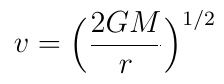
  10. Environmental Effect: Since the advance of the industrial revolution, we have developed a highly technological world. In particular, the development of electronic machines, which often involve the transmission of electromagnetic radiation through our atmosphere. This includes radio waves, but also other frequencies. It has been suggested that a mobile phone when held close to the human brain may raise the temperature of the fluid around the brain by as much as 1/10th of a degree Celsius. Given this, and the heavy saturation of electromagnetic waves in our environment, particularly through our power grids and wifi/satellite communication system are we sure that these technologies are not negatively affecting our brains leading to the manifestation of physical forms external to us, or at least the appearance thereof? Two possible sub-versions emerge from this. The soft version is that our technology effects our brains and causes us to hallucinate and since we are all in the same environment it is no surprise when some of those hallucinations are shared with other individuals. A more harder sub-option we might consider is that the technology is altering our brain to the effect that our senses are able to perceive a broader reality than exists outside of what we can normally perceive. In other words, the objects are there but only observed under certain conditions. This would then be analogous to seeing the human brain as like a radio transmitter where certain frequencies of reality were mostly shut off to it (for the purpose of survival in this material reality) but under the right conditions could be broadened to perceive that wider reality (which then returns us back to something like a broader nature to reality).

In considering all of the above there is another element to this which cannot be ignored and may or may not lend support towards particular hypothesis depending on our own interpretation of other phenomenon. In this article we are only discussing orbs, but we cannot neglect the fact that others have also reported seeing more fantastic objects such as flying discs. In some of those observations, the orbs have been seen exiting from the discs, which might suggest they have the function of a sub-probe from a larger craft, perhaps for the purposes of scientific reconnaissance as a type of advanced probe. We will not ponder that more here, but simply acknowledge that it is a possibility. Given this author has never personally observed a flying disc, so associated with the traditional UFO, I cannot yet concede to this hypothesis, only to state that it is not an unreasonable one to assert provided it can be shown that the other types of observations of discs appear credible.

Another element we might consider is that long distance space travel is not consistent with limited life biological organisms and so we may be looking at some form of artificial intelligent life that represents an original civilisation. Perhaps, if that civilisation had figured out how to upload its consciousness into an artificial form, they are for all purposes them. This would make them masters of time and space to a degree only imagined in our best science fiction novels. An implication of this, is that to them we would appear as like insects in comparison to their advanced form. Would their studies of us then be purely taxonomical? Their actions would appear to indicate a deeper and more profound interest in human affairs.

In summary, nobody really knows what these objects are, and more data is required to form meaningful hypothesis which can be tested or falsified. But I will say that from my own personal experience there does appear to be an intelligence behind them. This intelligence may be a distant controller, or the object itself manifest of intelligence. On this basis, I am personally inclined towards the options [6], [7] and [8], but also very open to [4]. Although, no doubt some percentage of all the above is likely playing a role (particularly [1]) which only adds to the confusion. For example, we know that the government ‘is’ also flying drones in the air, but this is likely to investigate the phenomenon and to ensure that the majority of objects seen by the public are conventional drones which dismisses the possibilities of the fantastic as a deliberate counter-intelligence operation.

My personal opinion is we are looking at something that is not a construct of our human civilization, is advanced technologically, and is intelligent to the point where it is aware when we are observing it. This certainly lends itself towards a higher form of intelligent life and is deserving of our respect and humility. Any form which is characterised by these kinds of traits, would also possess an awesome power for which we are dwarfed in comparison. The fact they have not used that power, also suggests a trait of wisdom but also compassion towards humanity and this would suggest a benign intention towards us. The recent actions of these objects, such as the blatant appearance in New Jersey, would also suggest a level of concern and urgency towards our current direction and we would be wise to pause and think.

The science of orbs may represent an exciting new field of scientific study for which I hope mainstream scientists start to examine and it should be a field of academic research at all universities that have an interest in exploring the unknown. For as the writer Arthur C Clarke once said, “the only way of discovering the limits of the possible is to venture a little way past them into the impossible”. I’m personally hoping for open minds going forward and certainly plan to give this issue more attention from a physics and astronautical engineering perspective.

A Personal Perspective on the UAP Phenomenon

The following post is made with trepidation and much thought, but I have felt compelled to write it despite my misgivings about doing so since I am surely to be criticised. Recently there has been a lot of press coverage over ‘drone’ activity. This has included bases in the UK like at RAF Lakenheath, and government facilities in the US such as Langley Air Force Base, Wright Patterson Air Force Base and Lawrence Livermore National Laboratory. This has also included much activity around the area of New Jersey and surrounding states like Virginia. Whilst 95% of this activity is likely to be terrestrial drones, sent up by government agencies, hobbyists, or mistaken identity for what is conventional aircraft and helicopters, it is my contention that there is a small fraction of these for which none of the above is their nature.
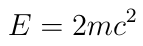
In the US, the government has appeared confused over the drone activity and from an outsider’s perspective appears discombobulated and uncoordinated in the management of the phenomenon. There are statements from different federal agencies but also state authorities, many of which contradict each other, demonstrating the inadequacy for which they have a handle on the problem. It will be clear to everyone that they do not. In fact, they are as confused as everyone else.

Instead, a story has been put out that they are perhaps looking for radioactive material, perhaps because a warhead had been smuggled from Ukraine into the US, as a relic of the former Soviet Union, and was now lost and this explains why they are looking. I’m going to call this out as disinformation but also inappropriate given the fear it may cause in the citizens surrounding the area. Instead, I believe it is a story created so that the public may be settled for now with a reason for the drone activity. I am going to state why I think the drones are there, although I may appear as a fool for sticking my neck out but that is the risk I take.

For decades, many people have been claiming to have seen things in the skies, what are now termed Unidentified Anomalous Phenomena (UAP). These people have been dismissed, ridiculed, made fun of, called crazy, even ostracised. I feel this widespread dismissal of a phenomenon that has both an objective and a subjective component is unreasonable. Especially since space pioneers like the astronaut Gordon Cooper have openly spoken of the things they have seen, such as in his book Leap of Faith. The astronaut Leroy Chiao also recently saw “two big metallic spherical orbs” whilst flying from Colorado to Texas whilst at 9,000 ft in August 2024. See the graphic below from the All-Domain Anomaly Resolution Office for how widespread the phenomenon is in our world.

The things people see have a wide range of nature and experience and each case should be examined on its own merits, since many will be false or mistaken identification of the known. Yet that is not the case for all of them. One of these types of objects is orbs, typically orange but also sometimes white or other colours. These are small spherical yet amorphous forms which appear like a plasma. Such objects have also recently been seen on the US East Coast.

It takes courage to come out and make a statement that you have been a witness to a phenomenon that is as controversial as this, and more so when you are a professional scientist, where objective scepticism on all observations is a requirement of our trade. As the astronomer Carl Sagan said, “extraordinary claims, requires extraordinary evidence”. Indeed, it does, but with our eyes we can see, even if our minds cannot compute the process in any rational way or account for it using prosaic explanations. So, I post this article fearing the implications to myself but doing what I think is proper in the expression of my view and as a personal right of free speech within a democracy.

I am an Aerospace Engineer and Astrophysicist. My main research is advanced spacecraft propulsion and spacecraft concept design for deep space missions. Through hard work and persistence over many years, I have earned multiple degrees in this subject to include a Doctorate. I have also published dozens of peer reviewed papers in the academic literature, and I have had the honour of visiting and presenting at every NASA laboratory in the US. In addition, I have published over 50 papers in the classified literature (none of which I can cite) when I worked for over a dozen years as a thermonuclear physicist; to include working extensively with the US laboratories. I know very well the consequences of nuclear war and the significant risks this brings to humanity should a ‘Hot War’ ever achieve realisation.

What you should take from this is that I know my air and space vehicles. I have studied aeronautics, astronautics and astrophysics. If I see something in the sky, I am appropriately qualified to make an objective assessment of its nature. I know a bird from a plane, an Aurora from a Zodiacal light, a Mars from a Venus. I know a lens flare on a phone camera from an orb. I know what the ISS looks like, individual satellites and I have seen on several occasions a string of Starlinks. I know a shooting star from a comet.
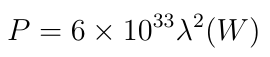
It is for the first time I make a public statement, that for several years I have personally been seeing objects in the sky and I have reported this to some of my close colleagues. This includes bright orange and white orbs at night, but also white metallic looking spheres in the daytime, usually going from/to the Ocean and on occasions appearing only hundreds of feet from me. I am not going to elaborate on the details here now, but I will merely state that I have seen them on multiple occasions (see photo above). Although some might claim it is a result of psychological exteriorisation, it was as clear as if I could reach out and touch them. When I ponder why I have been seeing these objects, I think it was because I was for many years ignoring the phenomenon in my efforts to be a good scientist and stay away from the highly speculative fringe - especially fearing the implications to my career and professional reputation. Yet, it appears to have got my attention by coming to me, as it has done so to many others, and I have seen with my own eyes things I have not understood or fit within my normal notions of the conventional. This is therefore my word.

Influenced by this, and over grave concerns for global geopolitical events, I was moved into action. I saw what appeared to be an incendiary push by certain nations to promote war between the West and Russia. The significant escalation of tensions was clearly building to a point where the media were openly discussing the prospect of World War 3 and it particularly concerned me that they appeared to do so in a state of excitement, rather than horror, and were not holding our governments to account but more like singing their song. I believe this was a real concern, especially since from an outside perspective it appeared that elements within the United States (a country that I love) and its allies seemed to desire that outcome.

In October I took the unprecedented step of writing a letter to the leaders of the five permanent members of the UN Security Council urging a more peaceful path. The only country that responded to me was the Elysée Palace in France under President Macron, who does appear to have attempted peaceful settlements for which I will at least acknowledge. <Read Letter Here>. The remainder ignored my letter, illustrating how the leaders of our different nations are so removed from the people they claim to serve. I even took the extraordinary step of sending my letter to the King of Great Britain and directly to the UN. Perhaps I was being naïve, to think that I could influence their actions, but if we are to create a world where all nations co-exist in peace then each person must at least try. Whilst as a Scholar my trade is the use of the intellect, I am also moved by the heart and extremely concerned for the future of the children of this world.

It is my opinion that the public are in no danger with these drones in New Jersey and beyond. The majority of them are human made drones, and many launched by the US Federal agencies and the remainder is people seeing aircraft and mistaking them for drones. But the reason the government drones are there in the first place is to understand and intercept what is the presence of a phenomenon for which they do not comprehend, and neither do they control. It is my humble opinion that those objects are there to prevent humankind from a self-destruction of its own making and maintain the pristine planetary environment of Earth that we all so adore. By their existence, they force our leaders to pause and make themselves visible to us so that ‘we’ the wider public may be aware they exist, which puts more pressure on our leaders who then have to answer questions about them; since they may already be aware of their existence but may not want that knowledge to be public to others. By the intervention, they have stagnated the rush towards war, and I believe that is the efficacious intention, especially during a Presidential transition and where the world stability hangs by a piece of string due to nefarious intentions. A Third World War that goes nuclear you will not be permitted to begin and all those that rush towards such a destination should take note.
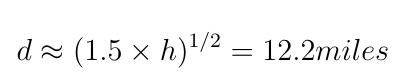

To those in power, you cannot stop them, and neither should you try, for although they may appear diminutive, we are impotent in their presence. I do not feel they have any malicious intentions towards us, but your pernicious actions and decisions have caused grave concerns that go beyond the interests of this world. To others I say do not be alarmed. Be excited and filled with joy, that the hazardous actions of our global leadership class have been paused so that we may be safe and can continue towards a future trajectory that is filled with optimism. For as a human species we were at a crossroads, and had they not intervened, I believe we may have been living in a rubble of ash, dirt and the cries of the fallen children, where beauty is but a memory once told and the light of incandescent hope decays to a darkness where even shadows don’t form. Such a future must be rejected at all costs if the light of human consciousness is to continue to shine out to an extraordinary cosmos.

I will finish by stating that I do not know the true origin of these objects and it would represent mere speculation by me. Based on what I have personally seen I believe we are likely in the presence of something that has an intelligent nature and through that also arrives the dissolution of the Fermi Paradox. Perhaps they are something way beyond our level of technological maturity. Perhaps they are visitors, or perhaps they have always been with us. We can only speculate. Yet having seen them for myself on numerous occasions, I am not alarmed but filled with joy at the broader implications for what may come as the nations of the world strive towards a more peaceful and prosperous union since we are one humanity after all. Wishing everyone a Happy Christmas, everyone on the good Earth.

Kelvin F Long BEng MSc PhD FBIS CPhys

Aerospace Engineer, Astrophysicist, Author

Aurora (again)

On the 10th October 2024 I was fortunate to witness a fantastic Aurora display in Southern England, like many. This is now the third time I have seen it and this time it was the best ever. It is such a pleasure to be engulfed by such a beautiful natural phenomenon. Some of the photos I took of the event are shown below.

The Fermi Paradox Narrative?

Contact with intelligent life from another star system (or elsewhere) would be one of the most profound moments in human history. It would have deep impacts on our social-cultural, political-economic, scientific-technological, religious-philosophical perspectives. It would be both a source of joy and excitement, but also concern about what it may imply for our place in the grand scheme of the Cosmos, as well as species-species interactions.

This has been well recognised for some time. For example in the 1960s the Brookings Institution published a report where they recommended: “Certain potential products or consequences of space activities imply such a degree of change in world conditions that it would be unprofitable within the purview of this report to propose research on them. Examples include a controlled thermonuclear fusion rocket power source and face to face meetings with extraterrestrials” [D. N. Michael, “Proposed Studies on the Implications of Peaceful Space Activities for Human Affairs”, A Report Prepared for the Committee on Long-Range Studies of the NASA, by the Brookings Institution, December 1960.]

The Fermi Paradox has emerged as a dominant framing device for discussions surrounding the potential existence of Extraterrestrial Intelligence (ETI) in the Universe. History tells us that a famous lunch took place circa 1950 at Los Alamos in New Mexico in which the brilliant physicist Enrico Fermi asked the question ‘Where are they?’. This was an apparent reference to the theoretical prediction that they should be here by now yet our observations do not detect them, giving rise to a contraction between our expectations and our experiments - otherwise referred to here as a Paradox.

We can look at the problem by examining two extremes, and then everything else in between. These two extremes are that we are the only intelligent life in the galaxy, or that we live in a crowded galaxy. The idea that we are the only intelligent life in the galaxy, and therefore the first intelligent life to arise in the galaxy, has been argued by many. This includes Viewing [“Directly Interacting Extraterrestrial Technological Communities”, JBIS, 28, 735, 1975] as well as Hart [“An Explanation for the Absence of Extraterrestrials on Earth”, QJRAS, 16, 128, 1975] and Tipler [“Extraterrestrial Intelligent Beings Do Not Exist”, QJRAS, 21, 267, 1980]. We might refer to this as Hart-Viewing Chauvinism.

The idea that we live in a crowded galaxy, has been argued by authors such as Shklovskii and Sagan [“Intelligent Life in the Universe”, Holden Day, 1966] and also Sagan and Drake [“The Search for Extraterrestrial Intelligence”, Sci.Am., 232, 80, May 1975]. Bond and Martin examine these two extremes succinctly in their paper [“Is Mankind Unique? – The Lack of Evidence for Extraterrestrial Intelligence”, JBIS, 36, pp.223-225, 1983]. We might refer to this as Drake-Sagan Chauvinism.

Enrico Fermi died in 1954, and I am not aware of him talking about the topic in any of his published writings. So all we have to go on that this discussion took place was the word of the witnesses who were apparently present at the meeting and recounted it later. This includes the nuclear physicists Edward Teller, Emil Konopinski and Herbert York. It also includes a retelling by Hans Mark, although he was not present during the original meeting and only heard the story whilst at Los Alamos and it is unclear why such an apparently light hearted discussion would attain the status of a generational mythological story.

Indeed, our only evidence that the conversation ever happened comes from those that wrote about it years later such as by Eric Jones in his 1985 article [E. M. Jones, “Where is Everybody? An Account of Fermi’s Question”, LANL, 1985], and his correspondence with those that attended. In fact, the term ‘Fermi Paradox’ did not enter into widescale usage until around 1975 onwards. [A. R. Martin, “The Origin of the ‘Fermi Paradox’, JBIS, 71(6), 200-206, June 2018.]

Enrico Fermi

The conversation is interesting, because it is strange that in the 1980s these physicists remember it so well. When according to Teller “there was a conversation which I believe to have been quite brief and superficial on a subject only vaguely connected with space travel”. So why then did Teller seem to remember it if it was not an important conversation, so many decades later? Teller continued “We then talked about other things which I do not remember and maybe approximately eight of us sat down together for lunch”. Apparently Konopinski and York were quite certain that there were only four of them. Teller also states “We then talked about other things which I do not remember….I think it was some down-to-earth topic”. So why did Teller (and others) remember this conversation with Fermi but none of the other conversations? Especially when he himself down plays the importance of the conversation. I find this an inconsistent accounting of the meeting.

Teller further states “I do not believe that much came of this conversation, except perhaps a statement that the distances to the next location of living beings may be very great”. In his reply to Jones, Konopinski says “More amusing was Fermi’s comment, that it was a very reasonable theory since it accounted for two separate phenomena: the reports of flying saucers as well as the disappearance of the trash cans”. The main cartoon from the New York newspaper that discussed this matter is shown at the top of this article and is one of the ways that the discussion was dated to the summer 1950.

Although a comment that others may interpret to be intended in jest, this perspective was backed up by Fermi’s answer to the probability that within the next ten years we shall have clear evidence of a material object moving faster than light: Teller said “I remember that my answer was 10 to the minus 6, Fermi said ‘This is much too low. The probability is more like 10 percent”. This is actually a consistent picture of Fermi’s view. On the one hand his theoretical prediction was ‘they’ should be here. On the other, he appeared to assign a 10% probability to an observation of them by circa 1960. Yet this is not how history seems to reflect this discussion. History instead has recorded the Fermi question as ‘Where are they?’

The matter is seen through the lens of jovial comedy and that in some way an underlying premise of Fermi’s position was that they are not here now. But if one reads the account of Fermi’s words by Teller it is clear this is not what he said. Fermi said it was a very reasonable theory. Also according to York, Fermi had concluded that on the basis of such a calculation that we ought to have been visited long ago and many times over. Contrary to how the event is remembered, by these accounts, Fermi was not saying ‘Where are they?’ he was saying that the ideas they are here is reasonable.

Although the term Fermi Paradox has its origins in 1950, it did not enter into common use until the mid 1970s onwards. Although one can find discussions of the same idea without reference to Fermi, such as by the astronomer Carl Sagan in the 1960s [I. S. Shklovskii and C. Sagan, “Intelligent Life in the Universe”, First Published 1966].

Then in a paper published in 1975 by Viewing the two term’s ‘Fermi’ and ‘Paradox’ were used in the same sentence which is arguably from here that the term then became codified into popular culture. [D. Viewing, “Directly Interacting Extra-Terrestrial Technological Communities”, JBIS, 28, 735-744, 1975].

From this we can conclude the following facts:

  1. Fermi had apparently expressed the view that the idea of ETI being here now (circa 1950) was a reasonable theory.

  2. Fermi had expressed the opinion that by circa 1960 there was a 10% chance we would observe an object in the sky moving at ftl speeds; although he also suggested that such a value would constitute the equivalent of a ‘miracle’.

  3. The Fermi Paradox as a phrase did not enter into use in popular culture until at least 1975 but more widespread later.

  4. Since Fermi died in 1954 we have no testimonial from him about this 1950 conversation or what his actual views on the question were.

  5. We are reliant on the memory (circa 1984) and testimonials of Teller, Konopinski and York and then the efforts by Jones to pull all this together.

Following these events, the SETI Institute was arguably formed around the phrasing of this paradox as a starting premise and was founded some years later in 1984 by Jill Tarter and Thomas Pierson. It was also built on the work of pioneers like Frank Drake who first wrote down the Drake equation in 1961 and served as the President of the board of trustees for the SETI Institute when it was first founded after he moved to the University of California at Santa Cruz. Historically this author has had a lot of respect for SETI researchers and has attended some of their meetings at the International Astronautical Congress for example. Indeed I have had the pleasure of meeting both Frank Drake and Jill Tarter, two of the pioneers of the subject, having been inspired by the subject matter.

Although, as a researcher into the related subject of interstellar studies, where I mostly look at the possibility of robotic interstellar probe design, I always found them to be somewhat distant from me and I would not describe the interactions as over friendly. I felt very much an outsider, and I could never quite work out why. For example, I sat in on one of their meetings at the Breakthrough Listen project in San Francisco and raised what I think were reasonable view points about alternative detection strategies, only to be answered by silence, or an unwillingness to engage with me and this has been my consistent experience. Having considered this at the time, my assumption was this was a funding issue, perhaps seeing the interstellar studies movement as a competitor to SETI funding, in a tight fiscal climate. Particularly since there is strong competition for instrument time and so any ideas which are far out of the existing orthodoxy are less likely to be selected.

Yet, upon reflecting on this I feel the issue may be much deeper and this gives me some pause for concern. A factor that has guided this thinking is the way in which the SETI community seems to have responded to Professor Avi Loeb in his attempts to seek out evidence for life and intelligence nearer to home (Avi Loeb, “Extraterrestrial, The First Sign of Intelligent Life Beyond Earth”, John Murray, 2022). I also have a lot of respect for Avi and all he has achieved, although I have also had my differences with him, and I worked with him closely on the Breakthrough Initiatives Project Starshot. In particular, I don’t feel that his representation of the scientific community on podcasts and to the media at large as being closed minded as entirely fair and I have expressed this to him personally. What he might see as closed minds, I feel others would argue is a higher standard of objective rigour. That said, I am starting to come around to seeing his perspective based on how the SETI community seems to have responded to his efforts with the Galileo project. I would also note that Avi does at least write up his research and seek to publish in peer reviewed journals, so he is following the scientific method, putting his work out their in an open and transparent way for others to scrutinise and/or criticise if they so wish [Avi Loeb et al., “Chemical Classification of Spherules Recovered from the Pacific Ocean Site of the CNEOS 2014-01-08 (1M1) Bolide”, Chemical Geology, 670, 20, 122415, 2024].

My main research has been in interstellar studies. I have produced many papers, books, and participated in several television documentaries around this subject. I have also been involved in the founding or co-founding of several companies in the UK and US in relation to this subject. This includes Icarus Interstellar, Initiative for Interstellar Studies, Institute for Interstellar Studies to name some. I have also worked with other interstellar organisations quite activity, such as the Tau Zero Foundation, The British Interplanetary Society, Tennessee Valley Interstellar Workshop (which now calls itself the Interstellar Research Group). I was also a prominent member of the winning team for the NASA/DARPA 100 Year Starship competition only to find myself not enjoying any of the spoils of the win, with devastating consequences to myself and my colleagues at the time.

I have also participated in many cool projects, including serving on the Breakthrough Initiatives Project Starshot advisory panel to send a gram-scale probe to the nearest stars using laser sails. This includes a Johns Hopkins Applied Physics Laboratory effort to design a 1,000 AU probe for a Decadal study. This includes an International Academy of Astronautics Commission 3 study into a 200 AU probe. This includes instigating the British Interplanetary Society Project Icarus, a design into a advanced fusion propelled rendezvous interstellar probe as a redesign of the historical Project Daedalus.

The SETI community has historically been mostly focussed around the idea of long distance messaging, such as picking up radio signals from a distant civilisation in deep space. It has consistently showed no interest in the possibility that life may have been here or is here today; although I will offer the caveat that recently some members participated in a NASA workshop on technosignatures which might indicate a change of perspective with a new generation [Jason Wright, “NASA and the Search for Technosignatures”, A Report from the NASA Technosignatures Workshop September 2018].

In terms of the idea that intelligent life may be here already, its members actively ridicule the possibility. If anyone claims an observation that might indicate some level of contact, they are immediately labelled with the tin foil hat brigade and by definition not welcome into the SETI club. This is effectively an unscientific culture that is not much different from religious dogmatism. It is therefore constructive to examine the narrative that studies in SETI are founded on; although I acknowledge this may be somewhat of a generalisation.

The field of SETI is largely based around two themes. The first theme is that life may exist close by to include on some of the celestial objects of our solar system (on Mars or one of the Moons of the gas giants for example) but if it does exist it is likely microbial in form. This is the domain of astrobiology, an important discipline of scientific knowledge but for which the potential for dialogue with another lifeform is not possible, since we cannot communicate to bacteria. This is not to understate the importance of a discovery of microbial life on another world from a scientific perspective, but its consequences to our society are limited. Arguably, a lot of NASA’s work in the search for life is focussed on the field of astrobiology.

The second theme is that intelligent life may indeed exist among one of the many stars of our galaxy (or another galaxy) but it is likely very (very) far away. This possibility motivates the search for emission signatures from long-distance communication systems. Since it takes a long time for radio signals to travel over thousands of light years distance, the potential for dialogue with one of those advanced civilisations is again made not possible, since we are out of space and out of time. Indeed, they may not even exist anymore.

There is a third theme which we should mention and this is also a major theme for which NASA and the ESA is involved, although it has only emerged in recent decades. That is the possibility of discovering exoplanets which are habitable systems upon which life may emerge and thrive. Since we have discovered over 7,000 exoplanets to date, one might imagine that evidence for ETI may be forthcoming since it would be difficult to contain any emission data from well-motivated astronomical observers. As our astronomical observing programme picks up, provided it is conducted in an open and transparent way, the potential for discovering ETI is at least more probable.

Arguably, since SETI has largely been a pursuit of astronomers, they may not be the best choice of practitioners if one wanted to consider the possibility of ETI existing on Earth or in nearby space. Indeed, we might instead refer to their community as the Astronomical Search for Extraterrestrial Intelligence (ASETI) with its emphasis on optical and radio telescopes. Particularly if this promotes a culture of rigidity over orthodoxy.

The first and second themes discussed above are two extremes which provide for a set of boundary condition on the solutions space for what is possible. In the figure below everything to the left of the green line is considered permissible for mainstream scientific enquiry.

In both the above two main themes there is absolutely no possibility of dialogue with ETI. Life is either very close but too primitive, or it is advanced but very far away; and by implication far back in time so may not exist anymore anyway. This is an unacceptable narrative that constrains the potential solution space and certainly appears to set out to neglect the possibility of intelligence being here now - even the possibility of it is kicked into the long grass. Yet, the suggestion of an ETI presence within or nearby to our Solar System is a perfectly reasonable hypothesis upon which to form a scientific research programme. That is also the basis of Arthur C Clarke’s “2001: A Space Odyssey” and the discovery of a Sentinel probe. The physicist James Benford has proposed searching for co-orbiting probes for example [James Benford, “Looking for Lurkers: Co-orbiters as SETI Observables”, The Astronomical Journal, 158, 4, 2019].

In a recent paper this author has demonstrated that with the rise of our technological astronomical machines, in addition to the maturation of our advanced propulsion technology, if any ETI exists within 100 - 200 ly of Sol, then first contact would occur within the next 100 - 200 years. By implication if they existed within 10 - 20 ly then contact would occur within 10 - 20 years. This analysis neglected the possibility of them being here as a thought experiment. [K. F. Long, “The Temporal Contact Equation: An Estimate for the Time of First Contact with ETI”, JBIS, 76(11), 279-282, November 2023.]

In another recent paper by this author, a calculation was conducted using the diffusion equation to show that if any advanced ETI civilisation constructs von Neumann machines, self-replicating AI probes, that it is possible for them to cover the entire galaxy in a timespan as short as hundreds of thousands of years. [K. F. Long, “Galactic Crossing Times for Robotic Probes Driven by Inertial Confinement Fusion Propulsion”, JBIS, 75(9), 118-126, September 2022.]. This was limited to transport speeds of order 0.1-0.15c based on a fusion propulsion capability. If ETI had access to propulsion technology that was much faster, especially approaching (or even exceeding the speed of light as in ftl) then the galaxy could be covered in a much more rapid time frame.

In an online video the physicist Freeman Dyson tells a sweet story of when he went to visit Enrico Fermi in Chicago to discuss some pseudo scalar theory of pions and how well or not they matched to experiment [see: ‘Fermi’s rejection of our work’ on You Tube] . Fermi was not impressed and quoted the physicist John von Neumann who had said “with four parameters I can fit an elephant, and with five I can make him wiggle his trunk” and on this basis Fermi did not find the numerical agreement with experiment profound. Seeing how von Neumann and Fermi think, one might borrow their reasoning and similarly articulate that with two parameters I can construct a narrative. Such a narrative is demonstrated in the figure of this post shown above.

In contrast to the left side of the green line, for the items in the bottom right corner of the green line in the figure appears to be considered out of bounds or the domain of the uninformed observer, the amateur, the uneducated, the ignorant, the fool or even the crazy. If anyone conducts research in this area or proposes search strategies along these lines, they can expect a barrage of ridicule to land at their door. This is especially the case for established scientists, where ostracization from the community awaits and so with it the possibility of research grant funding. This is an effective no-go area for scientists unless you want to have your work downgraded to science fiction.

To illustrate the level of fear, I myself was reluctant to post this article (and others and I am currently writing) because even now I am concerned it will lead to the rejection of research grants I am currently pursuing and desperately need since I am entirely unfunded and unsupported. This is my reality as a professional scientist, working in isolation. Yet as a scientist, our highest ethic must be the pursuit of truth despite the consequences this may bring.

Indeed, such a policy of ridicule would be consistent with the famous Robertson panel report in 1953 which due to fears over causing mass hysteria and panic over the possibility that the Russians might capitalise on any observed phenomena in the skies, after objects were reported by the general public. This report was published two years after the famous Fermi lunch and two years before his death. [H. P Robertson, “Report of Scientific Advisory Panel on Unidentified Flying Objects”, Convened by Office of Scientific Intelligence, CIA, 14 – 18 January 1953.]

It is certainly the case today that the SETI Institute, and the SETI community stays well clear of the bottom right corner of the figure above. ETI is never close if it is intelligent and neither should such a hypothesis be considered reasonable. Instead we see phrases in their articles like “in a distant galaxy far far away”. In discussions over aliens one will often see phrases from the media like ‘little green men’ as a term of derision. One only has to read a popular magazine article by a member of the SETI Institute or by the wider media to see this sort of language being used, often accompanied by laughing. Due to events in my personal life yet to be articulated, I feel it is necessary to call a spade a spade. To me, this feels like a propaganda campaign designed to promote a particular narrative that has acted to suppress original and creative scientific enquiry into the unknown.

Many years ago, circa 2013, Jill Tarter was quoted as saying at a San Francisco Science Fiction convention “The Starship is effectively impossible” by a reliable witness who was present at the meeting and informed this author who wrote the quote down. There is in fact hundreds of published peer reviewed technical journal papers by outstanding academics that shows the opposite is in fact the case going back as far as the 1950s [Les Shepherd, “Interstellar Flight”, JBIS, 11, 1952]; yet this research by highly qualified people is apparently ignored. This illustrates the mindset of an organisation that has historically focussed on a narrow solution space for the possibilities of intelligence in the Universe, but also actively controls the narrative. I personally find this behaviour, to effectively act as the Gate Keepers on any speculations about intelligent life, to be highly frustrating. Admittance of individuals into that community requires some degree of compliance to the narrative.

As a test, a proposal was also recently made to the SETI Institute by this author to pursue a research grant under this subject matter titled ‘Characterising Propulsion Emission Signatures from Advanced Technological Civilizations’. The grant was rejected without explanation or debrief. This is despite the fact that the subject proposal was reasonable, the amount of finance requested was small, and the author well qualified to undertake the research having published dozens of peer reviewed research papers relating to advanced propulsion. Even now, we still do not know who won the SETI Institute technosignature grants.

I simply wanted to propose a survey of the expected emission signatures from different types of propulsion engines and then on the basis of that make recommendations for astronomical surveys in terms of wavelengths, frequencies, energies, power. For example, if an advanced fusion engine or antimatter engine was operating within a light year of Sol, we had a chance of detecting it. It is also perplexing since the power spectrum associated with advanced propulsion systems is orders of magnitude higher than what we might expect from deep space communication systems [R. Zubrin, “Detection of Extraterrestrial Civilizations via the Spectral Signature of Advanced Interstellar Spacecraft”, Progress in the Search for Extraterrestrial Life ASP Conference Series, 74, 1995]. Therefore the rejection of such research is even more curious.

Although I will acknowledge that the window of using advanced propulsion systems may be limited, since any civilization that advanced to a high technological state may develop technologies way beyond these capabilities [N. S. Kardashev, “Transmission of Information by Extraterrestrial Civilizations”, Soviet Astronomy AJ, 8, 2, 1964].

To illustrate the dogma adopted by members of the SETI community, here is some content from a recent article published by Space.Com on 17th April 2024 where the SETI Institute Director Bill Diamond is quoted in reference to the UAP phenomena that is currently under discussions in US Congressional hearings: “The idea that the government is keeping something like this secret is just totally absurd. There’s no motivation to do so” and “We don’t have any evidence of any credible source that would indicate the presence of alien technology in our skies. And we never have”. Currently, there are active scientific studies to detect UAP phenomena under way [Wesley A Watters et al., “The Scientific Investigation of Unidentified Aerial Phenomena (UAP) using Multimodal Ground-Based Observatories”, Journal of Astronomical Instrumentation, 12, 1, 2023].

I will state for the record, and without breaching any national security oath, as someone that has worked on highly classified government programmes within the UK and US, that governments absolutely can keep secrets and Bill Diamond does not know what he is talking about. This mantra is often also adopted by the influential astronomer Neil deGrass Tyson and is utterly wrong and is an opinion expressed by people that never appear to have worked in government programmes of this nature.

Diamond further states: “Statistically speaking, every single star in the sky has one or more planets around it….That implies the existence of tens of billions of potentially habitable worlds in our galaxy alone…So indeed, the statistical probability that we are alone in the Universe is zero. Surely there is life beyond Earth”.

He further states: “But the presence, both in space and time, as well as proximity, of advanced alien civilizations is another matter completely. There are innumerable variables, all of which in the sciences of astrobiology, planetary science, astronomy and astrophysics, we are trying to figure out”.

So even with the most conservative assumption of one planet per star, Diamond admits that statistically the possibility of intelligence in the galaxy or beyond is high. Yet, despite admitting this, in terms of ETI being here today, he just won’t go there, and note that the emphasis is always on “Beyond Earth”. It has to be either close but microbial or intelligent but extremely far away and out of reach. He appears to be trapped within an oxymoron of logic in his own reasoning.

This presents a dichotomy where an institution exists that professes to search for intelligent life but does not give moderate funding support to proposals that have some chance of detecting it. It is also an institution that won’t even consider the possibility that ETI may be here today. This is a mystery wrapped in an enigma, sufficient to garner one’s attention as a red flag.

For sure, as scientists we must hold our objectivity. We must withhold jumping to any conclusions until the evidence that presents itself becomes undeniable. As the astronomer Carl Sagan once said “extraordinary claims, requires extraordinary evidence”. When claims are made we have to dig deeper into our scepticism and it becomes a battle between the heart that wants it to be true and the mind that intellectualises the parameters.

Yet, I have a feeling that very soon the SETI Institute is going to be the outsiders in the discussions about ETI if they do not open up to the possibility that not only may ETI have been here in the past, but they could be here now today. It is as if they are in a room and people are trying to tell them there is a huge elephant standing behind them and they just can’t see it….or they won’t see it….because that is not the narrative to be followed.

In a recent fund raising post the SETI Institute declared: “The SETI Institute continues to lead the charge in exploring the cosmos, driven by our shared curiosity and determination to discover what—or who—may be out there..”. It also claims on its web site that it is “the only research organization solely devoted to searching for and studying life and intelligence beyond Earth”. I think it is time this claim for being the leader in exploring the cosmos and discovering what/who is out there should be challenged. No doubt I am going to get attacked for this statement and I have experienced this before from followers of the SETI community, who surrounded me like a pack of wolves for merely daring to raise a criticism of their thinking. That is after all, the conduct of a cult following. But okay, as a scientist making statements in a public domain I accept that others have a right to defend themselves.

Despite my criticism, this author wants to acknowledge the important research that has been done by the bread and butter members of the SETI community over the years and this post should not be seen as a criticism of individual research papers which contribute to the entire debate over what may be possible. Those research papers have enormous value. However, I find myself asking about the framing of the discussion and whether this has been a deliberate strategy to control the narrative over the potential of an ETI presence on Earth today and for which may have held back scientific progress in the search for intelligent life.

I have not come to this conclusion lightly, but through much thought over many years of being a researcher in interstellar studies but also my interactions with the SETI community which I would not describe as particularly welcoming. This is also based upon personal objective observations that are yet to be articulated in the public domain but I intend to do so in the near future. Elephants indeed! I end this post by stating my view clearly, that the SETI Institute is wrong to deny the possibility that there may indeed be an ETI presence today and I would suggest it starts considering this possibility if it aims to remain relevant, giving what is likely over the horizon in the very near future. For it is my stated opinion, that the truth may already be at our door.

Extraterrestrial Compassion

As child, at aged around 10 years old, we watched a film at School for Christmas. It was Steven Spielberg’s Extraterrestrial (ET). I sat towards the front, the lights were dimmed and we enjoyed watching the film. Yet, the moment when the ET was under the bridge half dying, caused me great emotional distress. I reacted to it unusually for a young lad, in that it made me cry. There I was emotionally upset at the site of a dying ET on television, but afraid of being judged by the boys and girls around me in the classroom. Somewhat embarrassed, I quietly wiped away the tears and nobody noticed.

When I was a teenager, I was walking in a field by some trees and noticed two Magpi birds flying above the tree line in distress. I went into the trees and found one of their babies, a small Magpi. I gathered it must be injured so I picked it up and took it home. The bird’s parents were yelling at me the whole time but I did not listen to them and just wanted to help the baby bird. I placed it into a box in my bedroom and went down to the local pet shop for some advice. The owner suggested using tweezers to feed it with a tin of dog food. So I did this. I tried hard to feed the bird just wanting to help it. But in the attempt, I guess I caused the bird so much distress in trying to open its beak, that it died of shock in my hands. I was absolutely devastated, to think that I had killed a bird that I just wanted to help. I recall getting very emotional in my over reaction and smashing up my room I was so overcome by the moment. My family and the neighbours were outside in the garden concerned about me that I might do something to harm myself. Eventually my elder brother got into the room and calmed me down. They all thought it was funny and a bit ridiculous that I had reacted so badly to the death of a bird, but I was overwhelmed by grief that I might have played a role. To this day, this incident influences me and I still think about it decades later.

Another incident that effected me in recent years as an adult, was a local aquarium had an Octopus in one of its glass tanks. One day I was in there and I saw it looking at me from behind the rocks. Its eyes on me like it was communicating its distress to me that it wanted to get out. I felt I was being silly and such a thing is impossible and I ignored it, although not particularly happy about the limited size of its enclosure. It still bothered me and I thought about campaigning to the aquarium to have it released. I had planned to start to write a letter, but alas life gets in the way and I never did. When I next visited I discovered it had died. I always remembered that octopus and I have a photo of it.

Just recently, with my children we had a summer project to grow some Butterflies at home. We had nine in total and at the end we produced eight which I think shows we did a good job in taking care of them and following the instructions. We had released them into the garden and it was such a joyous day to witness. But one of the Butterflies was tangled up in the remaining skin of the Chrysalis material. I tried to help it and got out a large magnifying glass and some tweezers to see if I could separate it. But it was obvious its wing was completely broken and ripped and it had no chance of survival. I knew I had to take it out into the garden to end its life. But first I wanted it to see the Sun. So like a silly person, I took the Butterfly out and did a circuit of the garden and showed it the Sun and allowed it to enjoy it for a few minutes, before I ended its life. It was heart breaking for me, but was necessary since it really stood no chance at all.

For some reason, I have an emotional reaction to animals that might appear to be trapped or in distress. This is perhaps just my human compassion speaking. In 2010 the Whale and Dolphin Conservation Society was involved in organising the Rights of Cetaceans out of Helsinki in Finland, and I was glad to be a signatory to such an important piece of writing that hopes to foster moral and legal change to the rights of the animals in our oceans.

But such feelings of compassion are bought to a heightened state of awareness when I consider the claims made by some that human beings may at some points in our history have had an alien being in a facility and not taken care of it. This is particularly the case in a video that has been doing the rounds online for some years. Although many point to it being a hoax, others are not so sure. I am not offering an opinion here, just presenting the information that such a video exists. If you wish to see a part of it the link is below:

The Alien Interview released in 1997 - clip of alien in distress

The very thought that we could have a being in captivity and not treat it with the absolute best care we can muster, overwhelms me with disappointment but also anger; and so I hope it is not true. That if we were to go to another star system I would like think that they would take care of us. If it was the case that beings travelled here and suffered in distress under our supervision, I cannot think of a greater crime to have committed. Any person involved in such an activity would be the epitome of evil and I would certainly advocate for their prosecution.

We must also acknowledge that the idea there may be beings walking among us on Earth is difficult to understand. We know that any organism has evolved within the microbiome of its environment and so it is not clear that any biological ETI that visited Earth would be able to survive here, the same way we might not survive on another planet that already had an indigenous life population. This might suggest that any visitors would have to adopt some form of artificial body, for the purposes of interacting and communicating with humans. That is, unless they have figured out some form of advanced genetic engineering that allows them to hack into our biology and survive in our environment.

Although such creatures would by definition be alien, if one was stranded here, we have a duty to take care of them as best we can so that we may learn from each other. Any form of first contact would represent an important moment in our species history and it is important we treat it with the appropriate amount of respect. There is so much we can learn from them. Do they have art, poetry, music? What is their culture like? What is their cosmological models of reality? What grand planetary problems did they overcome (and not) and how can they advise us? Do they play sports and write literature? What is their architecture like? Do they believe in God and what physics have they understood? There are so many questions. I also think they would be equally curious about us. We may appear primitive to them, but perhaps a glimpse into their own past maybe millions of years ago. The humans, capable of so much beauty yet also so much destruction. We must at least represent an enigma.

It is for this reason that a couple of years ago I started working on a document related to the rights of intelligent kind, to include humans and aliens, in the exploration and use of outer space. This has been a substantial piece of writing taking into account some of the greatest pieces of literature in human history. In 2025 I plan to submit this document to a peer reviewed journal in the hope they will publish it and start a conversation about the rights of all life wherever it may have originated, with the purpose of facilitating for peaceful relations.

Some years ago I visited the United Nations in Vienna and I attempted to get a meeting with someone from the Office of Outer Space Affairs but I was unsuccessful. The organisation seems to do good work, but it is very difficult to get involved in it or even to find out how to get involved in it. I have found this situation highly frustrating and certainly not consistent with openness in a democracy. I know that there is so much they are not looking at when they need to be. For this reason, I have been working on this document in isolation and without the guidance of others. I hope that when I publish it, the UNOOSA will at least read it and think about the rights of humanity and other beings that we may encounter in the future, on Earth and in Space - assuming we havn’t encountered them already?

Reaching for the Stars

As a child, coming from an upbringing of poverty, violence and English council estates opportunities were not even on my horizon. My father for example when he was young had known the Kray twins and worked at one of their clubs with his two brothers. His father, my grandfather, was a bare knuckle fist fighter from Dublin in Ireland and would later join the Irish and British Army. I have a photo of him with the Great Train Robber Buster Edwards. This was my history, and as much as I loved my father I did not want this to define me. We had a difficult relationship whilst he was still alive but I grew to understand him. He once told me he had learned to read and write by studying the graffiti on the underground tunnels of London. Despite his own background he would become an artist, poet, musician and stage performer. My happiest memories of my father as a child was going for walks looking for dinosaur fossils and fishing floats and he would tell me stories. When he passed in 2014, I was with him and he left this world looking like a King.

At some point when I was a teenager, I moved to Northern England to complete my School education. It was tough and I was in fights a lot at School so I just stopped going it was so awful. At age 15 I was instead delivering LPG cylinders in the cold snow of Cheshire, and I could see the Jodrell Bank telescope in the distance but never made it there. I went back to School three months before my exams, but they wouldn’t let me take mathematics or science because my attendance record was so poor. So I left School with no qualifications. But what made me go back to School?

One day, when I was meant to be at School and looking for somewhere to hide away, I walked into a museum and what I saw changed the trajectory of my life. For this museum had an exhibit of Project Apollo and the year was 1989. There was a country, America, that had been given a mission to land a person on the Moon by the end of the decade and it did it. This affected me profoundly and sent me on a trajectory of wanting to work in astronautics after many years getting an education. I wanted to be an astronaut and I called myself “An Englishman pursuing the American dream”. I even sewed myself a NASA badge and placed it onto my shirt and I remember people thinking I was a bit strange. We had a debt collector and she was a nice lady and she went to Florida on vacation with her family. When she came back she bought me back some NASA cards and a brochure and it just really inspired me. The kindness of that lady for doing that. I still have those items. I would also spend days at the local library reading all of their space books.

This was a very powerful vision and absolutely inspiring to me. I would go to the museum every day for several weeks and copy down the newspaper clippings on President Kennedy’s speech. I recall getting travel brochures from the local estate agent on Florida just so I could imagine what it looked like, the place where they launched rockets. I followed American Football and my team was the Miami Dolphins, all just because they were in Florida. I even found a local England team and on Sundays would travel there to watch them play just so I could be around them. I made myself a home-built American football board game. I would go and lay in a field on my own in the middle of the night, in the not the safest area, and just look up at the stars through a pair of binoculars I had obtained. This is where my obsession with spaceflight began. It is no exaggeration to say that I connected to something about that exhibit, something triggered in me that was profound, like it was always meant to find me. After many years of hard work, I did get back to School, through College, University and to earn multiple degrees, although I also got side-tracked working as a scientists for the government for many years in what was at least interesting work. But space kept calling me and I slowly returned to it.

Years later I went to the Kennedy Space Centre with some friends after a conference. We were very tired and had been up for days with hardly any sleep. So we arrived with tired eyes. The first thing that greeted us was an exhibit about President Kennedy, the man who was assassinated. I remember feeling very emotional and so did one of my friends. It was a special moment for both of us. Even today I keep a framed photo of President Kennedy behind his desk, in my own office and it reminds me never to forget the good things he tried to do, and that bad things that prevented him from doing them.

Since then, I am fortunate to say that I have since given a lecture at every NASA centre in the United States and it has been my honour to also receive a VIP tour and NASA has always been very kind to me and an excellent host. Probably one of those highlights was visiting the Jet Propulsion Laboratory in Pasadena, California and standing next to an exact replica of the Voyager probe. You can see how happy I am in the photo. I also gave a talk to the JPL staff. How strange I must have appeared to them, talking about interstellar flight when they were actually building real spacecraft. Years later, when giving a talk at NASA JSC they were kind enough to present me with an appreciation plaque for my contributions to interstellar studies and that remains the only recognition I ever received. But that is okay.

Yet I have bigger dreams, which sound more like science fiction, of wanting to send spacecraft to other stars. This vision infected me at some point and it has dominated my every waking thought like a dream that will not evaporate. I think about it when I wake up in the morning, throughout the day and when I go to sleep at night. It became an absolute obsession. I recall being in a supermarket doing my shopping, and yet my imagination would take me to a crazy place of seeing and hearing a giant 100 ft engine nozzle being tested on the ground. This would make me smile in my own little world. Whilst other people were carefully picking their groceries, I was seeing the future that may yet come.

My name Kelvin, is celtic, and its meaning is “Passing Ship”, which is interesting for someone that does research on starships. Its also an interesting name for a physicist. In the 2009 film Star Trek I was thrilled to see the USS Kelvin in the first ten minutes, only to see it get blown up, as the baby Captain Kirk was born. In the 2013 sequel Star Trek Into Darkness, again in the first ten minutes, I was thrilled to see the Kelvin Academy, only again to see it get blown up. I’m sure this is just a co-incidence, but this is sort of how how my own journey in interstellar studies has been. To build something only to have it snapped away by disappointment.

Strangely, 2009 is the year that I launched Project Icarus, an initiative to design a fusion powered interstellar probe. We are only just writing up the final papers now and they should all be published in 2025. Plans started the year before that in 2008 when I presented the 5th highlight lecture at the 59th IAC in Glasgow which was arguably my seminal talk. The year before that in 2007 was when I hosted a conference on the Warp Drive in London at the home of the British Interplanetary Society. It got a lot of media attention and it was a lot of fun for those involved. We also participated in a documentary film about the subject. Prior to 2007 I hadn’t done much in spaceflight other than write the occasional small article, mainly due to the restrictions of my day job, so this is the year when I really entered the subject matter. I have never really understood what has so compelled me to push so hard on this subject and just occasionally it feels almost like I am not in control of the direction in which the winds blow my sails. It has been both a blessing and a curse.

Co-incidentally, in 2009 I was diagnosed with a macro prolactinoma. This is an expanded pituitary gland in the head, right in between my two eyes. The normal measure of prolactin in the pituitary gland should be around 300 - 400 micro-units/litre, but mine was measured at over 9,000 micro-units/litre. The Pituitary gland had grown from a 1-2 mm tissue to as large as 14 mm and it was visible on the MRI. Fortunately for me, it was a benign tumour although I would have to take medication to control it thereafter. I asked the doctors what would cause it and they said we don’t really understand the causes of it. Stress may be one factor, although I was not particularly stressed at this time. Although it was diagnosed in 2009 it must have been building in the ~1-2 years prior to that.

It is a strange fact that from this period, circa 2007-2009, I also became so obsessed with the starship and interstellar studies. My friends joked around me that it was typical of me that I would get a medical condition that only served to increase my productivity. Indeed it did and the papers, presentations and emails flew out. My friends jokingly referred to being around me as being exposed to “Kelvin Radiation”, particular for my emails which were prolific. Probably, it was too much for them, and I was quite intense to be around and was not always as sensitive to the intensity it created being around me for others. Highly driven, never taking my foot of the pedal. I became a leader among many, not having had any leadership training prior to this. The audacity to think I could just jump in and lead people on a path towards a vision. But I did, through shear confidence in myself and an instinct that my path was the right one. Yet it was not all plain sailing and we had our moments. I lost good friends during this time too as our visions and personalities clashed. It won’t be a surprise to hear that I still think my vision is the right one to pursue in terms of making a path to the stars. Yet now its just me, with no team and no financing. Such is life.

I like to call myself a child of the Renaissance man Leonardo da Vinci who in the 15th century had visions of the flight of the birds and designed machines to be flown by humans. How crazy he must have seen to his generation? Yet many of his visions came true centuries later. That is not to say that I in any way equate myself with the brilliance of Leonardo for he was exceptional and he remains my favourite artist. More so, that is how I see the Starship, that to us today it may seem like science fiction, but in the future it will become reality. Those that work towards such a future are Leonardo’s children; metaphorically speaking.

My own adventures in interstellar studies have involved many theoretical projects but also the creation of for-profit and non-profit companies. I have also worked on professional starship projects. This includes the ‘Interstellar Probe’ with Johns Hopkins Applied Physics University, and ‘Project Starshot’ with the Breakthrough Initiatives. This includes a 200 AU Commission 3 study with the International Academy of Astronautics. I have also received grants from US corporations to do starship research. I was also a part of the winning team for the DARPA/NASA 100 Year Starship; although for reasons not articulated never enjoyed the winnings and I stepped away from it shortly after.

My life feels like I have started from zero and I am racing towards infinity. Yet, infinity feels a little closer every day. Although it is the mind that conducts the calculations pertaining to these theoretical studies, it is the heart that has driven me forward in this endeavour. In my quest to reach for the impossible and hopefully bring benefit to our species that is so troubled by its own self-created problems of destruction. I very much object to the current direction of conflict and war between nations and advocate for a more peaceful path among men.

Despite my own gains and losses, triumphs and falls. Despite building companies only to see them collapse, assemble teams only to see them disassemble, to find friends who turn out not to be your friends, to trust only to find disloyalty, to give vast sums of money or vast sums of time only to find it was for nothing. Despite melting into the ashes under the pressures of existence in this world, and at one point wanting to walk away from it all caused by years of depression suffered in silence, despite finding myself standing as an island apart...the stars continue to call me to towards their light...and my journey shortly moves to the next stage. Unfunded and unsupported I may be, but the Starships are coming...and I intend to make sure of it. Watch the Stars!

The Fermi Parameter

Life on planet Earth has taken many millions of years to evolve to the complex life-forms that characterise Homo sapiens with all its intelligence and associated technological tools. Yet, for centuries, astronomers have speculated that it may be possible that intelligent life exists elsewhere, and this search has informed some of the motivations for our national space programs. Life may have evolved from the same primordial soup and simply been transmitted from one world to another, such as during planetary collisions during the early stages of the Solar System formation, or it may have separate points of evolution that are independent from each other. A discovery of life representative of a separate biogenesis from Earth would be one of the most profound moments in the history of the scientific endeavour.

This search has become more poignant in recent years since the discovery of thousands of exoplanets around other stars thanks to amazing astronomical observatories like the Hubble Space Telescope, the Kepler Space Telescope and the James Webb Space Telescope. These observatories and others that succeed them are sure to change our perspectives on models of planets, stars and life in the Universe as their sensitivity and resolution improves with each decade of technological development. In our search for planets around other stars we have discovered Hot Jupiter’s, Super Earth’s, tidally locked planets and they range in compositions from mostly iron to mostly water. It seems only a matter of time where instruments like this will be able to directly image exoplanets around other stars and fully characterise their atmospheric composition and possible evidence of technological industrialisation.

Fundamental to the arguments regarding life visiting our solar system is the Fermi paradox, which asserts that there is a contradiction between our theoretical expectations for intelligent life emerging in the Universe and our apparent lack of observations to confirm it has indeed done so. The calculation for such a prediction is based on the number of galaxies, stars, and planets, their measured ages and spectral types when compared to the solar system from which we originate. From a statistical basis, a calculation of probability suggests that we are not special but perhaps typical of an average system that might evolve.

It is perhaps constructive to consider the Fermi Paradox in terms of two factors so that any paradox is quantified numerically. There is a measurement M. Then there is a Theoretical estimate T. We can define both M and T as the measured or predicted number of independent intelligent civilisations to exist within 100 LY/1 million years, or a similar sort of scaling. We can then define the Paradox as a ratio between these two factors in what we may define as a Fermi Parameter

F = M / T (1)

This then presents three possible scenarios. When M > T, then F > 1 and in this scenario, there would be more ETI civilisations observed than we expected from theoretical predictions. When M = T, then F = 1, and there is no paradox since the number of observed civilisations is consistent with our theoretical predictions. However, when M < T, F < 1, this is when the number of measured ETI civilisations is less than expected from theoretical predictions. This is in fact the current paradigm accepted by mainstream science, in that it is the position we have only observed one intelligent civilisation (humanity on Earth) and yet estimates of our theoretical predictions (such as using the Drake equation) suggest there should be more. In fact, one might go further and argue that according to the current paradigm M << T, and so F << 1.

Yet we can take this a step further and consider the addition of uncertainties associated with both the measured and theoretical parameters in our attempt at quantification. There is a measurement M which has an uncertainty δm. Then there is a Theoretical estimate T which has an uncertainty δT. Then rewriting the Fermi Parameter to include the uncertainties we get the following

F = (M +/- δm) / (T +/- δt) (2)

To make any analysis simple, we can take the special case of values for M, T, δm, δt close to unity and not large deviations thereof. This is done to facilitate the visualisation of the potential solution space. For the scenario of the currently accepted particular paradigm M = 1, but we are attempting to look at the more general case here.

To illustrate with an example. Imagine that the measured was determined to be M = 5 but with an uncertainty of δm = ± 2. Now imagine that the theoretical was determined to be T = 10, but with an uncertainty of δt = ±1. In this scenario M < T and δm > δt. Then calculating

F = (5 +/- 2) / (10 +/- 1) = (3 < F < 7) / (9 < F < 11) ==> 3/7, 3/9, 7/9, 7/11 (3)

We note that in all these solutions F < 1, since the number of measured ETI civilisations would be less than what our theories predict. This is a hypothetical scenario since in reality once we discovered other civilisations this would lead to a revision of our theoretical models to bring them into parity. However, we must consider here that T is a theoretical model prior to the latest measurement.

The figure below shows the different models that can arise from this sort of thinking, where the Measurement M is plotted against the Theoretical prediction T, but both with uncertainty error bars on the prediction.

The figure below shows a summary of the possible solutions and how they compare to each other. The point of presenting this data is to illustrate the different solutions and that to narrow the solutions it would be constructive to focus on the quantification of our theoretical predictions and our measurements, so that this may lead towards a narrower range of solutions that we may focus on. The uncertainties may be systematic or random in form.

In terms of the measurements, the nature of the uncertainties is the limitations on the detecting equipment, what data they are filtering and how it is being processed. Whether scientists are even looking at the right type of data, or neglecting others. Therefore, the main uncertainties are likely to be physics and engineering based. In terms of our theoretical predictions, the nature of the uncertainties is in our definitions for life and intelligence and what we understand about systems that can organise. Therefore, the main uncertainties are likely to be biologically based.

For both the measured and theoretical uncertainties they will be informed by our prior expectations and if it is the case that MT, then it is likely that to close this one of our prior expectations must be revised. In particular, a prudent strategy would be to broaden our measurement range outside of the current domains of observations, but also to broaden our definitions for life and intelligence. Yet, there appears to be resistance to doing either.

One example of an alternative idea to definitions of life originated in 1944 with the physicist Erwin Schrödinger who wrote in his book ‘What is Life?’: “living matter, while not eluding the laws of physics as established up to date, is likely to involve other laws of physics hitherto unknown which however once they have been revealed will form just as integral a part of science as the former….life can be defined by the process of resisting the decay to thermodynamic equilibrium”..

A sensible strategy would be to list the source of uncertainties within the measurements and theoretical predictions and then attempt to quantify them. Through using normalised units, it would then be possible to state them relative to a unity value and so then the source of the Fermi Paradox could be identified as dominated by measurements or theoretical models. This would then promote research in these two areas and therefore close the gap.

If over time the uncertainties in the measurements can be minimised to a negligible value, then this would imply a major rethink on our theoretical models, such as definitions for life and how it may form in different types of environments. If instead the uncertainties in the theoretical models can be minimised to a negligible value, then this would imply a rethink on the sorts of measurements we conduct with our experimental detectors that allows us to rule out the existence of ETI. From this author’s perspective, it is curious that this attempt to close the Fermi Paradox through the quantification of uncertainties has not been pursued previously and is suggested as the subject of a major research effort.

Covid Letter to British Government March 2020

During early 2020 the Covid 19 outbreak was in full swing. Nobody knew how serious things were at the time and so most just followed government guidance, which also later became government mandates. This was a terrible time for many and in particular with the loss of people’s love ones and not being able to say goodbye due to the restrictions by authoritarian hospital administrators.

One of the things that bothered me watching the news media each night was the appearance of government ministers on television claiming they had no idea what the prevalence of the virus was in the country (or the world) at the time. In response to this there was a major push by government ministers to get to a testing regime of something like 100,000 people per day. I considered this and thought immediately this did not sound like a sensible policy yet it had became the main focus of government policy in responding to the pandemic. In addition, it seemed to me to be a waste of government resources, in terms of money, time and people allocation…and therefore a totally inefficient response to a crisis.

As a result, I decided to write a letter to Number 10 Downing Street and the office of the Prime Minister of the United Kingdom. The letter was sent to his Chief Advisor, but it was also sent to other government departments including the office of the Chief Scientific Advisor Sir Patrick Vallance. Although I received confirmation through the system that the letters had been received I never heard back from any of these people. Recently the UK held the Covid enquiry and I submitted my letter to the system, but again no feedback.

The main argument that I was making in my letter of March 2020 was that there was a simple way to determine the prevalence of Covid in a population by a mathematical method known as statistical sampling and for a basic estimate it would only require the testing of around 4,000 people. I have decided to publish my letter below in full.

===================================================================

To: Dominic Cummings

Chief Advisor to Prime Minister Boris Johnson

10 Downing Street, Westminster, London, SW1A 2AA

 Date: Sunday 29th March 2020

SUBJECT URGENT: STATISTICAL THEORY SUGGESTS WIDE-SCALE TESTING OF THE UK POPULATION FOR COVID-19 IS NOT REQUIRED TO ACHIEVE HIGH CONFIDENCE SAMPLING IN RAPID TIME (HOURS TO DAYS).

Dear Sir,

I am writing in regards to the requirement for testing Covid-19 within the UK population. Although I accept that eventually wide-scale testing of the population will be required, there is a much faster way to get critical status information with high confidence by limited statistical sampling methods requiring the testing of only thousands of people in the population and with a result within hours or days depending on the assumptions. I have seen no evidence this is currently occurring. Because the sampling size is so small, a benefit of this method is that it can be repeated on a weekly basis and so give critical information about the rise and fall of the virus as it is present in the population at the time of testing. Although a caveat of this method is it will not inform about who has previously had the virus. It is argued that adoption of this method will help to inform our response strategies in a vital way. In the text below I describe this proposal in more detail, for the scrutiny of your team.

Many governments are stating the importance of testing for Covid-19 infections in the human population and the UK is no exception with current testing at 10,000 per day with an aim to get to 25,000 per day. The emphasis on wide- scale testing right now by governments demonstrates a lack of appreciation for statistics and may also be an inappropriate use of time, resources and personnel when urgently needed. Particularly since data on the presence of the virus in the community is severely lacking. Please read on to understand my argument as to why this is the case. I have tried to keep this letter as short as possible but also including sufficient information to permit an evaluation.

In observing the big emphasis on wide-scale testing, I fear that governments have been inaccurately advised by the science in not adopting well known methods in mathematical statistical theory. Although the UK has a large population size of order 65.7 million people, it is actually only necessary to test a small sample group of that population in order to obtain a mean of that distribution, and then to resample (bootstrap) that population, in order to get an accurate and high confidence measure for the levels of Covid-19 in the UK population TODAY. The purpose of resampling the same population data set is to gain an insight into the variability of the mean that has been estimated. This would then enable a repeat of that sampling on a weekly basis as a metric for how our nationwide responses are working. The estimate of a statistical sample on a population depends on a few crucial parameters:-

Population Size: It only depends on the total population size in the circumstances where the population group is small or when the size of the sampling exceeds a few percent of the total population being assessed. Neither would be the case or necessary in regards to the UK population and in this circumstance this is a large population size and so the sampling required is independent of the population size. This is due to the randomness of the distribution, and the Central Limit Theorem of mathematics which states that the distribution of any sampling will be normal (bell shaped curve) if the population is large, no matter what the shape of the population is; we can assume the distribution is normal. This does require that any two events are independent random variables and in the case of Covid-19 in the UK there will be some dependence present in the sample. However, if care is taken to ensure that the chosen sample is sufficiently random the degree of independence will be maximised and I think the assumption of tending towards a normal distribution would be an appropriate approximation.

Sample Size: The sample size to be adopted only needs to be in the thousands and increasing this number will only serve to make the estimate more accurate. In other words with greater numbers in a sample we can be more confident in the estimate. The size of the sample that we then require will depend on only three parameters, known as the Confidence Interval, Confidence Level and the Population Proportion.

Confidence Interval: This is the error on the estimate and is also known as the margin of error. For example an estimate for the number of people in a sample with Covid-19 might be 10% and stated with a confidence interval of +/-5%, so the actual value could be in the range 5 – 15%.

Confidence Level: This is a measure of the certainty on the estimate, so that a population with a normal distribution is around the confidence interval. It is also correlated to the standard deviation from the mean. Such that a 99% confidence level is within 3 standard deviations of the mean, a 95% confidence level is within 2 standard deviations of the mean. To have confidence in the sampling of the UK population for Covid-19 it is recommended that 2 standard deviations be the minimum requirement on any measurement although obviously a higher number of standard deviations are desirable for improved confidence. This means that for the Confidence Interval above of an estimate of 10% +/-5% we can be 95% certain in the estimate or that the sample is within the defined range.

Population Proportion: The accuracy of modelling depends on the percentage of the sample that gives a specific answer. If 99% are negative and 1% is positive for Covid-19 then the chances of errors are negligible, no matter the size of the sample. However if the numbers are much closer together such as 55% negative and 45% positive then the chances of errors are significantly large. It is standard practice to assume a worst case population proportion of 50% when determining the sample size.

Using the above, I have constructed some basic model calculations and I conclude that the amount of testing we need to do in order to get an accurate measure of the levels of Covid-19 in the UK population AT ANY TIME is in fact relatively low. My recommendation would be that we random sample groups of around 385 people and that we do this 10 times around the country; so that the total number of people sampled is of order 3,850 and the total measurement time would be around 9 hours; this is assuming a Confidence Interval of 5%, Confidence Level of 95%, proportion of 50%. Alternatively, one may accept a lower Confidence Level of say 90% which would then require individual sampling groups of 273 people, assuming the same Confidence Interval of 5%, but then repeat this exercise as a resampling of the data 100 times, which would then require a total sampled group of order 27,300. It is up to government statisticians to derive the optimum sampling approach balanced with other resource needs.

Example sampling options are illustrated below and with sampling times based on the current 10,000 per day claimed government testing capability, to derive a total testing time with given people per group (ppg) Confidence Level (CL), Confidence Interval (CI). For the calculations shown below we only show margins of error of 5% as the likely range, although it is possible that the error could be slightly higher ~10-15% depending on the assumptions.

(i) CL=99%, CI=5%, 666 ppg, 10 groups, Total group = 6,660, Time = 16 hours.

(ii) CL=95%, CI=5%, 385 ppg, 10 groups, Total group = 3,850, Time = 9 hours.

(iii) CL=90%, CI=5%, 273 ppg, 10 groups, Total group = 2,730, Time = 7 hours.

(i) CL=99%, CI=5%, 666 people/group, 100 groups, Total group = 66,600, Time = 7 days.

(ii) CL=95%, CI=5%, 385 people/group, 100 groups, Total group = 38,500, Time = 4 days.

(iii) CL=90%, CI=5%, 273 people/group, 100 groups, Total group = 27,300, Time = 3 days.

It is also important to ensure that the group sampled is random and care is taken to avoid selection bias, sampling errors or systematic uncertainties. That would be sufficient to build up an accurate estimate with high confidence. However, due to the differences in the rate of infections, we may have to build a separate sampling model for the big cities like London, Birmingham, Manchester, Glasgow, Newcastle, since the levels of infections are likely to be higher due to the larger population density and the sampling in these locations would not be representative of the majority of the country. So it is likely necessary to create two separate sampling groups on the population, which for those three big cities would be an additional 1,925 people (5*383) bringing the total testing to only 5,775 people; far below the current numbers of people being tested (more if separate sampling for other big cities). This exercise could be repeated weekly throughout the epidemic to inform the success of response and mitigation strategies.

A major question to be addressed is what group to sample so as to avoid selection bias? At one extreme there is sampling door to door, but it could be argued that those at home are likely okay and do not have the virus because they have been in near-isolation for some time. At the other extreme there is sampling of all patients in a hospital but it could be argued that this group has a higher probability of having the virus because they are around infected patients or medical professionals that are involved in their treatment. Therefore a good compromise group between these two extremes would be those out and about, walking in parks, or those at work in the community, who are neither confined to home nor confined to hospital but are still interacting with other people even if they are practicing social distancing. This may include police officers who at this time have a moderate social interaction. There is also the question of what is one testing for in the sampling? This could be direct testing of Covid-19 using the current medical process, or measurements of proxy data such as elevated temperatures as an indication of the likely prevalence of the virus within the population. Such decisions are best made by medical professionals.

I would encourage an urgent review of the above analysis by UK government statisticians and the construction of confidence models based on statistical sampling methods which can give results rapidly. If we can quickly build up an accurate picture of the levels of Covid-19 in the current population as it is present now and with only limited testing, this is bound to have dramatic implications for our political, economic and medical response strategies and also an adjustment to our current way of life in the disruptive civil society we currently endure. This would also be important for getting business back to work and providing some level of certainty to the financial markets on the actual status.

In particular, because the amount of testing within the population required to form an accurate estimate using statistical sampling techniques is limited, this means that testing can also be freed up to focus on medical health professionals who are at the front line in fighting existing infections; and they should receive the priority in any other non-sampling testing so they can safely return to work and carry out their important duties of care. The testing can also be carried out on a weekly basis to gauge the rise/fall of the virus in response to our mitigation strategies. A caveat to the proposed method is that it does not take into account those people that have previously had the virus.

To be clear, I do think that testing is very important, but it is the wide-scale manner in which it is being applied and advocated at this time which concerns me. At a time of this critical urgency, it is important to not over allocate resources disproportionately, and whilst well-meaning may be inappropriate to addressing the problems in the immediacy. Indeed, it is argued that current wide-scale testing methods may in fact serve to exacerbate the problem beyond reasonable control by diluting our resource capacity and creating a large data management problem that may not be helpful in the present. Thank you for your attention.

Yours Sincerely,

Kelvin F Long BEng Msc FBIS CMInsP

Aerospace Engineer, Physicist

Watching Starlink

On the 11th November 2024 I had the pleasure to witness Starlink satellites coming over the horizon from West to East. It occurred around 19:20 hours GMT. Some of the photos are shown below where you can see the string of pears as it stretched out across the sky. I would see a satellite come up, then another and they would spread out as they came over. What was unusual for me however was seeing the dispersal. Some of the satellites split up from the string and began to head South and it was quite a site to see.

There was a Starlink launch on November 9th that launched 20 satellites from a Falcon 9 launched from the Vandenberg Space Force Base in California at 06:14 hours EST. There was also a launch of 24 satellites from Cape Canaveral SLC-40 on 11th November 2024 at 21:28 EST. I am unsure what cluster I was seeing and whether they were associated with the launch on the 9th or the 11th, but given they seem to be dispersing into their orbits I would guess I was seeing the satellites from the 9th which were dispersed into an orbit of 535 km or 332 miles altitude with an inclination of 53 degrees.

Each Starlink satellite carries a Hall-effect thruster powered by Krypton to allow them to raise their orbit and also de-orbit at end of life. They each carry four phased array antennas and two parabolic antennas to provide increased capacity.

This brings the total number of Starlink satellites in orbit to around ~7,400 in total. It is common to see Starlink satellites a day or two after they have been launched but once they achieve their final orbital altitude and the Sun reflects off their individual solar panels and that is when they are easy to spot. The observations occurred between 19:20 hours to 19:27 hours GMT.

The 2020 US Election Results & Urgent Need for a Constitutional Remedy

Although I am not an American I am “an Englishman pursuing the American Dream”. I have spent much time in America working with many of its agencies and companies and Universities. I love the country and all that it stands for. I think that the Constitution of the United States of America is one of the most beautiful documents ever written, right up there with the works of William Shakespeare. I see America as the light of hope in the world, to help rise all nations up from the problems of our shared history and the plight of our present suffering. For this reason I want America to be strong and to be the world leader, but working in co-operation with other nations. This doesn’t just mean our allies, but also countries like Russia and China too, which have their own rich history and cultures. We could be working on some of the worlds pressing problems together such as the environment or building lunar and planetary colonies. It is for this reason, that I embark on this (controversial) article, believing that America can and should be the “leader of the free world” if it can only fix its significant problems of corruption.

In 2020 the Democratic Party won the election against the sitting President Donald J Trump. This led to President Biden and Vice President Harris taking office in the White House. Many questions have been raised about the data from that election given the data appears to be anomalous when compared to previous elections and those that followed. It is constructive then to examine the popular vote in some detail as an exercise in democratic scrutiny, whilst taking into account that not all the votes from the 2024 election are yet finalised.

These were the popular vote numbers for the Republican party in the last three elections as recorded on the 24th November 2024:

2024 = 76,398,185 ~ 76.40 million.

2020 = 74,216,154 ~ 74.22 million

2016 = 62,984,828 ~ 62.98 million.

These were the popular vote number for the Democratic Party in the last three elections:

2024 = 73,688,756 ~ 73.69 million.

2020 = 81,268,924 ~ 81.27 million.

2016 = 65,853,514 ~ 65.85 million.

Note also that the population of the United States in these three years is estimated to have been around 345.4 million (2024), 329.5 million (2020) and 323.1 million (2016). This means that the actual percentage of people that voted for these two main parties (some would have voted for independents, typically <2% in 2024) was ~43.5% (2024), ~47.2% (2020), ~39.9% (2016). Indeed, we can in fact look back over the last two decades back to 1984 (President Reagan) and see how the proportion of the electorate voted for either Democrat or Republican and immediately we see that 2020 stands out as an anomalous year compared to all other years. This is shown in the data plotted below.

In the 2020 election between the two parties with the total of 155.48 million, this is split as 47.73% Republican and 52.27% Democrat, which means that the Democrats had approximately 4.54% more votes than the Republicans this year. This data also implies that in the 2020 election more people voted for these two main parties (neglecting other parties) than at any time in the last two decades.

The 4.54% advantage in the 2020 election is not unprecedented however. For example one can look at the winner margin of the popular vote between these two parties over the last two decades and one finds 3.53% (2024), 4.54% (2020), 2.22% (2016), 3.93% (2012), 7.38% (2008), 2.49% (2004), 0.54% (2000), 9.47% (1996), 6.91% (1992), 7.80% (1988), 18.34% (1984). Given that several of the previous year comparisons show a much higher winner margin it would be difficult to reach any conclusions about the 2020 results from this, although they are high when compared to the previous two elections and the one that occurred this year.

It is now useful to look at the overall popular vote of elections in the last two decades, but again restricted only to the two main parties and neglecting independents. In particular, it is useful to generate a polynomial trend fit on the peaks of the results and these are shown in the chart below for the US popular vote of the two main parties.

The plot is accompanied by a 6th order polynomial trend fit of the data. It is observed that for the red data bars (Republican) that the fit gives a good match through each of these peaks. This is not the case for the blue data bars (Democrat) however and this appears mainly due to the high voting numbers that featured in the 2008 and 2020 elections. Indeed, in order to get a match to the data the polynomial would have to be increased to a 7th or 8th order trend fit, which is suggestive of a more complex data set with more variables influencing the results.

We can look at how well the data is fitted by using a linear regression model, often referred to as R-Squared. This varies between 0 and 1 and is an indication for how much a response variable can be perfectly explained without error by a predictor variable. In this model the year is the predicator variable and the voting numbers is the response variable.

For the data shown above the red bars (Republican) show an R-Squared value of 0.9925, which means that 99.25% of the variation in the voting numbers can be explained by the trend in years of voting. By implication, 100 - 99.25 = 0.75% of the variation cannot be explained.

For the data shown above the blue bars (Democrat) show an R-Squared value of 0.9589, which means that 95.89% of the variation in the voting numbers can be explained by the trend in years of voting. By implication, 100 - 95.89 = 4.11% of the variation cannot be explained.

Comparing the two numbers, we see a difference of 4.11 - 0.75 = 3.36%. In other words, in order to get the blue data to fit a similar 6th order trend fit as the red data, the voting numbers would have to be lowered so that the R-Squared value was increased by 3.36%.

We can translate this difference directly into the number of votes by asking a specific question. By how much would we have to lower the 2008 and 2020 Democrat numbers in order to get the R-Squared value to be equivalent to 0.9925 the same as the Republican data, so that it can also be fitted with a 6th order polynomial? This was attempted and it is achieved provided the popular vote in both years for the Democrats was lowered to 90% of the recorded value, or where the values were lowered by 10%. The results are shown in the figure below and we note that the 2020 election popular vote would then favour Trump.

What would this look like in real terms?

2008: Current recorded popular vote = 69,498,516, Subtract 10% = 62,548,664.

2020: Current recorded popular vote = 81,268,924, Subtract 10% = 73,142,032.

In other words, an examination of the data for the popular vote over the last twenty years or 11 separate election cycles, suggests that in order for the Democrat vote to also fit a 6th order polynomial trend fit to the same level of regression via R-Squared as the Republican data, the popular vote for those years would have to be lowered by 6.949 million (2008) and 8.127 million (2020).

It is difficult to reach any firm conclusions over this without a much more detailed analysis of the data. However, we can certainly conclude that this is highly interesting and worthy of further investigation.

The figure below shows proportion of the popular vote as a percentage that went to the Republicans and Democrats jointly over these years. The slight increase in the 2008 numbers when compared to the previous years of 2004, 2000 and 1996 shows a consistent trend and there is little reason therefore to suspect any erroneous data. This would be the year that President Obama was first elected and he was done so on a rise of enthusiasm for his vision of hope. However, the 2020 data does appear to be inconsistent with the rise and fall trends shown in this graph in that it shows an anomalously high peak in the voting numbers. At the very least one would have to conclude that President Biden was as popular in the 2020 election as President Obama was in the 2008 election, if not more so. Is this believable?

Whether you agree with the politics of President Obama or not, it cannot be denied that he was a charismatic leader who inspired many behind his vision of hope and change. Indeed, not just in America but around the world many were inspired by his achievement of becoming the first black American to be elected to high office, including me, who afterwards went out and purchased one of his books Dreams from My Father. He was also an eloquent speaker of high intelligence and the sort of man you would want to hang out with. That his policies appeared to not live up to the promises is another matter entirely.

President Biden in contrast has been a career politician who has maintained the status quo within congress. As a man in his latter years, he lacks the eloquence of President Obama and this is compounded by what appears to be in recent years a severe health condition. Mistakenly stating that “I had cancer”, referring to the Vice President as the “First Lady” or making statements like “America is a nation that can be defined in a single word…. Asufutimaehaehfutbw”. Or in highly odd scenes of walking off stage and shaking hands with invisible people. This is not normal and has weakened the reputation of America in the eyes of the world. On this basis, it is extremely difficult to believe that President Biden could do as well as President Obama in the popular vote, let alone even better.

For several years President Trump has claimed that the election was stolen from him in 2020 due to voter fraud. This allegation has been vehemently denied by all sides, and in particular by the popular legacy media. Yet, the data shown above does appear to indicate that something is not right here, and whilst the government and media have often used the phrase “free and fair election” I am not sure that this statement is justified. Indeed, during the 2024 election on social media platforms like LinkedIn and Instagram I personally witnessed people filming incidents which appeared to show acts of voter fraud in the United States. So what is to be done about this?

To my mind, the situation is so urgent and that congress should meet in an emergency session and expedite the transition to the new President. This should be done immediately and without delay so that President-elect Trump can allow cooler heads to prevail and take actions in the interest of preventing an absolute catastrophe. Is this possible? I do not know but for those who hold constitutional authority it should be examined.

The possibility of an illegitimate administration in the White House is absolutely worrying since there are still two months to go. This is especially the case since that same administration in the dying embers of its term appears to be attempting to start World War 3 with Russia, and possibly also take actions to sabotage the next four years of the administration of President Trump so that he cannot act on his domestic agenda due to the existence of a global war.

One consideration is the US Code 606 War Powers of President.

During the continuance of a war in which the United States is engaged, the President is authorized, if he finds it necessary for the national defense and security, to direct that such communications as in his judgment may be essential to the national defense and security shall have preference or priority with any carrier subject to this chapter. He may give these directions at and for such times as he may determine, and may modify, change, suspend, or annul them and for any such purpose he is authorized to issue orders directly, or through such person or persons as he designates for the purpose, or through the Commission.

If World War Three does break out and America is in a state of war, can the transfer of the office of the President to a new administration be suspended? Is this why the White House is currently pushing the world towards war currently? Although I understand that would require a constitutional amendment. We note however that in Ukraine elections should have occurred in April 2024 and have been suspended due to martial law being in effect since February 2022.

Clearly, none of this is acceptable for the nation that claims it is the “leader of the free world”. Currently, the United States is not acting as a leader, nor is it acting as a free nation, in the suppression of opinions against the first amendment of the constitution. Whatever happens going forward, I would argue that in order to restore confidence in the Republic, a committee should be formed to create a new election process that minimises the possibility of voter fraud and also encourages independents to stand without blocking them through legal ways, the manner in which the Democrats did to Robert F Kennedy leading to his withdrawal. Whilst I am not claiming that I have proven voter fraud in this brief statistical analysis above, as a scientist I would go as far as to say that the anomaly of the 2020 election lends support towards this hypothesis.

Since President Biden has also not appeared to be coherent for some time, one must ask who is making the decisions for him in the White House? Which unelected officials are making decisions as a collective which influence the entire world and take us towards war? We may not know exactly who they are, but we know their character, and they are people that do not believe in the constitution of the United States or they wouldn’t do the things they do.

Someone who was very wise once told me that you can tell a traitor by “the deeds they perform and the emissions they make”. Since it appears that President Biden is not in control of the White House, we might get some indications of who is by laying out some indicators:

  1. Who pushed hard for him (and Harris) to be elected?

  2. Who went against their own party in standing against President Trump?

  3. Who advocates for war?

  4. Who’s interests are not served by President Trump being re-elected?

  5. Who has strong ties to the military industrial (congressional) complex?

Anyone that can be identified as fitting these five tests is a likely candidate for behind the scenes manipulation. Since it would be libellous for me to speculate, I will not do so. Instead, I will leave it to others to speculate on who might fit this criteria and by definition has behaved in a wholly unamerican way.

Perhaps all we can do is be reminded of the words of some of the founding fathers:

The end of democracy and the defeat of the American Revolution will occur when government falls into the hands of lending institutions and moneyed incorporations”, Thomas Jefferson.

If our nation is ever taken over, it will be taken over from within”. James Madison.

When the people find that they can vote themselves money, that will herald the end of the republic”. Benjamin Franklin.

But a Constitution of Government once changed from freedom, can never be restored. Liberty, once lost, is lost forever”. John Adams.

If the freedom of speech is taken away then dumb and silent we may be led, like sheep to the slaughter”. George Washington.

America will never be destroyed from the outside. If we falter and lose our freedoms, it will be because we destroyed ourselves”. Abraham Lincoln.

Meanwhile, we prey that the so called enemies of America, such as Russia, hold steady on the apparent provocation that is taking them towards war. Quite honestly, for all the people of the world, January 20th 2025 could not come soon enough. Yet, a lot can happen in 60 days and we should be mindful of the games being played out without the consent of any of the citizens of the United States, let alone all those of this blue planet Earth for which these events carry profound implications and weight.

The Anomaly of Plaskett Crater on the Moon

As well as Project Apollo NASA has achieved many great things. As a child I was personally influenced and inspired by the achievements of NASA and I am lucky that in my career I have got to lecture and visit all of the main research laboratories. It has been one of the privileges of my life and I have enormous admiration for the professionals who work at NASA and the outstanding research they do in the pursuit of spaceflight.

Yet, I have sat on something perplexing for a few years and I didn’t know what to make of it. I do not offer any grand speculations, but merely offer the information into the public domain in the hope that others may be able to explain it since I cannot. So here we go:

The Lunar Reconnaissance Orbiter (LRO) was a NASA mission to orbit the Moon in an eccentric polar orbit to map its surface. It was launched on the 18th June 2009 and entered operational service on the 15th September 2009. It is still operational and will continue to do so until 2026. It has produced excellent maps of the Moon and one can explore its surface using the NASA web site from the link given below:

Lunar/LROC :: QuickMap

Before I continue, it is important to be reminded of the actual Project Apollo landing sites and where they were located. This is Apollo 11, 12, 14, 15, 16 and 17. The map below shows the approximate locations of the landings sites on the side of the Moon facing towards Earth.

Next we turn to Plaskett Crater which is located on the Northern hemisphere and on the far side of the Moon, approximately several hundred miles South of the Lunar North Pole. Its centre located at 82.1 degrees North, 174.3 degrees East. It has several rims to the crater and at its full extent has a diameter of over 100 km. The crater is as big as a large city like London. Yet, due to its location, no humans have ever landed there and that was certainly the case for Project Apollo.

In an article by the European Space Agency published on 1st March 2007 titled ‘SMART-1 views the edge of Lunar Incognita: Mars on the Moon?’, they speculate that the location of Plaskett crater would be an ideal location “for lunar science studies, or even to prepare for human bases on the Moon and on Mars”. They say that “from Plaskett, on the far side of the Moon, the Earth can only be seen from the crater’s northern rim for just a few days during a few months every year”. Of course, if we did establish a base there, and build a tall tower in its low gravity environment, perhaps the Earth would be visible for much more of the year and it would in fact make for a good observation point.

In December 2018 I become aware of reports online that others had spotted what appeared to be artificial structures within the vicinity of Plaskett Crater. This made no sense of course, since no mission of Project Apollo, or from another country like Russia, had visited this location as far as we are aware. So I visited the LRO site myself and found the location in Plaskett crater to observe the same images. These images I am showing is a sequence of images zooming into the location which I personally took myself as screen grabs from the NASA LRO web site on the 21st December 2018.

As we zoom in even closer we begin to observe some interesting features.

Now according to the people that first reported this site online back in 2018, the tracks were evidence of rover activity - although I personally think that they are consistent with the boulder tracks seen at other locations on the Moon. But they also pointed towards what appeared to be artificial structures and a very tall object which creates a shadow similar in appearance to a rocket (or perhaps a tower). I personally do not have an opinion here, only to point out that they are interesting. The image below highlights some of these features.

At the time, I screen grabbed these images and filed them away and didn’t think much more of it. But in 2020 I looked and couldn’t find the original online discussions about the structures anymore. Further, I went back on to the NASA LRO web site and found that once you started zooming into Plaskett crater, the images became blurred and the features that I had seen in 2018 were no longer available. To illustrate, the image below was grabbed on 3rd August 2020 and note the significant degree of blurring compared to the images above.

None of the features seen in 2018 are now available. To double check, I recently went back to the NASA LRO web site and screen grabbed the same location. These were grabbed on 21st November 2024. Again, there is still significant blurring. It is no longer possible to zoom in and examine the features as I did in 2018. Something seems to have happened to the images that prevents any further zooming towards higher fidelity resolution so that smaller objects in this location can be examined.

To be clear let us compare all three images from 2018, 2020 and 2024 for the approximate same location on the Moon near the rim of Plakett crater. The image on the far left is the one from 2018:

What can possibly explain this? How is it that high resolution images of the lunar surface were originally high quality and showed lots of features, and then suddenly and thereafter show a limited resolution in detail. Could this be purely a result of the image filtering process? Has some software been applied, without care, that has resulted in poorer quality images?

I would love for people to give me their opinion and let me know if they have an answer. Why would the images get worse? Are we seeing any artificial structures on the Moon at this location or is this merely rocks and craters? I am not personally advocating that these are artificial structures although I will say that the objects are interesting. I am more perplexed by the subsequent image blurring and what could explain that.

Meanwhile, if this is not an attempt to hide information on the presence of artificial structures on the Moon (as has been claimed by some), then it must at least be seen as a form of incompetence in altering the images this way and it should be no surprise when even a professional space scientist like myself, let alone a popular enthusiast member of the public, is led towards broader speculations.

I would like to invite NASA to give a formal response to explain what has occurred here and why the image details around the rim of Plakett Crater are no longer visible to the public.